Egypt – Photo Gallery

A busy trip this one – lots to see and do in Egypt. We flew into Cairo and visited the pyramids before heading south to Aswan and Abu Simbel.
Then we travelled up the Nile visiting Philae, Edfu, Esna and Luxor. The cruise stops in these destinations en route to allow us to get off and do a tour before heading onto the next location.
Towards the end of week two we head to Hurghada, Sharm El Sheik – dive in the Red Sea – and over to Mt. Sinai and St. Catherines Monastery before stopping at the Suez Canal.
Finally we head to Tanis, Rosetta, Alexandria and back to Cairo for a flight back to Ireland.
Day 1 – 15th September 2004
This trip was the 5-year anniversary of the Epic Trips team. It was also called the Pharaohs footsteps. The members of the team that were brave enough – or stupid enough – depending on your point of view – included Derek, Mike, Keith, Paddy, Garry and Kevin.
Day 1 started not like any normal epic trips day – suffice it to say that that we did not have to get up early for this trip. We were going to Cairo via London. Derek and Keith made their way to the airport and Mike Kevin and Paddy arrived shortly afterwards. Now the video camera was acting up a little at the airport but we hoped that that was going to be ok as it was acting up before. We headed to London and met Garry – the last member of the team – and headed on to Cairo. On the way to Cairo we hit some serious turbulence – the place dropped 200 metres in the space of a few seconds. Everyone was pretty shaken but thankfully that was the worst of what was out there. Unfortunately the camera – that was acting up before – was not playing nice when we tried to get it working at Cairo international airport. No joy. So we were met by our guide – Mohammed – and we had no camera. We landed in Cairo at 25:50 and transferred to the hotel – the Victoria hotel.
Day 2 – 16th September 2004
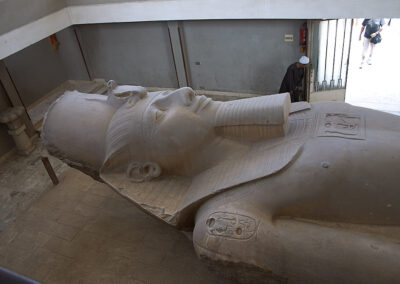
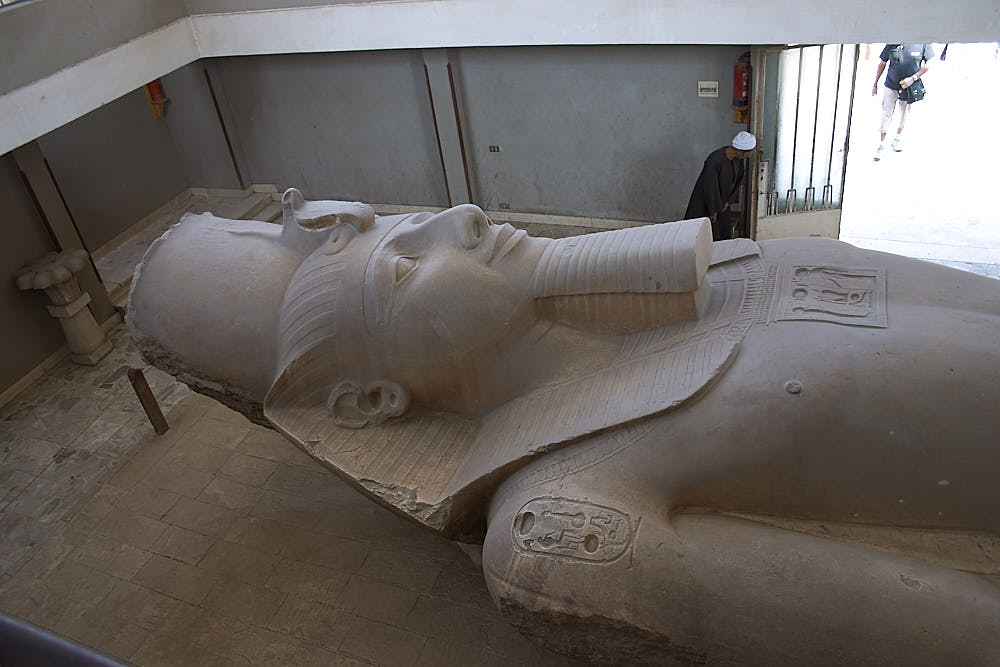
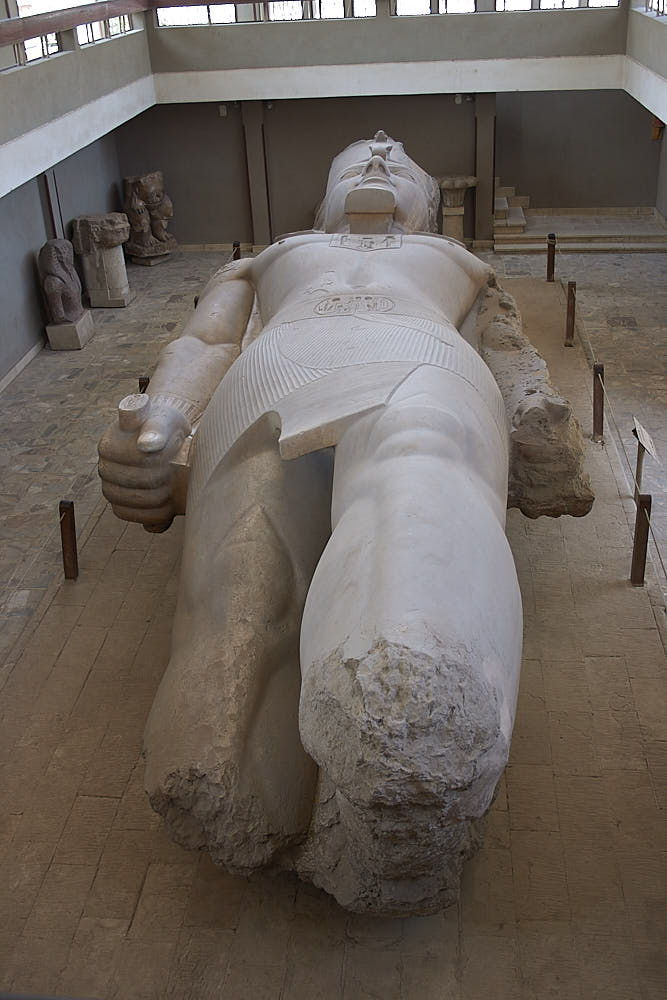
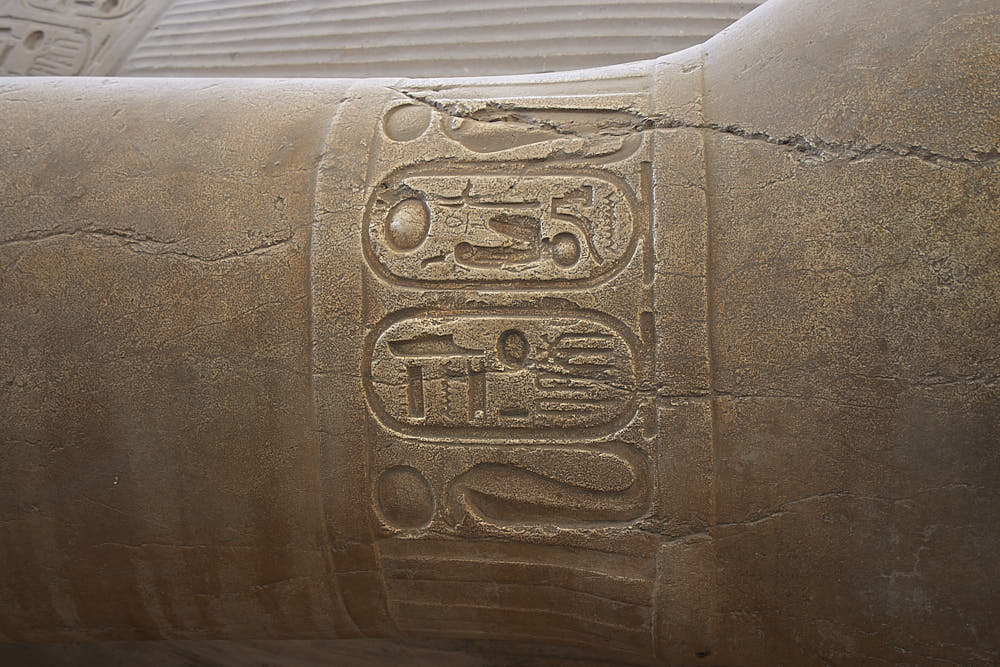
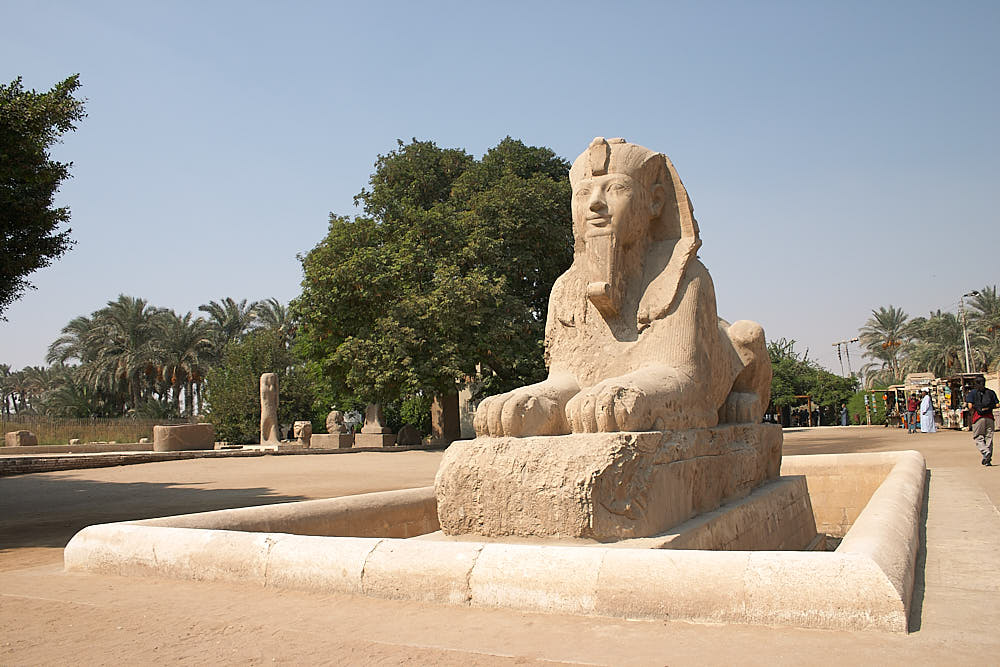
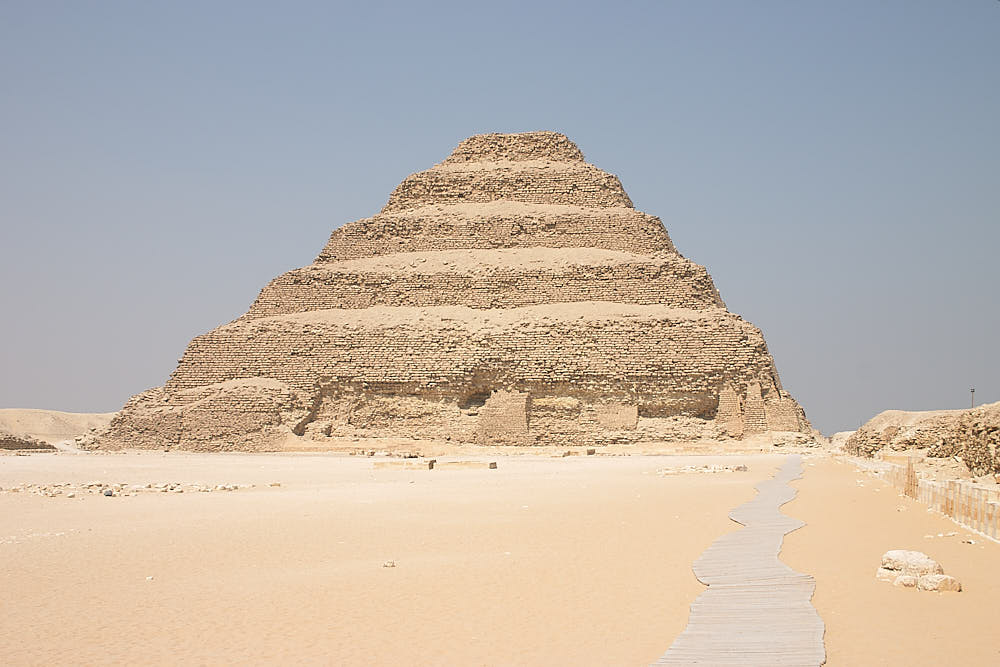
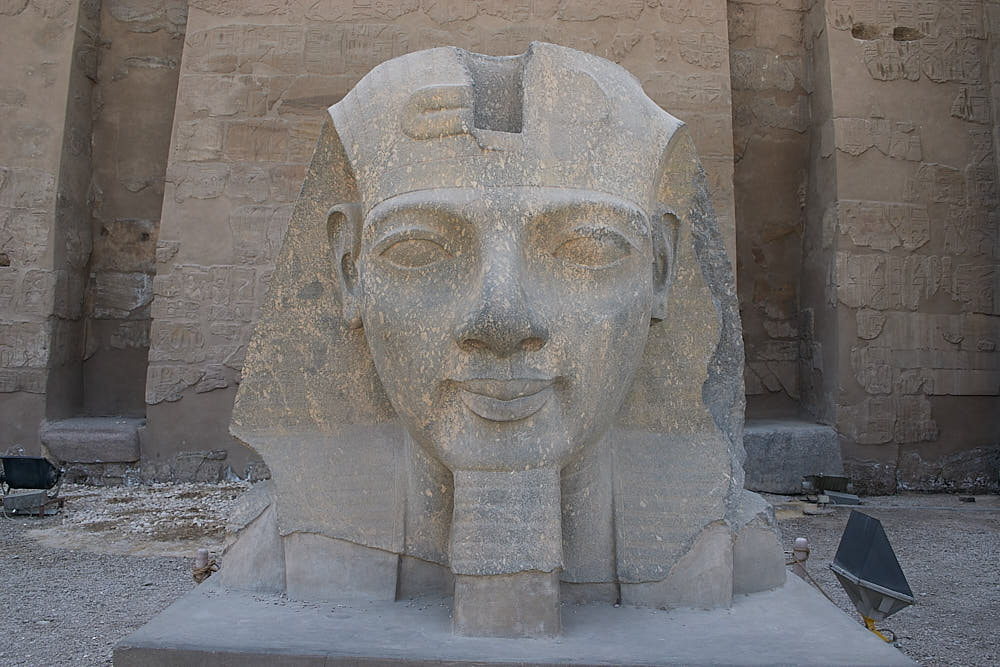
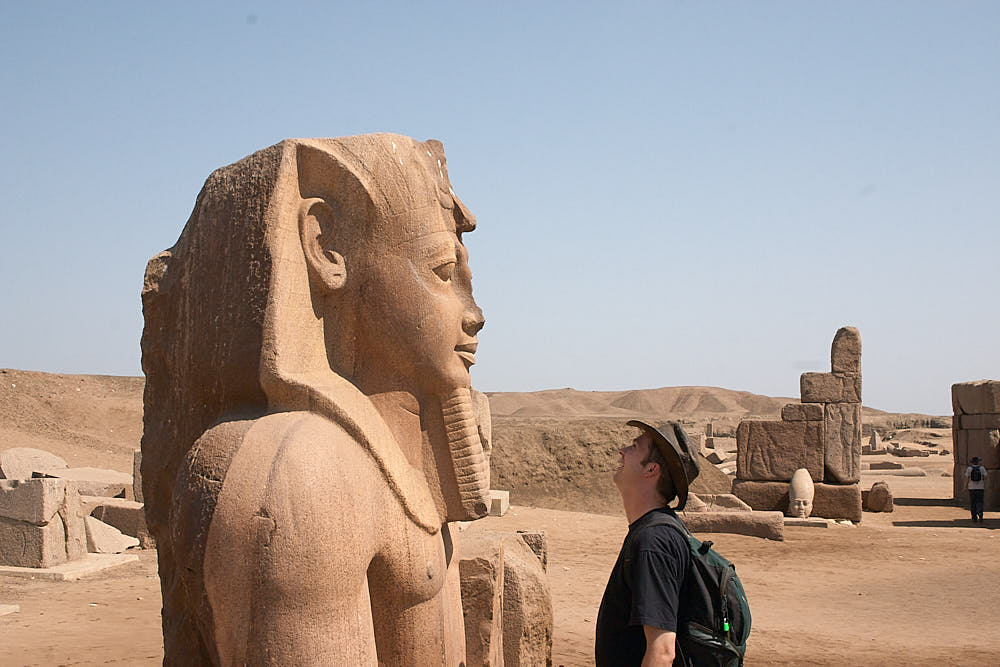
So we spent the day looking around the surrounding area of Cairo – we went to see the pyramids at Dashur, Sakkara and a place called Memphis where there were some statuses of Ramses the second. We also searched for some place that might be able to fix our camera.
The remains of the temple of Ptah and of Apis have been uncovered at the site as well as a few statues, including two four metre ones in alabaster of Ramesses II. The Sakkara necropolis is close to Memphis. It is believed that Memphis was the largest city in the world from its foundation until around 2250 BC. Its population was over 30,000. The beautiful and colossal statue of Ramses II is exhibited in the museum there. It is made of fine-grained limestone, 13 meters long, and weighs 120 tons. Also in Memphis are the Temple for Embalming and the Sacred Apis Bull.
Although relatively little is known in modern times, Dashur was a main breeding ground for the pyramid age. Here we find several pyramids, including two Old Kingdom pyramids, both unique, and both a distinct phase in the evolution of pyramid building and the pyramid complex. King Sneferu, father of Khufu, was the curious builder of these pyramids, and perhaps even the earlier one at Meidum .
The Bent Pyramid earned its name from its distinct change in angle. The pyramid was began at an angle of 52 degrees and midway through its construction this angle was suddenly and still inexplicably changes to the safer angle of 43 degrees. Some experts theorize that the pyramid at Meidum suffered its collapse during the building of this pyramid and it was this event that sparked the change in angle. Other experts believe that the Meidum pyramid collapsed much later, and this change in angle in the Bent pyramid would come for a different reason. Whatever the reason is, King Sneferu began a second pyramid at Dahshur, north of this first pyramid. This second pyramid, now called the Northern or Red Pyramid, was completely built at the angle of 43 degrees, as with the top portion of the Bent Pyramid.
These pyramids, as with the pyramid at Meidum, clearly demonstrate the features of the typical “pyramid complex”. Pyramid complexes consisted of the pyramid surrounded by a wall, smaller subsidiary pyramids, a Mortuary or Funerary temple at the east face, and a covered causeway leading to a Valley Temple, which would run parallel to the Nile. Remnants of the Mortuary temples can be seen at both pyramids. The Bent pyramid has a single subsidiary pyramid.
Sakkara is one section of the great necropolis of Memphis, the Old Kingdom capital and the kings of the 1st Dynasty as well as that of the 2nd Dynasty. It is mostly buried in this section of the Memphis necropolis. Three major discoveries have recently been made at Sakkara, including a prime minister’s tomb, a queen’s pyramid, and the tomb of the son of a dynasty-founding king. Each discovery has a fascinating story, with many adventures for the archaeologists as they revealed the secrets of the past.
Sakkara is best known for the Step Pyramid, the oldest known of Egypt’s 97 pyramids. It was built for King Djoser of the 3rd Dynasty by the architect and genius Imhotep, who designed it and its surrounding complex to be as grand as it was unique and revolutionary. Imhotep was the first to build stone tombs in honor of the king’s majesty. His many titles included ‘Treasurer of the King of Lower Egypt’, ‘Administrator of the Great Palace’, and ‘Imhotep the Builder, the Sculptor, the Maker of Stone Vessels’. Imhotep may have also designed the pyramid of Djoser’s successor, Sekhemkhet. 5th Dynasty kings such as Userkaf (pyramid) and Djedkare-Izezi built their pyramids at Sakkara. The last king of 5th Dynasty, Unas, decorated his burial chamber with the famous ‘Pyramid Texts’, spells written to help the king ascend to the heavens and descend again, which reveal the relationship of the king to the gods. 6th Dynasty kings such as Pepi I, Merenre and Pepi II built their pyramids to the south of Sakkara. Sakkara is also famous for its private Old Kingdom tombs which contain beautiful and revealing scenes: men force- feeding geese, cattle crossing a canal, men dragging a statue on a sled to the tomb. The best-known tombs are those of Ti, Kagemni, the ‘Two Brothers’, and Ptahhotep; the most famous is that of Meruruka.
Memphis was the ancient capital of the Old Kingdom of Egypt from its foundation until around 1300 BC. The ruins are 19 km (12 mi.) south of Cairo on the West Bank of the Nile. The city was founded around 3100 BC by Menes of Tanis, who united the two kingdoms of Egypt. Memphis reached a peak of prestige under the 6th Dynasty as a centre of the cult of Ptah. It declined briefly after the 18th Dynasty with the rise of Thebes and was revived under the Persian satraps before falling into firm second place following the foundation of Alexandria. Under the Roman Empire, Alexandria remained the most important city. It remained the second city of Egypt until the establishment of Al Fustat (or Fostat) in 641. Memphis was then largely abandoned and became a source of stone for the surrounding settlements. It was still an imposing set of ruins in the 12th century but soon became little more than an expanse of low ruins and scattered stone.
That night we went to see the sound and light show at Giza. Very cool.
Day 3 – 17th September 2004
We got up and moved location of the hotel because it was Derek’s birthday and we wanted to spend it in a nice place. We went from the Victoria Hotel to the Mena House Hotel. And seeing as it was the 5 year anniversary of the epic trips team what better way than to spend the night in a 5 star hotel – the first and probably the last that we will get to visit as part of an epic trips excursion. The name of the hotel was the Mena House Hotel (Oberai chain) it is located overlooking the pyramids of Giza. Oberoi Mena House Hotel was originally a royal lodge built for Egypt’s Vice King Kedive Ismail and used when he and friends were hunting in the desert or visiting the pyramids. You can have your breakfast or lunch whilst enjoying the splendour that is the pyramids. After we settled in we went for some lunch in the Khan El Khalili restaurant. We ate lunch, celebrated Derek’s birthday with some cake and drinks, enjoyed the view of the pyramids in the background and listened to Celine Dion on the radio. Alas when the birthday cake came out there was only one candle on it – now that was being a bit optimistic. We spent the afternoon looking around the place and enjoying the facilities that the hotel had to offer – ranging from swimming pool to fitness centre to a golf course.
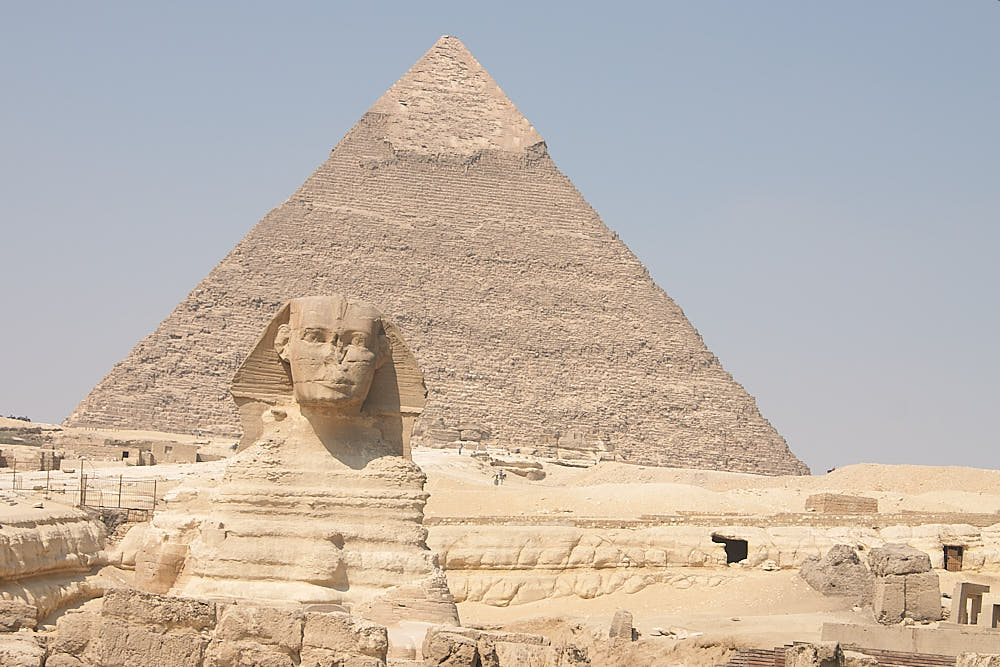
Then we went to see the pyramids at Giza. The Pyramids are the only surviving of the Seven Ancient Wonders. They are located in Cairo and were built to serve as tombs for royalty. It is believed that it took around 20 years to build the great Pyramid. Cheops is the largest and the oldest of the Pyramids of Giza. Not much is known about Cheops (Khufu). The tomb had been robbed long before archaeologists came upon it. Any information about him was taken with the objects inside the tomb. He is thought to have been the ruler of a highly structured society and he must have been very wealthy. He was buried alone in this massive tomb. His wives may have been buried nearby in smaller mastabas. The top platform is 10m square. The base of the pyramid is 754 feet and covers 13 acres. The original entrance to the pyramid was about 15m higher than the entrance that is used today.
The Pyramid of Chephren is often called the “Second Pyramid”. Chephren is the son and successor of Khufu and Hensuten. This pyramid is designed more modestly than Khufu’s. The Chephren pyramid originally was 10 feet (3m) shorter and 48 feet (14.6m) more narrow at the base. The estimated weight of all the stones in the pyramid is 4,880,000 tons. Because it is built higher on the plateau, it looks taller from most angles than Khufu’s pyramid. The slope of the angles is higher, 53 degrees compared to Khufu’s 51 degrees.
The Pyramid of Menkaure’ (Mycerinus) is the smallest of the three pyramids of Giza and shows the beginning of the decline in workmanship in the Egyptian pyramid building. The attention to detail is not as it is on the earlier pyramid. Menkaure’ was the successor to Chephren. The pyramid was not complete when Menkaure’ died. Shepseskaf, who was Menkaure’s son, finished the pyramid. The granite encasement was never finished. The pyramid stands 66.5m high, which is much smaller than the other two pyramids at Giza. Another difference between Menkaure’s and Chephren’s and Khufu’s pyramid is that Menkaure’s burial chamber was the lower chamber. The walls were lined with granite and below the pyramid’s foundation. The sarcophagus was found, but was lost at sea while it was being shipped to England. A wooden coffin was found, supposedly that of Menkaure’s. It was actually put in the pyramid about 1800 years later. It is thought to have been an act of restoration. In 1968 an inscription was found near the entrance in the casing which referred to this action.
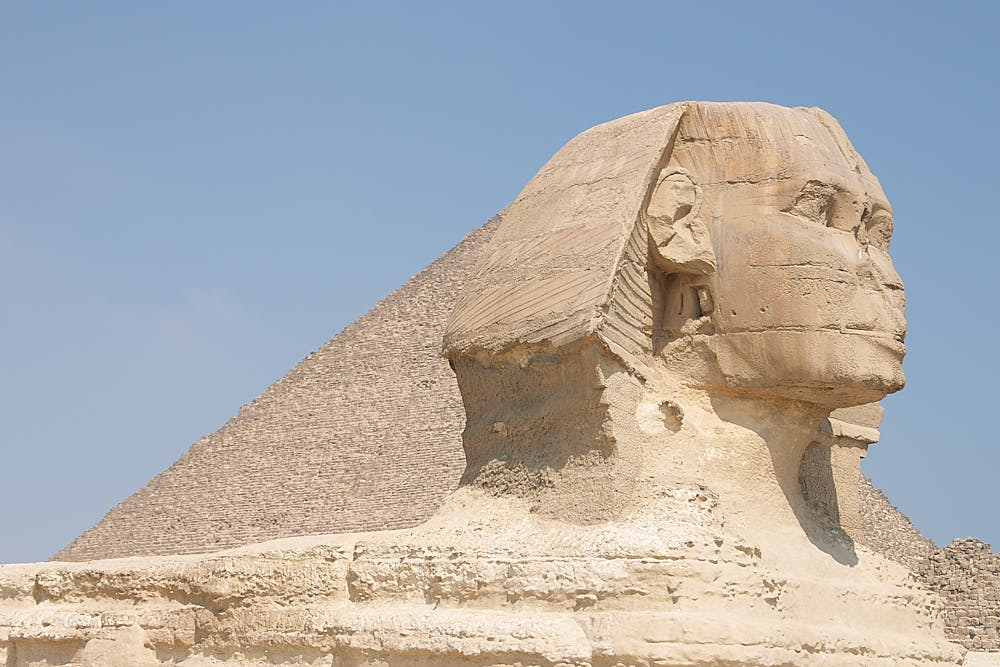
The Sphinx, one of most famous monuments in the world, has the body of lion and the face of a man. It is 70 m long and 20 m high. The face of the Sphinx is said to closely resemble that of King Chephren. The Great Sphinx is to the northeast of Chephren’s Valley Temple. Where it sits was once a quarry. Chephren’s workers shaped the stone into the lion and gave it their king’s face over 4,500 years ago. The sphinx faces the rising sun with a temple to the front which resembles the sun temples which were built later by the kings of the 5th Dynasty. The figure was buried for most of its life in the sand, which was cleared by King Thutmose.
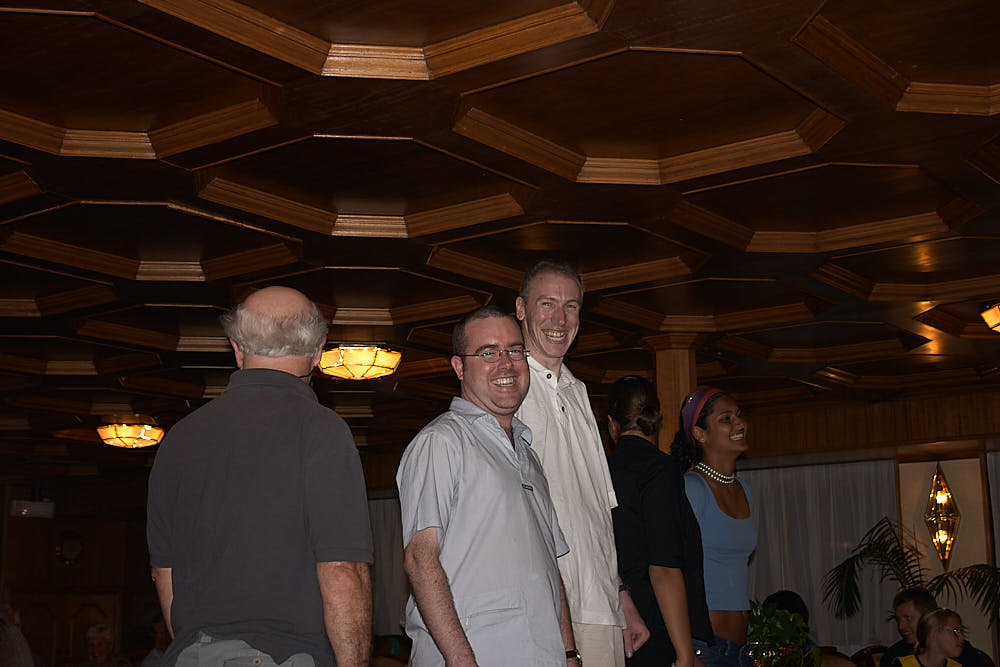
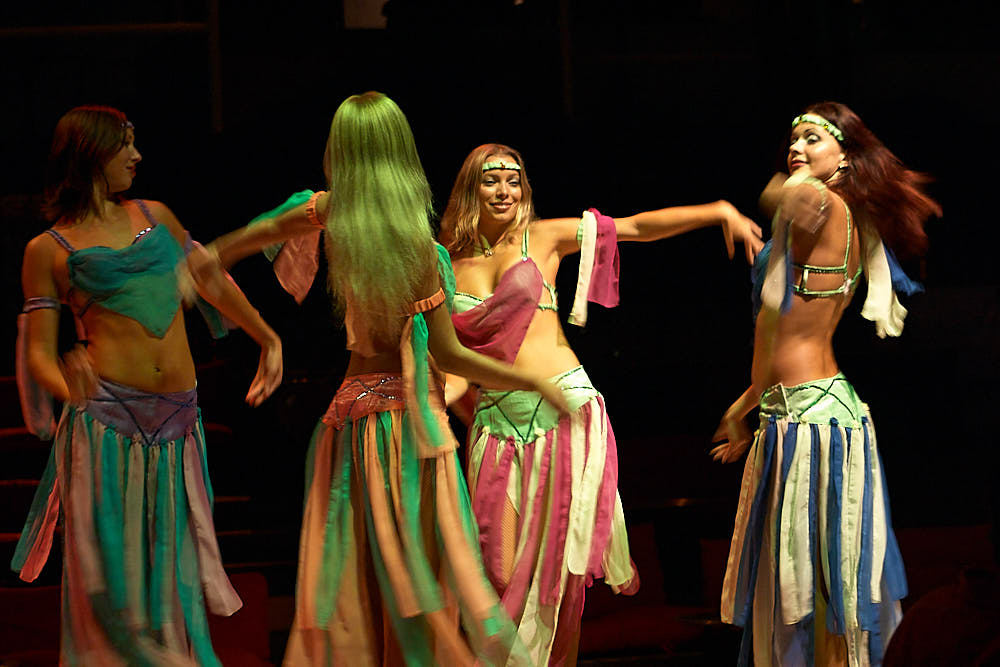
That evening we transferred to a Nile Dinner Cruise where we had a meal and entertainment afterwards. The dessert was an ice cream cake that we all enjoyed followed by some dancing with a pretty Egyptian singer (Derek was unwillingly dragged on to the dance floor here — it was not long before Garry Mike Paddy and Keith were up there as well helping him out). They needed someone to man the camera and alas this job fell on Kevin’s shoulders. Some belly dancing and finally some sword juggling followed this. We travelled down the Nile for nearly an hour and then turned around and headed back to our port of departure. We got some pictures at the obelisk on the way off the boat. We got transferred back to the hotel and took it easy. The roads were pretty busy at this time of the evening – I think that most of the cars in Cairo are on the roads when the sun goes down.
Day 4 – 18th September 2004
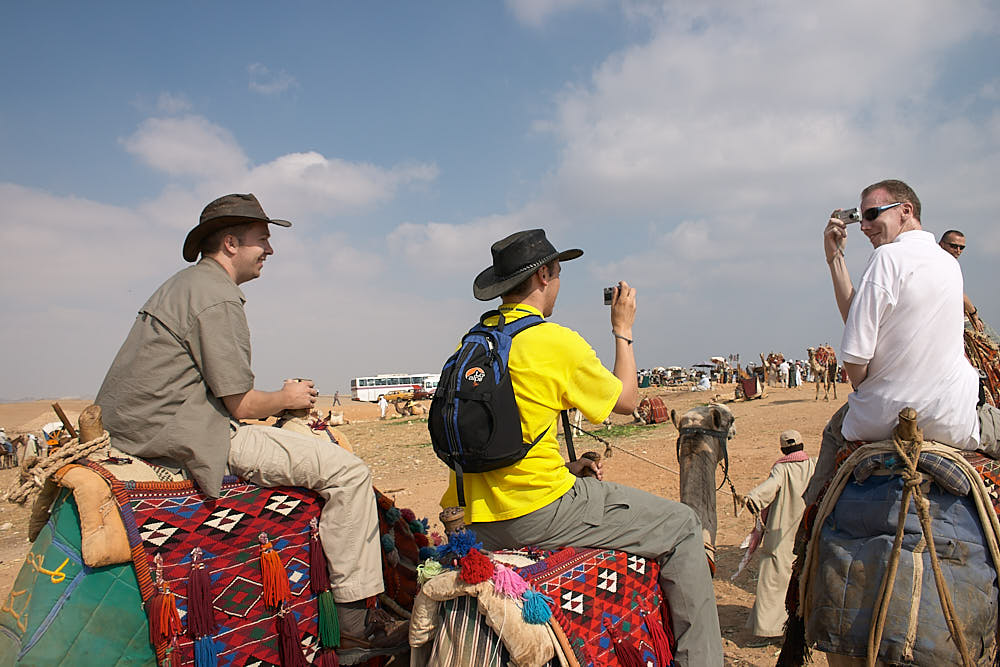
After we checked out of the hotel we went back to Giza to get some of it on the video camera. At Giza there were some camel riders. They approach tourists and aske them if they would like a ride of their camel. They do not mention anything about money and it is only when you are trying to get off the camel that they look for money and they wont let you down till you pay. The camels are pretty high off the ground so you have to be careful – you can’t just jump down. So if you want to go for a camel ride be sure to work out what the price is before hand. This way it is safer for you and your pocket.
After Giza we went to see the Egyptian Museum, the Markets the Islamic quarters and then we were going to take the night train to Aswan.
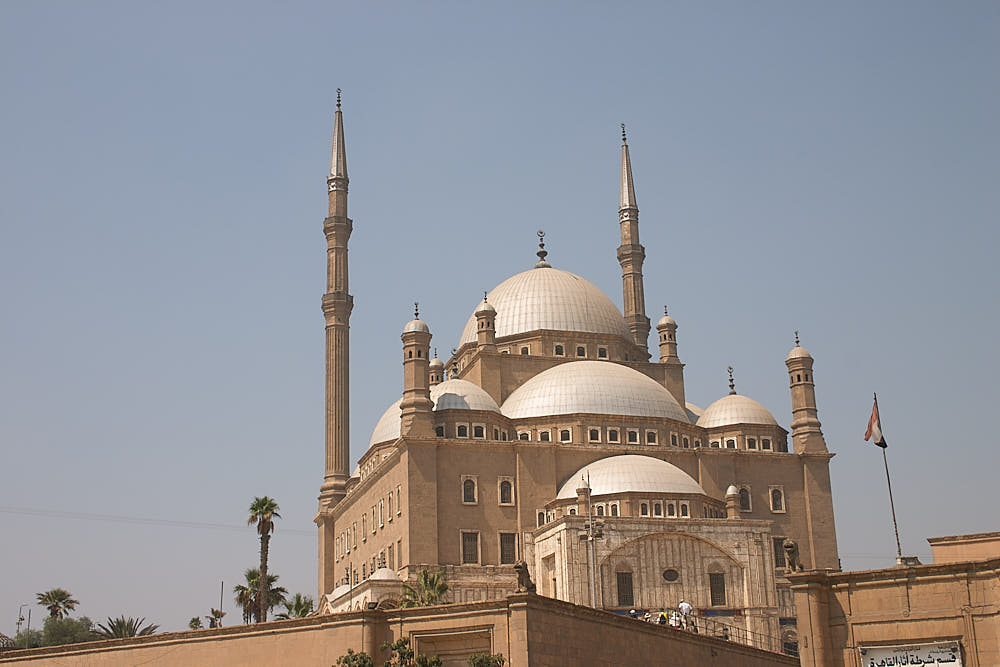
The Egyptian Museum housed remains, details and information on Tutankakmun, Neffertitti and HotChipSuit. After this we headed to the Citadel of Sala Dim (Mohamed Ali – not the famous boxer). It took 18 years to complete this mosque – 10 years to build it and 8 years to decorate it. It is located in the old Islamic quarter of the city. The decoration of the mosque is based on a European design as well as an Egyptian design. Upon entering any of the mosque you are requested to take your shoes off and make sure that the soles of them do not touch the floor.
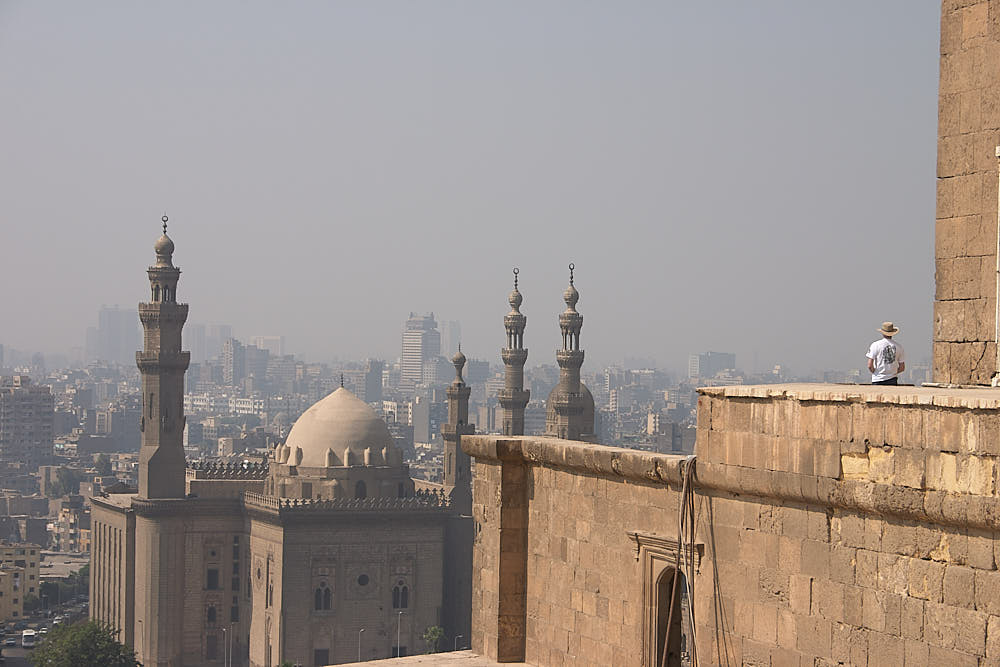
After this we headed to the Mosque of the Sultan Hassan – constructed in 1356AD. It took 3 years to construct at a cost of 20,000 de niro a day. It houses some of the most beautiful arrabic in Coptic style. It also has some impressive alabaster statues inside the mosque.
After this we went to collect our vouchers back at the travel agents and went to the Khan El Khalili market to spend some more money. This is a great market place as it has everything from Asfour crystal to papyrus drawings – and all at a good price that can be haggled upon . We got the train at 19:40 departing Cairo and overnight to Aswan. We got a meal on the train and then it was lights out and bed time for the lads.
Day 5 – 19th September 2004
We arrived in Aswan at 07:30 and transferred to the Hotel Isis. We were a little early and one of the rooms was still being made up. So we dropped off our bags and headed to the Nubian Museum in the town. It was quite impressive – very modern and the displays were very well constructed. All of the museums in Egypt accepted our ISIC student cards and permitted us a cheaper entrance into them. On the way to the museum you can see an island with a Chinese looking house on it – this island is called Elephantine island and the man who lives in that house is an English man who played an important role in constructed the new dam. Another thing that we figured out with this country – everyone looks for tips – regardless of whether they work or not so if you hear the word Back-shis then you better start reaching for your wallet and get something out for the guy .
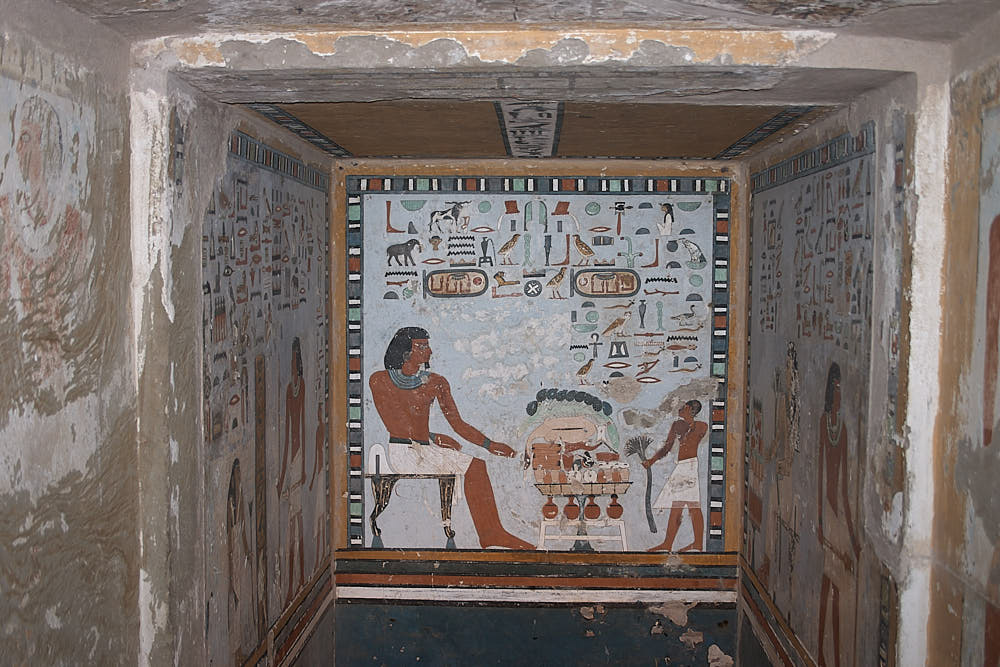
After the Nubian Museum we got a boat across the Nile to the tomb of the Nobles. It is situated on a hill overlooking Aswan. Tomb of Sirenput 2, the best preserved wall-painting of the Temple of the Nobles. Sirenput is seated and receives flowers from his son. Great view point and scenery from here. Arrived back in the hotel and we all went for a swim in the pool – there were some good reasons for us to get in to the pool – one was to cool off in the hot weather After this we headed to an internet café up the road and checked our emails and came back to the hotel. Keith did not go with us and it took us a long time to wake him up from his “Alaskan bear” slumber that he had going on. In the end we had to get reception to open the door because knocking on it, ringing the phone and banging on the window was having no effect.
Day 6 – 20th September 2004
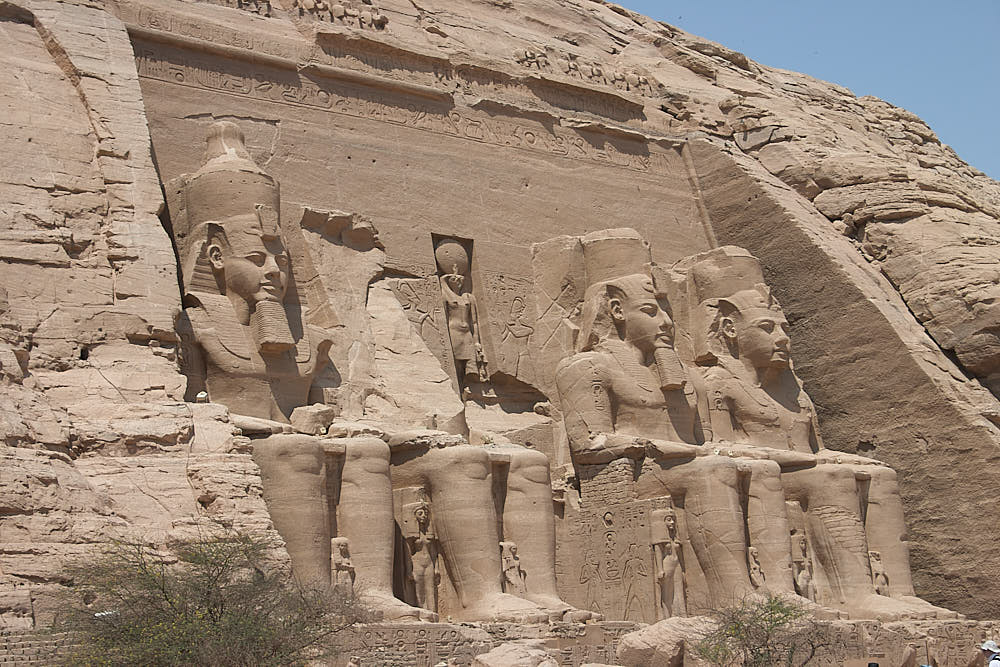
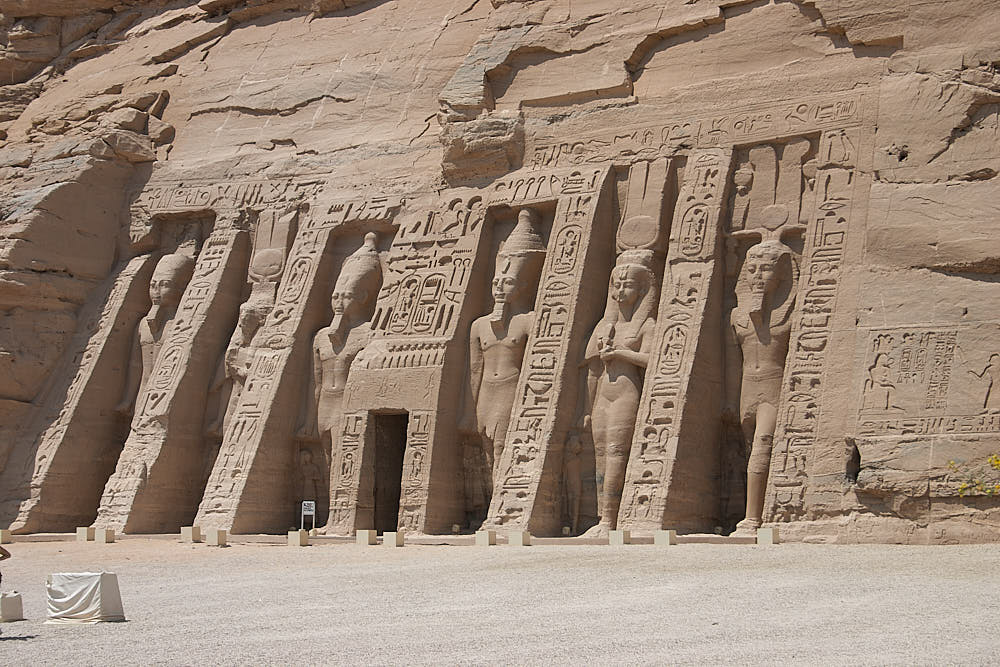
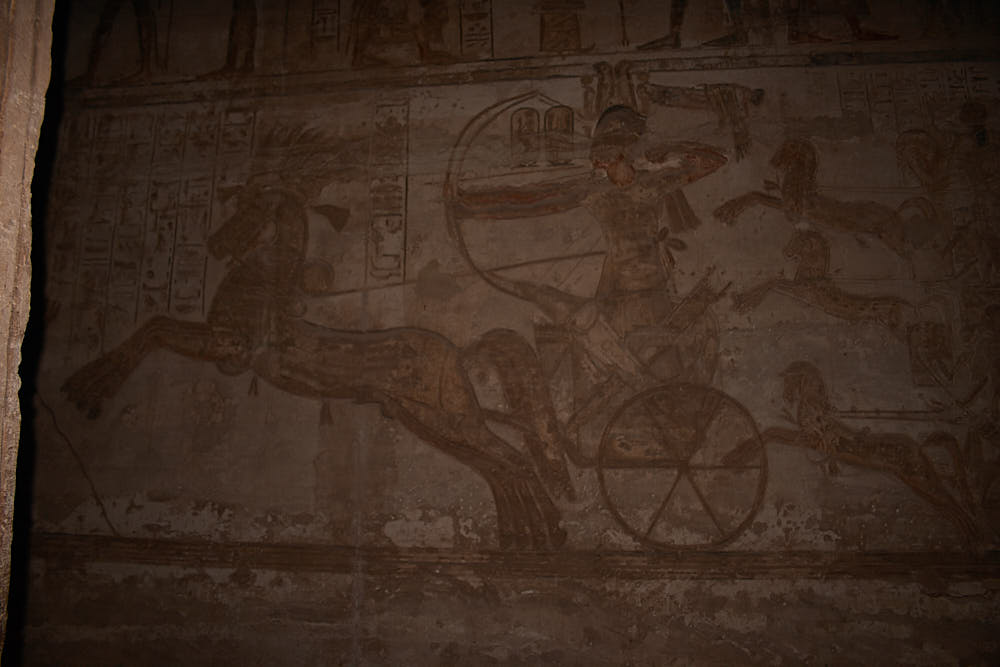
After we got up and had the best breakfast of the trip so far – the view was amazing and the food was great – and plenty of it – we headed to the airport via the old Aswan dam road. We flew to Abu Simbel to see the temples of Ramses the second and Nefertari – the most favoured wife of Ramses. These temples are situated on the shores of Lake Nasser in southern Egypt – 40km from the Sudan border. Famous carvings and sketching are depicted on the walls inside the temples. Abu Simbel is a temple built by Ramses II (c.1279-1213 B.C.) in ancient Nubia, where he wished to demonstrate his power and his divine nature. Four colossal (67 feet/20 meters high) statues of him sit in pairs flanking the entrance. The head and torso of the statue to the left of the entrance fell during ancient times, probably the result of an earthquake. This temple faces the east, and Re-Horakhty, one manifestation of the sun god, is shown inside the niche directly above the entrance. The alignment of the temple is such that twice a year the sun’s rays reach into the innermost sanctuary to illuminate the seated statues of Ptah, Amun-Re, Ramses II, and Re- Horakhty. The temple was cut out of the sandstone cliffs above the Nile River in an area near the Second Cataract. When the High Dam was being constructed in the early 1960s, international cooperation assembled funds and technical expertise to move this temple to higher ground so that it would not be inundated by the waters of Lake Nasser.Abu Simbel is a set of two temples near the border of Egypt with Sudan.
It was constructed for the pharaoh Ramses II who reigned for 67 years during the 13th century BC (19th Dynasty). The temples were cut from the rock and shifted to higher ground in the 1960s as the waters of Lake Nasser began to rise following completion of the Aswan High Dam. The Great Temple is dedicated to Ramses II and a statue of him is seated with three other gods within the innermost part of the rock-cut temple (the sanctuary). The temple’s facade is dominated by four enormous seated statues of the Pharaoh (each over 20 metres or 67 feet high), although one has been damaged since ancient times. The Small Temple was probably completed ahead of the Great Temple and is dedicated to Ramses’ favourite wife, Nefertari. At the entrance stand six 10-metre-high (33 feet) rock-cut statues – two of Ramses and one of Nefertari on either side of the doorway. The temples can be reached by road, air or boat. After we got back to the hotel there was a lovely flower arrangement on the bed – we reckon that the serving girls liked one of the lads in the room.
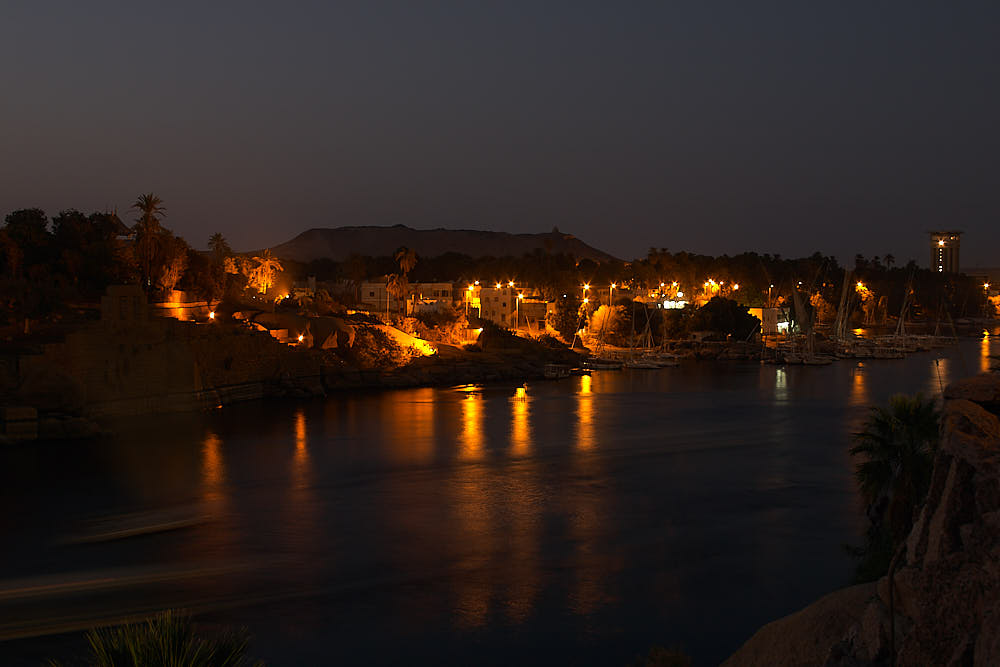
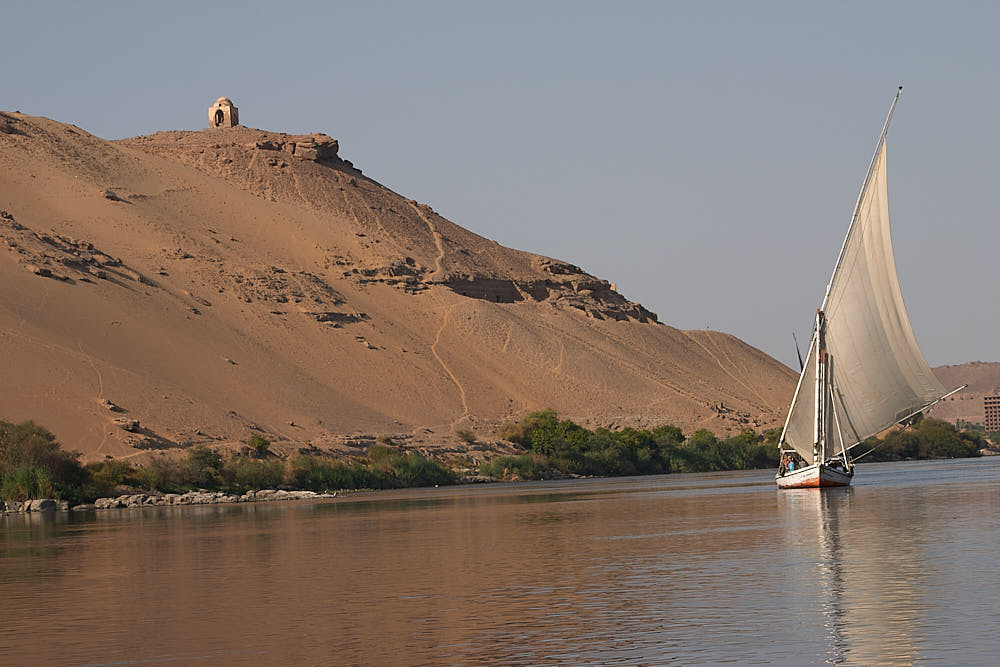
The afternoon was spent looking through the sueks or local markets. We walked around as a group and spent some more money and got some local trinkets and baubles to take back home with us. We then took a horse and carriage up to a hotel where we could sit out and watch the sunset over the Nile. The name of the hotel was the old Cataract Hotel and the view was amazing. We had to pay an entrance fee to get it and see on the veranda but you could use this money to buy yourself some drinks and sit back and enjoy the view. We had a great view of Elephantine island with the felucca’s sailing up and down the Nile as the sun was setting in the background. After the sun set there was a strange fog or smoke like vapour that rose up off the island. It looked kind of eerie and cool.
It was Garry’s birthday today as well so we went to the restaurant and had a nice meal followed by some chatting and messing. We went back to the hotel room and watched some tele and talked some more. We arranged to have a birthday cake sent down to the room for him – it took some organising but we got it there in the end. We had some cake and toasted Garry’s good health once more and watched Mission Impossible 2 on the tele before going to bed.
Day 7 – 21st September 2004
The start of the day was an easy relaxing sort of endeavour. Something that we are not used to at all. We checked our email first off and looked around the markets again – well some of us did. Then we went back to the hotel and checked out at noon. We transferred to the cruise ship that we were going to be living on board for the next 4 nights. After we settled in we looked around the ship and found where the emergency exits were located. Then we went and got some lunch. The name of the ship was the Nile Admiral. It is a 5 star cruise liner. We are really living it up on this trip aint we – first a 5 star hotel in Cairo and now a 5* cruise liner on the Nile.
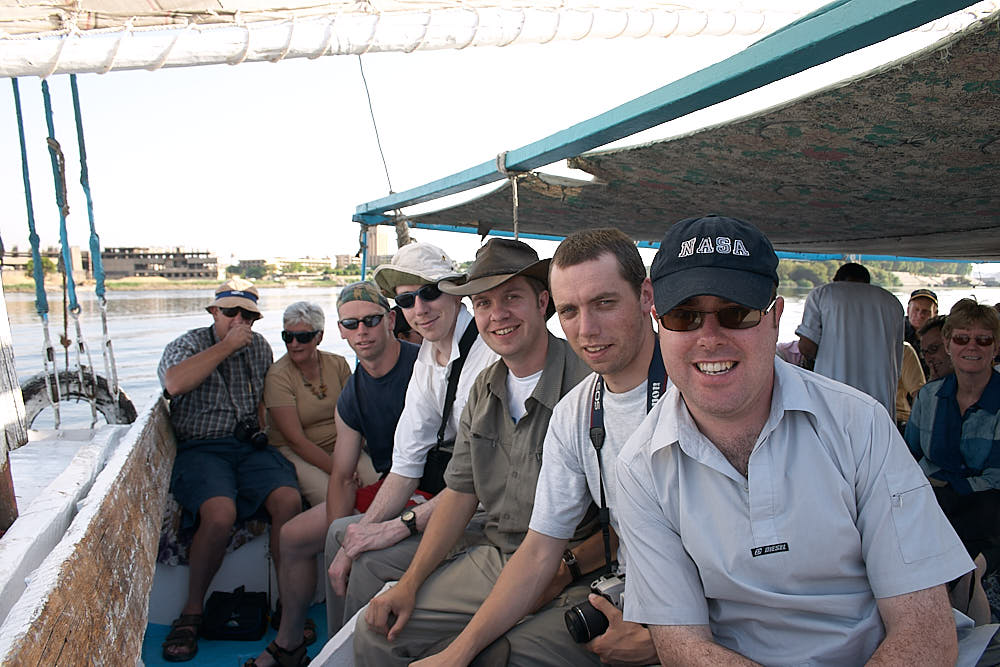
After checking into the rooms we got some lunch. All the meals on board were paid for in advance. The food was very good – too good. It consisted of a starters, main course and desert section in the main eating area – with plenty of choices. Entertainment on board was down to a small ping pong table and a small swimming pool area. In the afternoon we went out on a felucca and sailed down the Nile and saw some beautiful wildlife and landscape shots. Our guide for this section of the trip was Walid – he was going to be our guide whilst onboard the Nile Admiral. After dinner we had some entertainment in the form of some local Egyptians performing local dances and acts for the guests on board the liner. Garry and Keith managed to get into the middle of it though – causing no end of laughs for me and the rest of the lads – as well as the rest of the liner. It is always good to have your camera nearby when entertainers come looking for volunteers. Bed onboard the Nile Cruise Liner.
Day 8 – 22nd September 2004
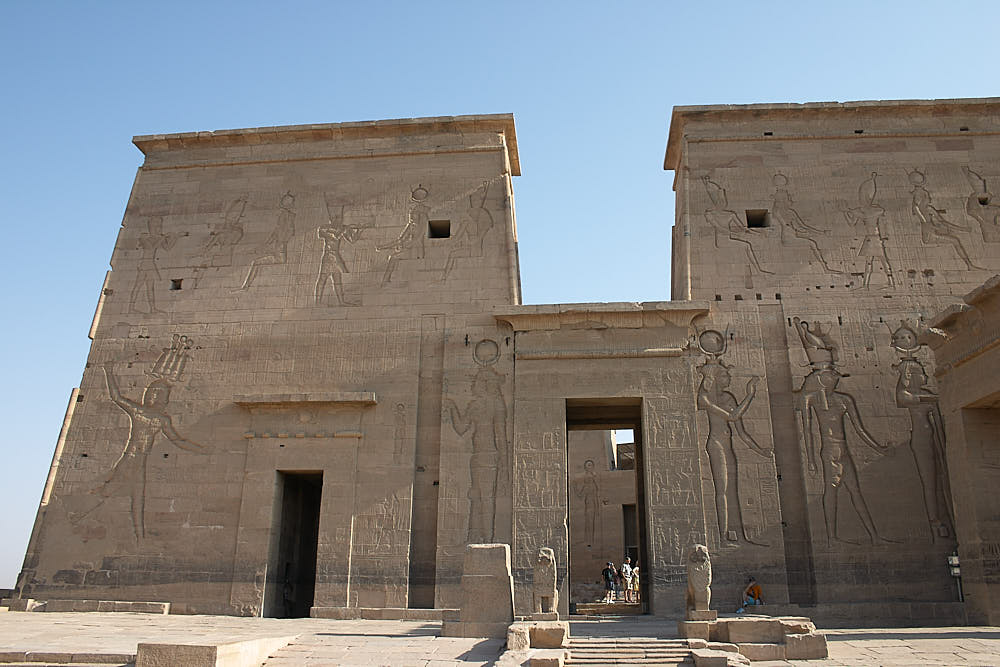
The island is called the island of Agilkia and it houses the temple of Philae and Isis. On the way out to the island we saw the old dam and heard a little bit about its history. This little island, an alluvium covered rock of granite, only 460 x 150 m, is situated ca 8 km south of the Aswan Dam in Upper Egypt, in an area which in ancient times made out the border to Nubia.
The well-known name of Philae is Greek. Its ancient Egyptian name was P-aaleq, meaning “End” or “Remote Place”, which later turned into the Coptic Pilak. Another meaning of the ancient name is ‘Creation’ or ‘island of the time of Re’, which tells about the Egyptian creation myth of the place where land rose above the waters of Chaos in the beginning of Creation. When the Aswan dam was built, the temple of Philae was submerged and a lot of the paintings inside were destroyed and cut off from the known world. Philae lay under water for most of the year and the beautiful paintings, which even the visitors in the 18th century could admire, vanished. By a rescue project by UNESCO in 1960, in connection to the building of the Aswan Dam, the temples were moved to the island of Agilkia nearby.
We looked around the temples for 90 minutes and then came back to the mainland where we got our bus to the new high dam and saw the power plant and the Nile as it now stands in all its majesty and glory. After this we went to a perfume and body shop where we purchased some pure scented oils and lavenders for ourselves and friends back home.
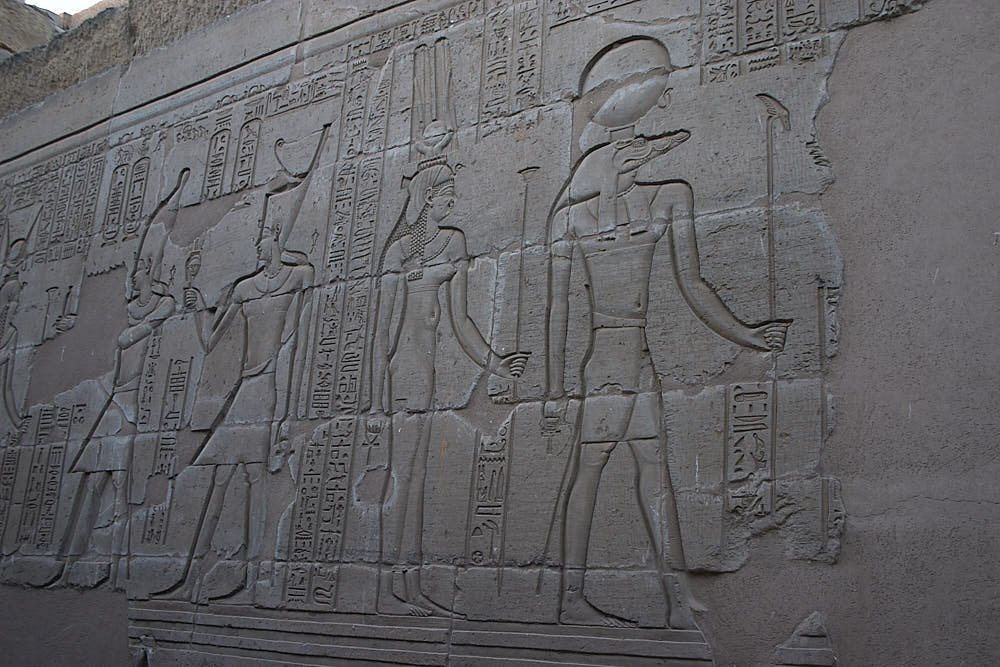
After getting back to the liner we left port and headed for Edfu and from there we were going to head on to Luxor (Thebes) and the end of the trip on the Nile. The afternoon was spent playing cards and taking it easy. We got in to Edfu later on that evening. It was very busy and there were a lot of cruise ships lining up to dock before us. Edfu was the Greek city of Apollinopolis Magna, and is a religious and commercial centre. Located about 33 miles south of Esna and 65 miles north of Aswan, this is a friendly town which produces sugar and pottery. It was the capital of the second nome (Horus) of Upper Egypt. The main attraction here is the Temple of Horus, which is considered by most to be the best preserved cult temple in Egypt. Kom Ombo was the ancient city of Pa-Sebek (translated to mean the “home of Sabek”), the crocodile god. Crocodiles were worshipped in pre-dynastic times and the temple at Kom Ombo is dedicated to this Egyptian god. Of note concerning this temple is its unusual style. It is actually two separate temples joined on one side. One temple is dedicated to Sebek, the crocodile god, and the second to Haroeris, Horus the Great, the solar god of war. Sabek was the god of fertility who is believed to be the creator of the world. The temple is perfectly symmetrical down the centre – half for Sebek and the other half for Horus. On the way back to the boat Mike fell in with a snake charmer and we got some pictures to prove it. Overnight in Edfu onboard the liner.
Day 9 – 23rd September 2004
We got up early and headed to the temple of Horus. Dedicated to Horus, the falcon headed god, it was built during the reigns of six Ptolemies. It was begun in 237 BC by Ptolemy III Euergetes I and was finished in 57 BC. Most of the work continued throughout this period with a brief interlude of 20 years while there was unrest during the period of Ptolemy IV and Ptolemy V Epiphanes. This is not only the best preserved ancient temple in Egypt, but the second largest after Karnak. It was believed that the temple was built on the site of the great battle between Horus and Seth. Hence, the current temple was but the last in a long series of temples build on this location. It is said that the original structure housing a statue of Horus was a grass hut built in prehistoric times. At any rate, there is an earlier and smaller pylon of Ramses II which sits in a 90 degree angle to the current building. After Edfu we got back on the liner and headed for Esna. We go there in the early afternoon and headed in for a look around. We were waiting for our turn to go through the lock to proceed on to Luxor.
The modern Egyptian village of Esna, which was ancient Iunyt or Ta-senet (from which the Coptic Sne and Arabic Isna derive), was built in the area of ancient Latopolis and is the site of a major temple dedicated to the god Khnum. Under the Greeks and Romans, the city became the capital of the Third Nome of Upper Egypt. Besides Khnum, the temple was dedicated to several other deities, the most prominent of whom were Neith and Heka. This was the ram god that was worshipped through out this area and who fashioned mankind from mud of the Nile on his potter’s wheel.
Esna is located about fifty km south of Luxor. Some blocks of the earlier 18th Dynasty structure are preserved. The present structure dates to the Greek and Roman periods and is one of the latest temples to have been built by the ancient Egyptians. Though only the hypostyle hall was excavated by Auguste Mariette, it is well preserved. Other remains of the temple lie buried beneath the surrounding buildings of the modern town. The back wall of the hypostyle hall is the oldest part of this construct, having been the facade of the old Ptolemaic (Greek) temple. It has depictions of both Ptolemy VI Philometer and VIII.
The roof of the hall, which is still intact, is supported by four rows of six tall (twelve meters high) columns with composite floral capitals of varying design that retain some of their original painted colour. They are adorned with texts describing the religious festivals of the town and several Roman emperors before the gods. The facade of the hall is in the form of an intercolumnar screen One of the fine column capitals within the Temple of Khnum wall similar to those of the temples at Dendera and Edfu. This structure, prior to its ruin, may have resembled those temples. The whole, remaining structure at Esna is extremely regular in design and symmetrical. The ceiling of the hypostyle shows Egyptian astronomical figures on the northern half and Roman signs of the zodiac on the southern half.
Day 10 – 24th September 2004
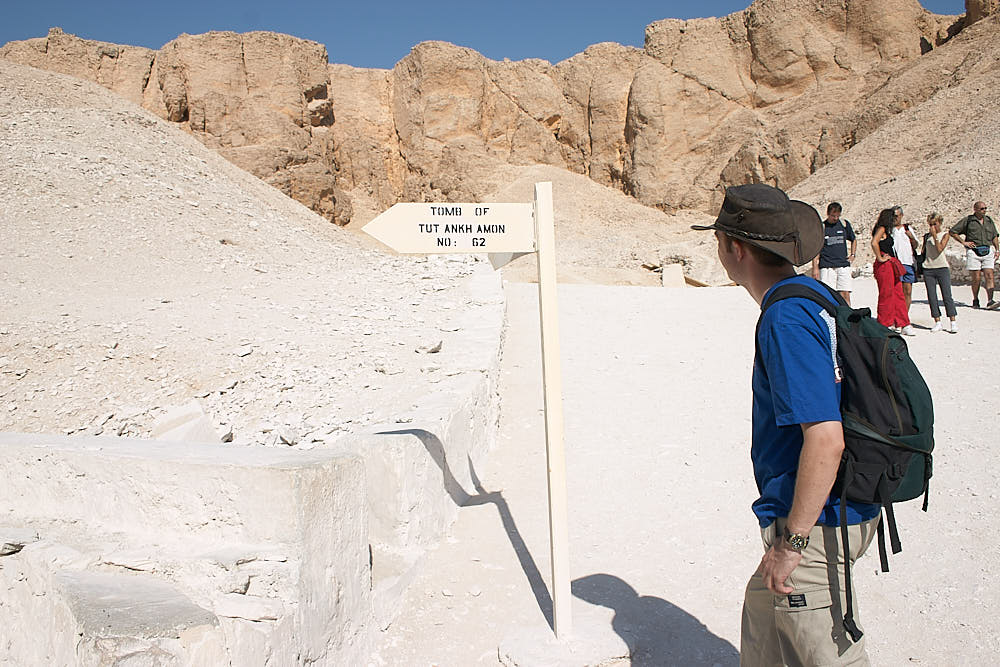
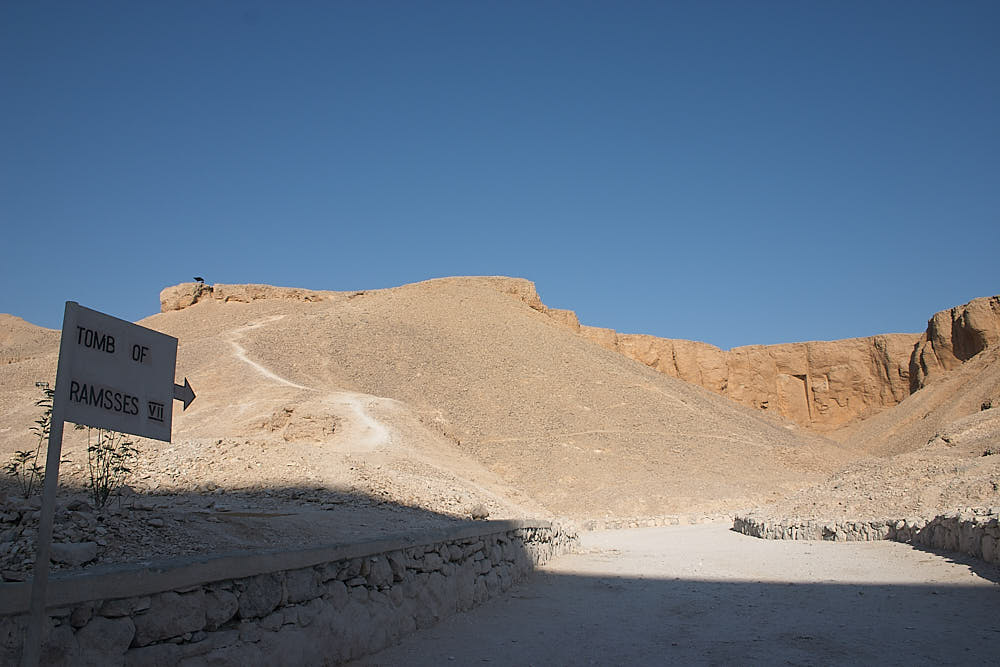
Today we went to see the Valley of the Kings. There are no video cameras allowed in here so we could not record anything. The Valley of the Kings, or Wadi el-Muluk is a valley in Egypt where tombs were built for the Pharaohs of the New Kingdom, the Eighteenth through Twentieth Dynasties. Wadi el-Muluk means valley of the kings. The valley is located on the west bank of the Nile across from Thebes (modern Luxor). It is separated into the East and West Valley, with most of the important tombs in the East Valley. The West Valley has only one tomb open to the public: the tomb of Ay, Tutankhamun’s successor. The Valley was used from approximately 1539 BC to 1075 BC, and contains some 60 tombs, starting with Thutmose I and ending with Ramesses X or XI. The Valley of the Kings also had tombs for the favourite nobles and the wives and children of both the nobles and pharaohs. Around the time of Ramses I the Valley of the Queens was begun, although some wives were still buried with their husbands.
Almost all of the tombs have been ransacked, including Tutankhamun’s, though in his case, it seems that the robbers were interrupted, so very little was removed. King Tutankhamun was a minor king and other kings probably had more numerous treasures. The valley was surrounded by steep cliffs and heavily guarded. In 1090 BC, or the year of the Hyena, there was a collapse in Egypt’s economy leading to the emergence of tomb robbers. Because of this, it was also the last year that the valley was used for burial. The valley also seems to have suffered an official plundering during the virtual civil war which started in the reign of Ramses XI. The tombs were opened, all the valuables removed, and the mummies collected into two large caches. One, the so-called Deir el-Bahri cache, contained no less than forty royal mummies and their coffins; the other, in the tomb of Amenhotep II, contained a further sixteen.
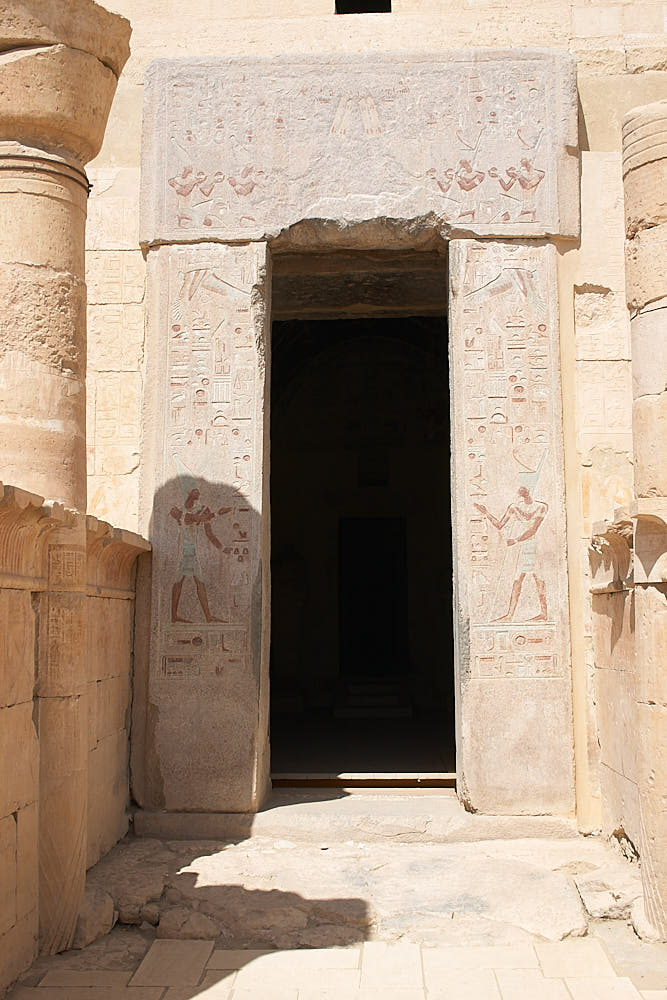
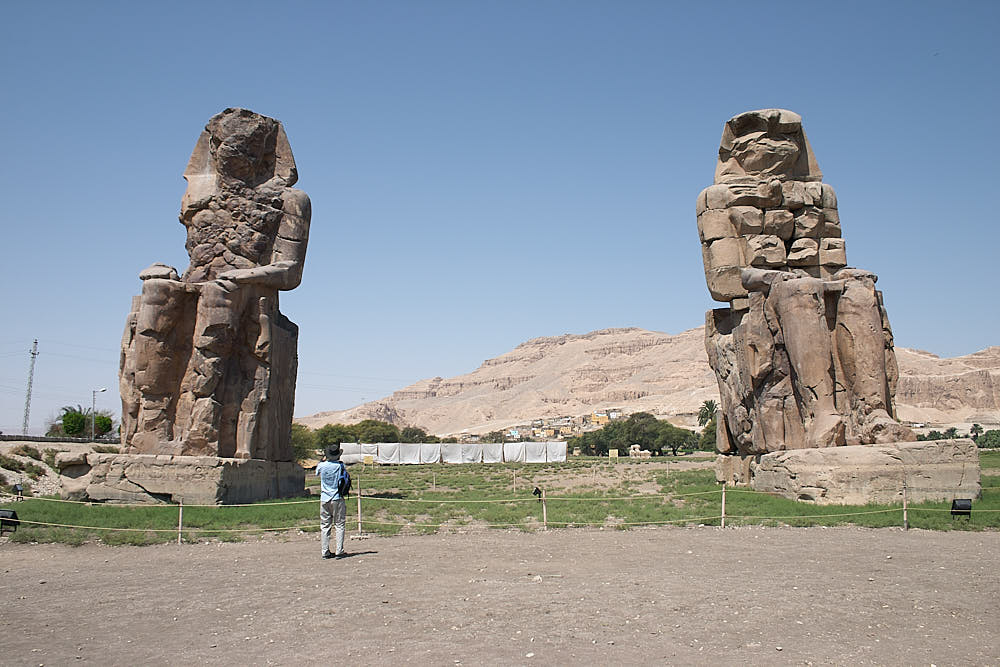
After the Valley of the Kings we went to an Alabaster shop and saw them making alabaster statues and ornaments. Then we went to see the Colossi of Memnon. Amenhotep III (18th Dynasty) built a mortuary temple in Thebes that was guarded by two gigantic statues on the outer gates. All that remains now are the 23 meter (75 ft) high, one thousand ton statues of Amenhotep III. Though damaged by nature and ancient tourists, the statues are still impressive. Ancient Egyptians called the southern of the two statues “Ruler of Rulers”. Later travellers called them “Shammy and “Tammy”, which may have been a corruption of the Arabic words for “left” and “right”. Today they are known locally as “el-Colossat”, or “es-Salamat”. The statues are made from carved blocks of quartzite quarried either at Giza or Gebel es-Silsila. The Northern statue depicts Amenhotep III with his mother, Mutemwia, while the southern statue is of Amenhotep III with his wife, Tiy and one of his daughters. On the sides of the statues are reliefs depicting Nile gods joining together plants symbolising Upper and Lower Egypt. After this we went to see the temple of Hatchepsut. The temple of Hatchepsut, built by the Senmout architect, is integrated perfectly into cliff. The funerary temple of the queen Hatchepsut (XIIIth dynasty, 1505-1484 before Christ) is one of the most remarkable monuments of Egyptian architecture as indicates it its old name ” nefer-neferou “, the ” sublime of the sublimes “. An alley lined with sphinx formerly connected it to the temple of reception, where the ceremonies of momification proceeded.
Hatshepsut, the fifth ruler of the 18th Dynasty, was the daughter of Thutmose I and Queen Ahmose. As was common in royal families, she married her half-brother, Thutmose II, who had a son, Thutmose III, by a minor wife. When Thutmose II died in 1479 B.C. his son, Thutmose III, was appointed heir. However, Hatshepsut was appointed regent due to the boy’s young age. They ruled jointly until 1473 when she declared herself pharaoh. Dressed in men’s attire, Hatshepsut administered affairs of the nation, with the full support of the high priest of Amun, Hapuseneb and other officials. When she built her magnificent temple at Deir el Bahari in Thebes she made reliefs of her divine birth as the daughter of Amun. Hatshepsut disappeared in 1458 B.C. when Thutmose III, wishing to reclaim the throne, led a revolt. Thutmose had her shrines, statues and reliefs mutilated.
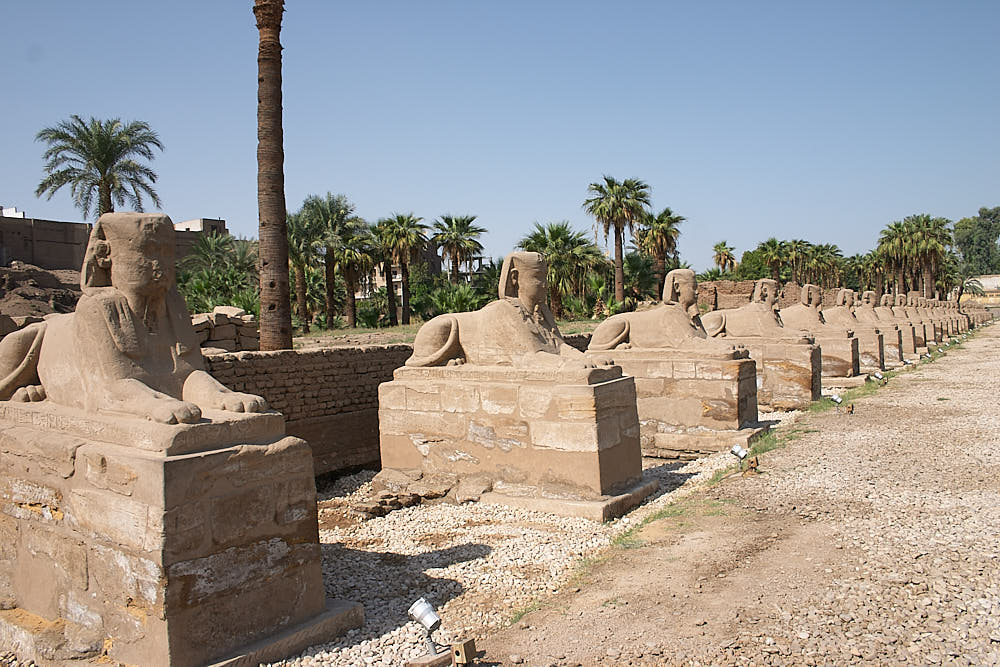
Friday afternoon, at 14:15 and the plans were to go and see the temple of Luxor and then head out to see the temple of Karnak. On the east bank of the Nile at Luxor lies the magnificent Luxor Temple which was dedicated to the great god Amun-Re, his wife Mut and their son Khonsu (the moon god) – together representing the Theban triad. Just outside the temple on the North side is the impressive avenue of sphinxes. The temple was built on the site of a probable smaller Middle Kingdom structure for the god Amun, while the earliest parts of the temple seen today date from the 14th century BC and the time of Amenhotep III (the 18th Dynasty of the New Kingdom).
His son, Akhenaten (Amenhotep IV), overthrew the existing order of Amun and replaced it with the cult of the sun god Aten. Consequently, Luxor Temple suffered under his reign. Restoration work was undertaken later during the time of Tutankhamun and Horemheb.
Ramses II (Ramses the Great) of the 19th Dynasty oversaw the addition of a new entrance pylon (decorated with scenes of his military battles) and a court at the northeast end of the complex. Two obelisks were erected in front of the temple’s pylon by Ramesses II in the 13th century BC. In the 1830s, the western obelisk was given to France and erected at Place de la Concorde in Paris where it still stands today. Ramses II also had erected in front of his pylon six granite statues of himself – two seated and four standing. A 3-kilometre-long avenue of sphinxes connected Luxor Temple with the southern end of the sprawling Karnak temple complex to the north.
During the 19th century, much of the temple was still buried and houses stood well above the current ground level encountered by modern-day visitors. An idea of the 19th century ground level can be gained from the Mosque of Abu el Hagag which, despite early French efforts to remove it, remains inside the great pylon. Passing through the pylon entrance, the visitor enters the court of Ramses II with numerous statues of the pharaoh and surrounding papyrus-type columns with lotus-bud capitals.
Beyond the court lies the impressive Colonnade erected by Amenhotep III. The inside of the walls on either side of the Colonnade were carved during the time of Tutankhamun and depict the important annual Opet festival during which the god Amun visited his southern harem. The reliefs show the sacred barges being brought from Karnak to Luxor. Unfortunately, the reliefs have suffered greatly over time, while a high water table has led to salt encrustation.
Next is the court of Amenhotep III surrounded by a double row of columns. It was in this court that numerous statues were found buried in the late 1980s. Beyond the court is the Hypostyle Hall containing 32 columns in four rows. At the rear is an area that was converted into a Roman shrine with Amenhotep III’s reliefs plastered over and painted with Christian themes. At the southern end of the temple complex is the sanctuary which is surrounded by various chambers including a so-called Birth Room in which the birth of Amenhotep III is depicted in reliefs.
After finishing in Luxor we headed over to the temple complex of Karnak – the biggest temple complex in the world. Seemingly it can take up to 10 days to get around the temple fully – we had one hour!
In ancient Egypt, the power of the god Amun of Thebes gradually increased during the early New Kingdom, and after the short persecution led by Akhenaten, it rose to its apex. In the reign of Ramses III, more than two thirds of the property owned by the temples belonged to Amun, evidenced by the stupendous buildings at Karnak. Although badly ruined, no site in Egypt is more impressive than Karnak. It is the largest temple complex ever built by man, and represents the combined achievement of many generations of ancient builders. The Temple of Karnak is actually three main temples, smaller enclosed temples, and several outer temples located about three kilometres north of Luxor, Egypt situated on 100 ha (247 acres) of land. Karnak is actually the sites modern name. Its ancient name was Ipet-isut, meaning “The Most Select (or Sacred) of Places”.
This vast complex was built and enlarged over a thirteen hundred year period. The three main temples of Mut, Montu and Amun are enclosed by enormous brick walls. The Open Air Museum is located to the north of the first courtyard, across from the Sacred Lake. The main complex, The Temple of Amun, is situated in the center of the entire complex. The Temple of Monthu is to the north of the Temple of Amun, and next to it, on the inside of the enclosure wall is the Temple of Ptah, while the Temple of Mut is to the south.
In the Great Temple of Amun, the Second Pylon of Karnak was built by Ramses II. The Hypostyle Hall is found after passing through the Second Pylon. The hall is considered to be one of the world’s greatest architectural masterpieces. Construction began during Ramses I’s reign. He was the king who founded the Nineteenth Dynasty and was king for only one year. The work continued under Seti I (1306 – 1290 BC). Seti I also built the Temple of Abydos and many other temples. The hall was completed by Seti I’s son, Ramses II.
The outer walls of the Hypostyle Hall are covered with scenes of battle. Again, Seti I is to the north and Ramses II is to the south. The scenes have long since lost their colour that was painted and the outlines of the scenes have been blurred by the centuries of wind and sun. The southern walls of Ramses II have hieroglyphic texts which actually record details of the Hittite king and Ramses II signing a peace treaty in the twenty-first year of Ramses reign.
The Transverse Hall lies beyond the rear wall of the Hypostyle Hall. The wall is mostly ruined. With the Transverse Hall is a partially reconstructed Third Pylon of Amenhotep (Amenophis) III. The Transverse Hall has remains of the earliest sections of the Karnak complex that are still in existence.
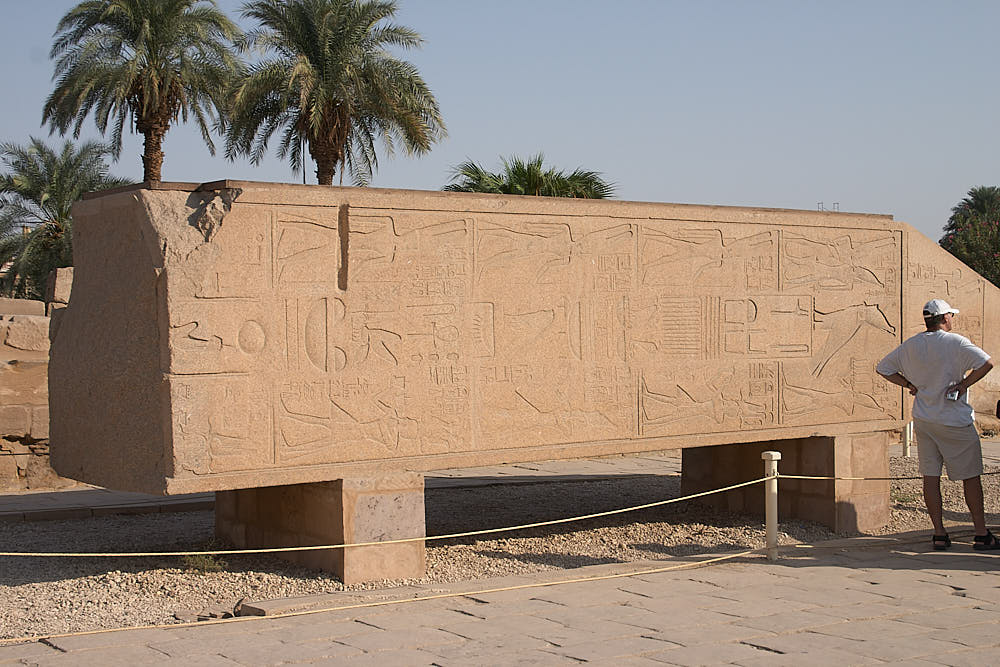
Leaving the hypostyle hall through the third pylon you come to a narrow court where there once stood several obelisks. One of the obelisks was erected by Tuthmosis I (1504 – 1492 BC) who was the father of Hatshepsut. This obelisk stands 70 feet (21.3m) tall and weighs about 143 tons. Beyond this obelisk is the only remaining Obelisk of Hatshepsut (1473-1458 BC). It is 97 feet (29.6m) high and weighs approximately 320 tons. Besides the Lateran obelisk in Rome, this is the tallest standing obelisk. The inscription on the obelisk says, “O ye people who see this monument in years to come and speak of that which I have made, beware lest you say, ‘I know not why it was done’. I did it because I wished to make a gift for my father Amun, and to gild them with electrum.”
Tuthmosis III (1479-1425 BC) was Hatshepsut’s successor. When he came to power, he built a high wall around her obelisk. This wall hid the lower two-thirds but left the upper towering above. It has been thought that this was an easier and cheaper way of destroying her memory than actually tearing it down and removing it. The top of the obelisk was visible for 50 miles (80 km). The pink granite for the obelisk was quarried at Aswan, which is several hundred miles south of Karnak. The stone was moved several miles over to the river and shipped down to Luxor (Thebes). To the south of the standing obelisk is its companion which has fallen. It was also made of a single block of granite but is broken now.
The Sixth Pylon, which was built by Tuthmosis III, leads into a Hall of Records in which the king recorded his tributes. Very little remains of this archive beyond two granite pillars. Just beyond these pillars lies the Holy of Holies or sanctuary. Originally it was the oldest part of the temple.
Day 11 – 25th September 2004
This day was a rest day. The Arab Esque hotel was not the best hotel in the world as the air conditioning was not working and it was extremely hot outside but at least it was centrally located and close to the markets and temples within the city. The plans were to go and see the museum in Luxor and then a sound and light show in Karnak later on.
One of the best displays of antiquities in Egypt is located at the Luxor Museum opened in 1975. Housed within a modern building, the collection is limited in the number of items, but they are beautifully displayed.
Upon entering the museum, there is a small gift shop on the right. Once inside the main museum area, two of the first items that catch one’s attention are an enormous red granite head of Amenhotep III and the cow-goddess head from the tomb of Tutankhamun.
Spaced out around the ground floor are masterpieces of sculpture including a calcite double statue of the crocodile god Sobek and the 18th Dynasty pharaoh Amenhotep III. It was discovered at the bottom of a water-filled shaft in 1967.
A ramp leads upstairs to more marvellous antiquities, including some items from Tutankhamun’s tomb such as boats, sandals and arrows. One of the major items of the whole museum is located upstairs – a reassembled wall of 283 painted sandstone blocks from a wall in the dismantled temple built at Karnak for Amenhotep IV. There are numerous other antiquities of interest including a couple of very nice coffins. The museum also houses items from periods after the demise of pharaonic Egypt. On returning to the ground floor, there is a gallery on the left (outbound) where there is a wonderful collection stone sculptures found in 1989 under one of the courtyards within Luxor Temple.
After the museum we got a horse and carriage ride back to the hotel. There was a McDonalds down the road so we decided to get something to eat in there for lunch – or a late lunch. Then we headed back to the hotel to decide what to do. Some of us stayed in the hotel and rested up and the rest of us headed down to the markets to look around and see if there was anything worth purchasing from this part of the trip. After this we found an internet café and sent some messages home and then headed back to the hotel.
Later on that evening we went to Karnak to see the sound and light show there. The show starts with a historical introduction covering the birth of the great city of Thebes (present day Luxor) and erection of the Karnak temple. The show also narrates the glorious achievements of some great Pharaohs. The Spectators listen to a magnificent and poetic description of the artistic treasures and great legacy which the Karnak temple encloses. Then we headed back to the hotel and got to bed.
Day 12 – 26th September 2004
We were up at 07:00 and left the hotel at 07:30. Today we were going to take an armed escort convoy across the East Arabian Desert to Hurghada. Hurghada, known in Egypt as Ghardaga, was at one time just a simple fishing village. But now, with its crystal clear water, untouched reefs and a multitude of shipwrecks, it has become one of the best Egyptian tourist destinations. We travelled across the flat plains of the eastern desert, stopping only once. We arrived at a little café and stopped to stretch the legs for a few minutes and get something to eat. Then we were back in the convoy and heading to Hurghada. We met some convoys coming against us but other than that there was not a lot to see – except sand and heat waves.
Hurghada is a pretty big town – and everywhere that we looked there were evident signs of construction. Everyone seems to be building or renovating some part of every building. We got something to eat and called it an early night as we were going to be up early the following morning for the ferry across to Sharm El Sheik.
Day 13 – 27th September 2004
We got up at 03:00 to get transferred to the ferry port to get across to Sharm El Sheik. There was still some activity on the roads at this hour of the morning but we were at the port with 40 minutes to spare. We collected the tickets at the desk and waited for the boarding to begin. We were on board and ready to depart by 04:00. The crossing time was 90 minutes. We tried to rest and take it easy but it is hard to do when you are up and about. We were off the ferry by 06:00 and waiting for our bags to come in. We collected our luggage and met our guide that would transport us to our hotel in Sharm El Sheik. Sharm el Sheik is situated on the Southern tip of the Sinai Peninsula. With the Red Sea on one side and the mountains of Mount Sinai on the other it is ideally situated for some diving or snorkelling. Or just to take it easy. We arrived at the hotel around 07:30 and proceeded to check in. The name of the hotel was Kabesh Palace hotel. We were going to be staying here for the next two days. We walked around the place and had a look around to get our bearings. Most of the places were not open yet so we took it easy and got some breakfast as soon as the places were open.
After breakfast we went down to one of the hotels on the waterfront and did some snorkelling. It was lovely but the current was pretty strong and I think that you have to be a good swimmer and be able to handle yourself in the water. We then headed to the Hard Rock Café for some lunch and the afternoon was spent looking around the shops and local markets. We also found an internet café and checked some mails and sent some messages home to everyone. That evening we got something to eat and then went to bed because everyone was tired after the early start that morning.
Day 14 – 28th September 2004
Today was the day that we were going to go diving. We were with the Oonas dive club – located 1 minute from the hotel. We went down there to do a single dive within the Naam bay area. We travelled for around 30 minutes on the boat and arrived at a place called the Garden where we were going to do our dive. The weather was really good, the sun was shining and there were no clouds in the sky.
We suited up and paired off – Kevin and Paddy, Mike and Derek. Keith or Garry don’t dive so they stayed on the beach for the day and took it easy. We dived on one tank of air – approximately 40 minutes of exploring. The visibility was extremely good – nearly 20-25 metres. The water was very warm – e had wet suits on us but I think that they were only required because we were going to be down diving for so long.
After running out of air we surfaced and headed back to the boat. There was got something to drink and sat out and enjoyed the sunshine for a little while. Then we headed back to the bay and got off the boat. The rest of the group were heading out again to do another dive.
After we got back on the main land we headed to meet the lads and get something to eat. Then we looked around some more of the markets and that evening went out to a club called Pasha (think Ibiza). Garry wasn’t feeling so good so he did not come. The rest of us headed in to the club and got something to eat and watched the dancers dance for us! There was a full moon out as well and the night was crisp clear and warm. We stayed in Pasha till 23:00 hours and then we heard that there was a full moon party on nearby. We got a taxi to the area and found the party. At the time of when we arrived there was not a lot of activity going on there. We decided to head back to the hotel as we were up for an early transfer the following morning.
Day 15 – 29th September 2004
Ok our guide was late. We were up early and we got some breakfast. At 11:00 we were waiting for our guide to come and collect us to take us to St. Catherine’s Monastery. Well we were going to that area to climb Mount Sinai and then sleep out in a beduin camp!. Our transport finally arrived and we headed away on the journey around 11:30.
The van did not have any air conditioning. Now we are not the sort of people that complain that much but where we were going – I think that it is something that is a must on such a long journey. There were 6 of us in the back of a van and there were a lot of bags. It was really hot outside and the tour guide had promised us an air-conditioned van. Well what we got was far from that. We found it pretty hot and uncomfortable in the back but we survived the journey.
It took us longer that we had predicted to get to St. Catherine’s. We arrived there and got a lunch of mars bars and marathons (they are still called marathon’s over her and not snickers). We had to get out and on the hike is we wanted to summit before the sunset. We left the town around 16:10 and headed on our way to make it to the top.
We had found a shop in the town and bought some supplies before we headed up. We got some salted crisps and water and a box of jelly babies as well. All for a pretty reasonable price. Garry was not feeling so well so he did not partake in this little adventure.
It takes around 3 hours to get to the top of Sinai – or so we were told. We reckoned that the sun was going to be setting around 18:40 or thereabouts so we had a little bit of pressure on us form the start. Ah but sure there is nothing like a bit of pressure to make things interesting.
We saw a wounded sparrow hawk within the first mile of the journey. It had hurts its wing and was unable to fly. Some of the local kids were playing with it! Our guide told us that you could also take camels to the top of Sinai if you did not or were unable to walk it. We met some camels on the way back down alright that had being going there for early that morning.
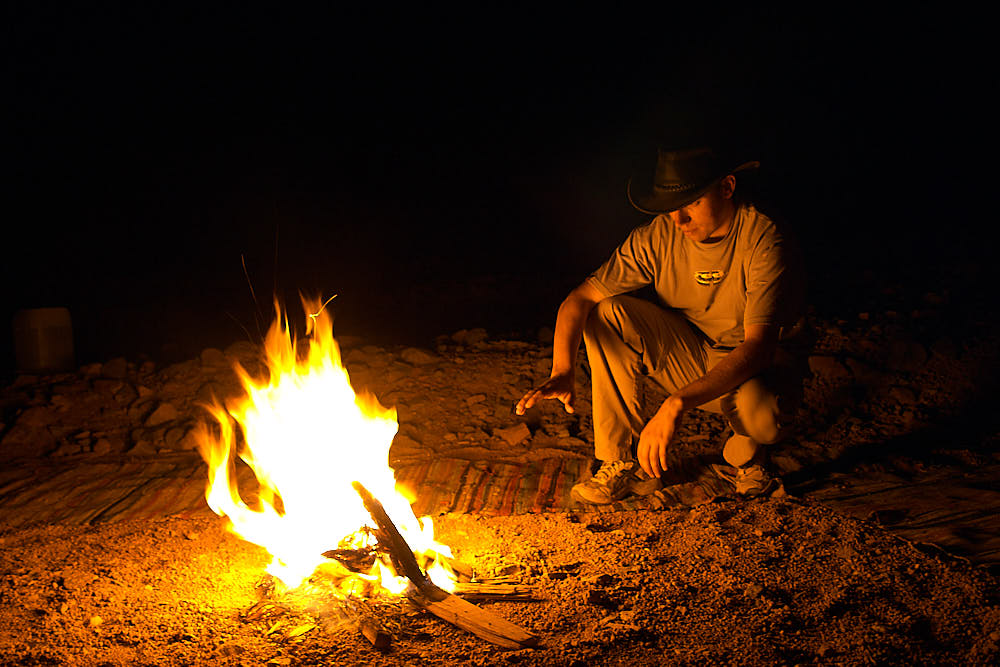
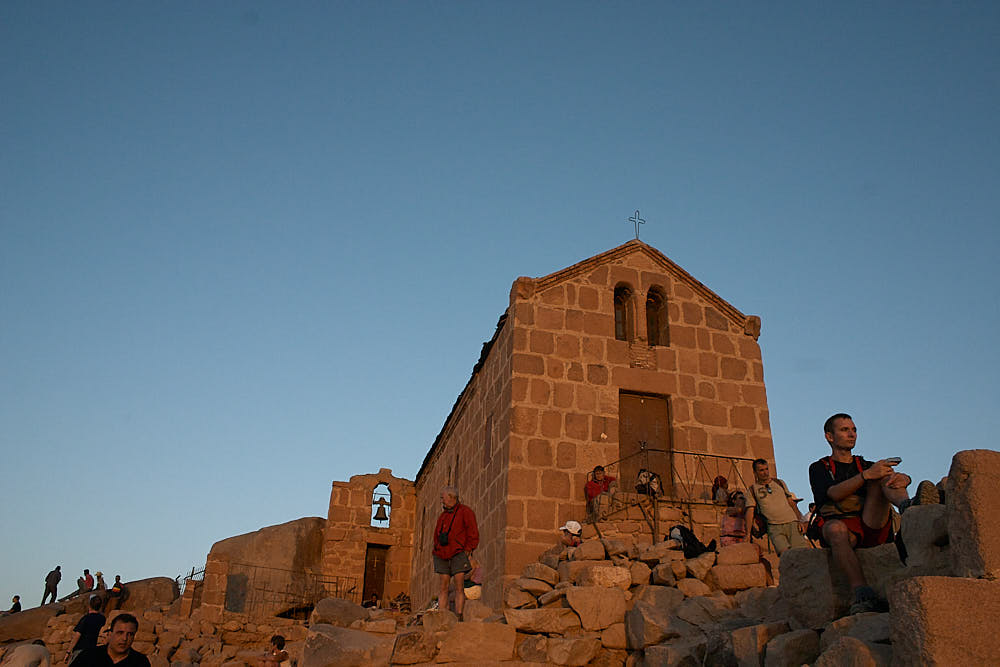
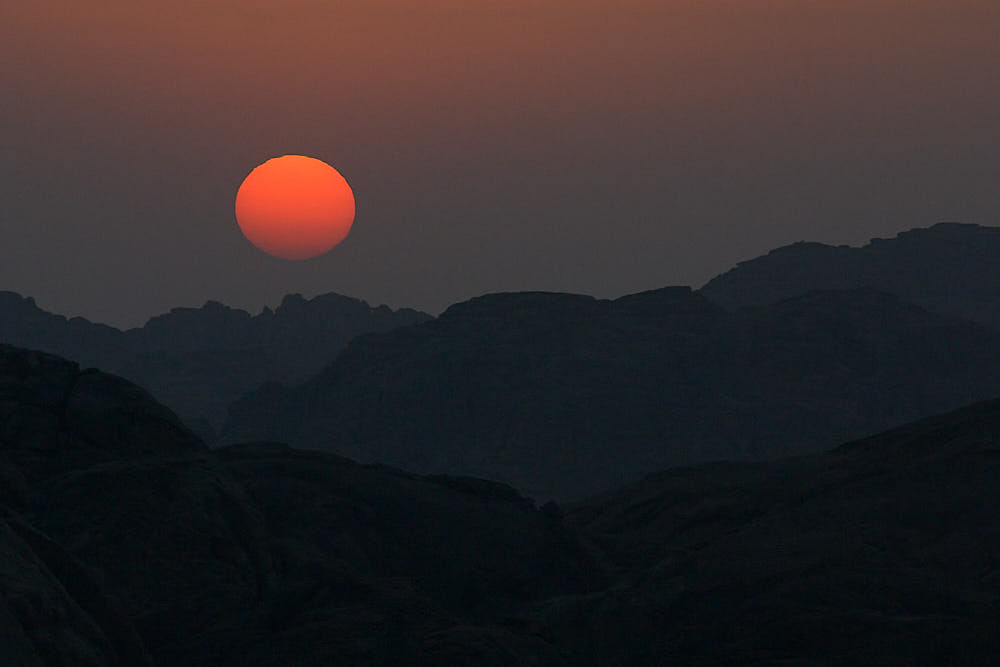
We walked along at a pretty good pace because of the time and we finally reached the summit with 10 minutes to spare. We sat down and enjoyed the sunset as we caught our breath and relaxed. It was rally beautiful and well worth the fast pace. We took a few minutes more to relax and then we had to descend again. Now one thing that we will say to all ye travellers out there – if you are going to do this hike be sure to bring some sort of long sleeved top that you can wear on the way down. It was pretty cool when we were descending what with the sun gone in and everything. Also make sure you have your torches or glow sticks as it gets pretty dark up there and watch your footing. There is a lot of rocks and scree on the slope down so be mindful of it. It took us nearly 3 hours to get back down to the valley floor. We met Garry and our other guides and had some dinner there outside in the open air. It was really nice as there was an open fire and a full moon. Everyone was pretty happy to get down and rest after the strenuous hike up and back. We listed to some local musicians playing by the fire as we finished the dinner and then we headed into town to spend the night in our Beduin camp. We went to the El Malga Beduin Camp and set up our sleeping nags for the night and turned in to get some well earned sleep.
Day 16 – 30th September 2004
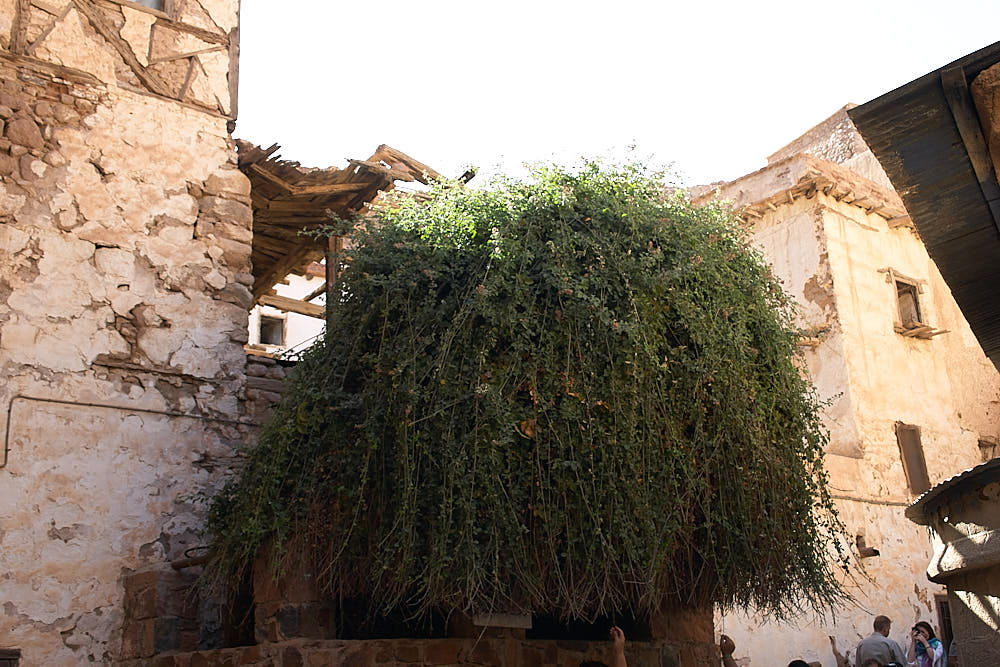
The one thing about staying in a Beduin camp is that you are up at the crack of dawn – literally. We were awake with the first rays of light – around 06:00. Now some of the team was willing to try to blot that out and sleep a little longer but some others were all eager to get up and go to St. Catherines. It was only after everything was packed up and we were ready to go that we realised that there was nothing open. So there was no breakfast for the team this morning. We had some jelly babies left over from the day before though. We arrived at St. Catherines around 08:30 to find that the place was not open until 09:00. We looked around the place and waited for the doors to open. Keith had to go back down to the van and change his shorts as we were told that he was not going to be able to get in to monastery in shorts. Once inside we saw the ‘burning bush’ and got some pictures at it. Inside there is also a museum that houses some of the relics found in the 9th century. After the monastery our next port of call was the Suez Canal.
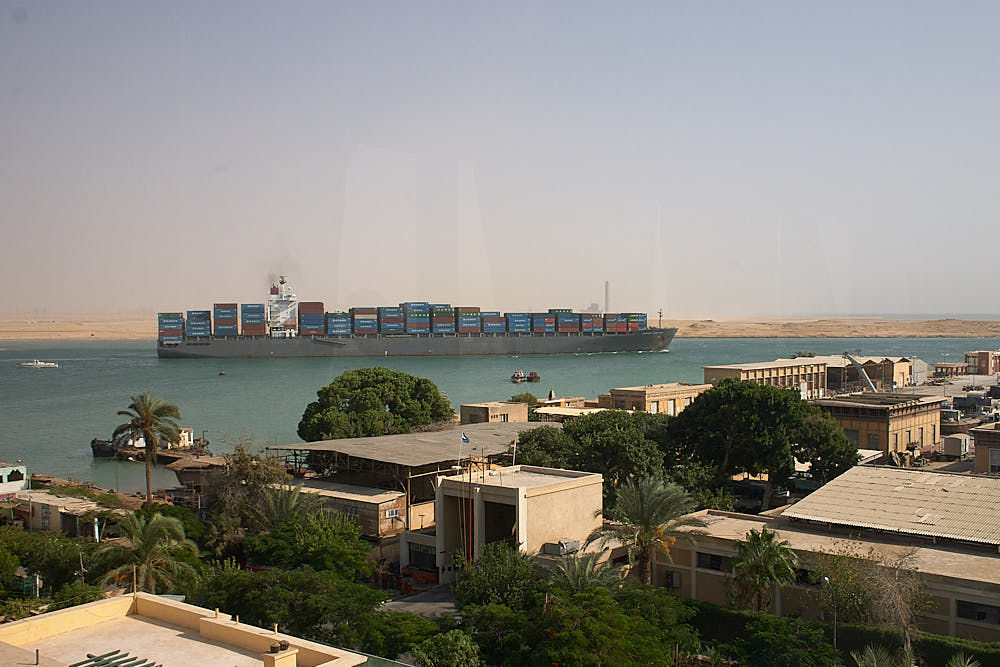
We were hoping to go to another monastery called St. Anthony’s but the roads were not as good as we had been informed and the travel time was taking long that we had anticipated. Around lunchtime we were barley at the Suez Canal. What we wanted to do was head south to St Anthony’s monastery, look around and come back north to the Suez canal point and head further north to Port Said for the night. Alas that was not going to happen. The weather was too warm and it was too hot in the van so when we got to the Suez Canal we decided to go north to where we were going to stay that night. But first we stopped off and got something to eat while admiring the view from the view – the liners going through the Canal with some serious cargo onboard. It was impressive.
The Suez Canal is an artificial waterway in Egypt, connecting the Mediterranean Sea to Gulf of Suez, and then to the Red Sea.
The canal is 163 km long, and has a width at a minimum of 60 metres. The canal is cutting through three lakes, the Lake Manzala, in the north from which it is protected with a bedding on the western side, the Lake Timsah in the middle, and the Bitter Lakes further south. The Bitter Lakes makes up almost 30 km of the total length. Along most of the length, there is only one lane for traffic available, though there are a handful of passing bays.
The canal is extensively used by modern ships, as it is the fastest crossing from the Atlantic Ocean to the Indian Ocean. Taxes paid by the vessels represent an important source of income for the Egyptian government.
After lunch we got back on the road and started to head north towards Port Said. If it is one thing that we learned from this trip it is to have a good map and a competent driver with you. The roads are not that good and the time it takes to go from one place to another is quite misleading. So try to fact in some extra journey time if you are travelling by car anywhere within Egypt.
We eventually got to a town called Ismailia and it was starting to get late so we decided to stop here and stay the night, with an early start in the morning to get to Tanis. We booked in to a hotel and got something to eat. After this we had a chat and went to bed early as we were determined to see Tanis and Rosetta the following day.
Day 17 – 1st October 2004
We got a change of van here today .The other driver was recalled to Cairo and we got the same driver that we had at the start of the trip. We knew that his van was nice and he was pretty competent in getting from one place to the next. So the plans for today were to go and see Tanis – where some of the Indiana Jones and the Raiders of the Lost Ark movie were set, then head of to Rasid – better known as Rosetta – where they discovered the Rosetta stone – and finally back across to Alexandria to spend the night.
Tanis took us some time to find and get to – mostly because all the drivers over in Egypt do not seem to have a map – we were using out map from the Lonely Planet guidebook. Well we got there at last and got out to look around the place. There were some nice statues and tombs decorating the area and we spent some time looking and searching both. Some of the lads went down in to the tombs with some of the local guards – a word of warning here – it is worth going down in to the tombs to see the glyphs and inscriptions on the walls but you better be willing to part with some Egyptian pounds for the guards troubles.
After Tanis we headed for Rasid to see where the Nile enters the Mediterranean Sea. We got there just as the sun was setting and we had left Tanis earlier that day around lunchtime. Again the time it took us to travel a short distance was very misleading and we very nearly missed seeing Rosetta.
Closely associated with the town of Rosetta is the discovery of the Rosetta Stone. The Rosetta Stone, a black basalt slab bearing an inscription that was the key to the deciphering of Egyptian hieroglyphics and thus to the foundation of modern Egyptology. It was unearthed in July 1799 by Napoleon’s army in Rosetta (Rashid). The stone recorded a decree passed by the priests of Memphis in honour of Ptolemy Epipanes (r. 205 BC- 181 BC ) on the occasion of his accession and coronation, for his bounty to the temples and the priesthood. The stone was taken to Alexandria & then to Cairo. However, following the defeat of the French fleet at the hands of the British in 1801 at Abu- Qeer, Alexandria, the Rosetta Stone was forfeited to the British, together with countless other treasures which formed the nucleus of the Egypt collection at the British Museum in London. As the original stone was moved to London, copies were sent to universities and research centres interested in Egyptology around the world.
Jean- Francois Champollion was born in Figeac, south France on December 23, 1790. At the age of 18, Champollion was well-versed in Arabic, Calidonian, Syrianic and Coptic languages. Following in-depth examination of the Rosetta Stone, Champollion came to the conclusion that he had at hand one single text in three languages. Based on his profound knowledge of Coptic language, Champollion found out that there was one text , written once in hieroglyphics, a second time in demotic, and a third time in Greek.
The stone recorded a decree passed by the priests of Memphis in honor of Ptolemy Epipanes (r. 205 BC- 181 BC ) on the occasion of his accession and coronation, for his bounty to the temples and the priesthood. The decree embodied quotations from proclamations whereby the king attempted to correct the evidently sorry conditions of Egypt at that time Rosetta – with its strategic location between the Mediterranean and the western arm of the Nile, Rosetta had been an extremely important military site since early times. The town was witness to many important events in ancient as well as modern times. It is typically tranquil and highly green town with vast gardens, orchards and date-palm plantations, in addition to a multitude of beautiful historical houses, inns and mosques adorned with exquisite decorative inscriptions and woodworks.
After seeing the rose of the Nile we headed due west to Alexandria where we were going to stay for the night and do some sight seeing in the coming days. We were staying in the Kaoud hotel.
Day 18 – 2nd October 2004
After getting up and getting a good breakfast we were going on a two and a half hour tour of Alexandria. We all agreed that it was the nicest and cleanest city of Egypt that we had seen so far. It was all the coolest – temperature wise. After seeing Alexandria we were going to go and see El Alemain and then head back to Cairo where we were going to be back in our hotel that we started the trip in – the Victoria.
The second largest city and the main port of Egypt, Alexandria was built by the Greek architect Dinocrates (332-331 BC) on the site of an old village, Rhakotis, at the orders of Alexander the Great. The city, immortalising Alexander’s name, quickly flourished into a prominent cultural, intellectual, political, and economic metropolis, the remains of which are still evident to this day.
It was the renowned capital of the Ptolemies, with numerous monuments. It was the site of the Lighthouse, one of the Seven Wonders of the Ancient World, as well as the Great Library. It was along these shores that history took a tragic turn at the time of Cleopatra, Julius Caesar, Mark Antony, and Octavian.
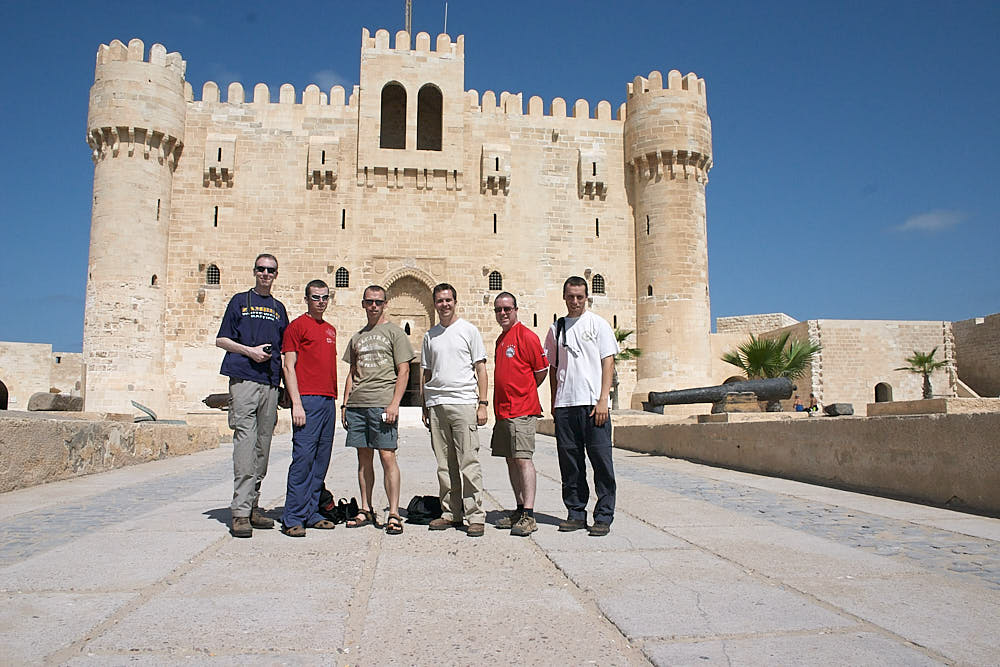
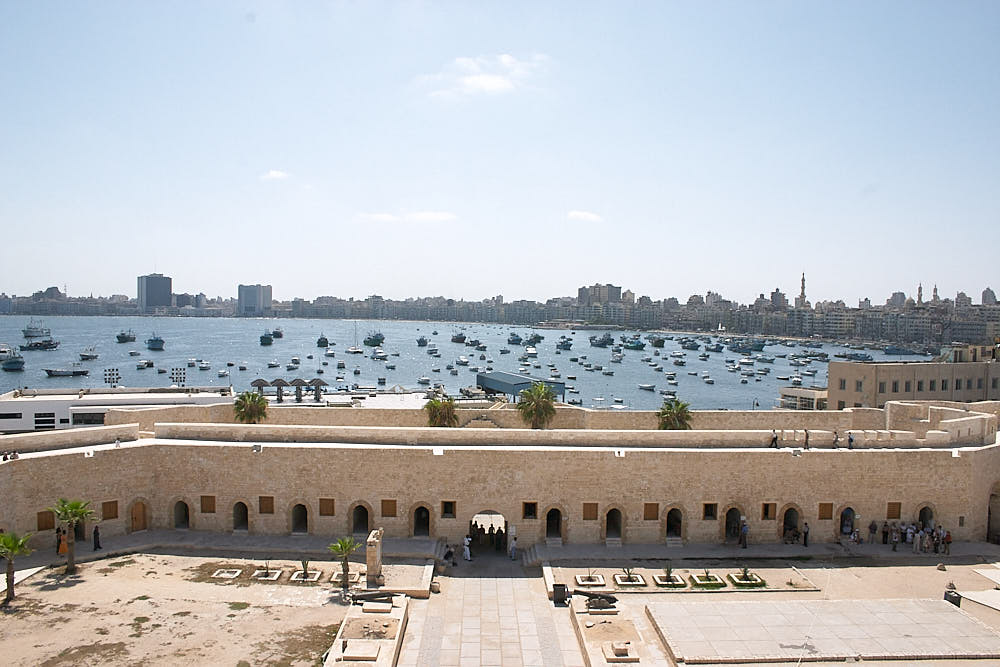
First of we went to the national museum and saw some sculptures and mosaics of Egyptian culture. Following this we headed to Qaitbay fort – a fort built on the site of the ancient lighthouse called Pharos by the Sultan Ashraf Qaitbay in 822 AD. This is where Keith was mistaken for some English football player – must have been what he was wearing. If they only knew!
The mosque in the citadel – considered the oldest in Alexandria. It is of the school type. It is a square within the arches recess being assigned to one of the four sects of Islam. The floor and the steps leading to each recess are inlaid with coloured marble tiles.
We then passed by the new library from the outside and headed on to see the Roman theatre. It was here that Derek and Keith got their busts of Alexander. Then we saw Popey’s Pillar and then McDonalds for some good food!
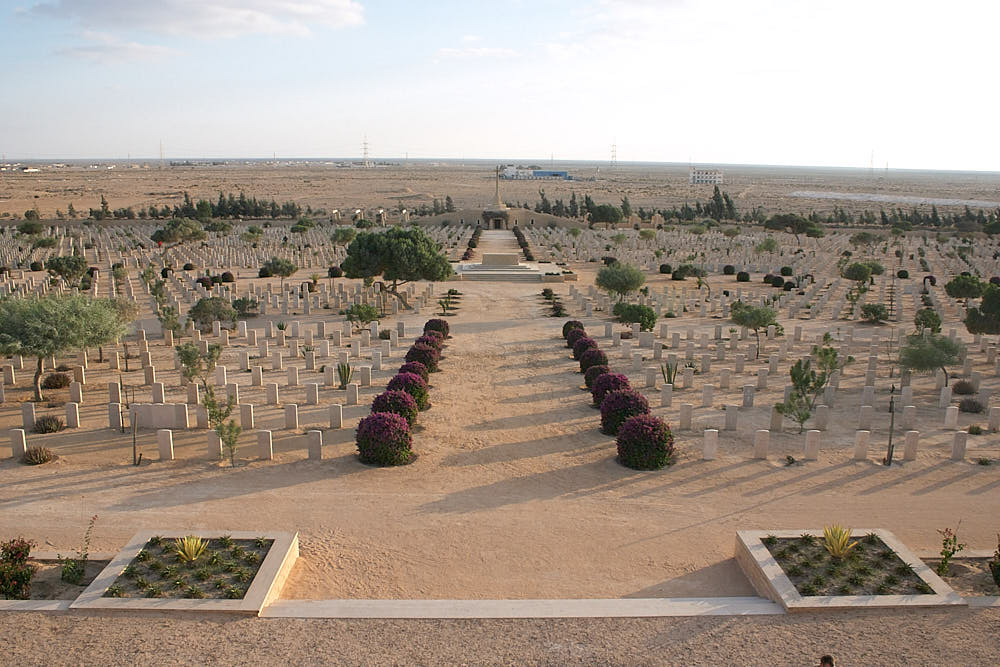
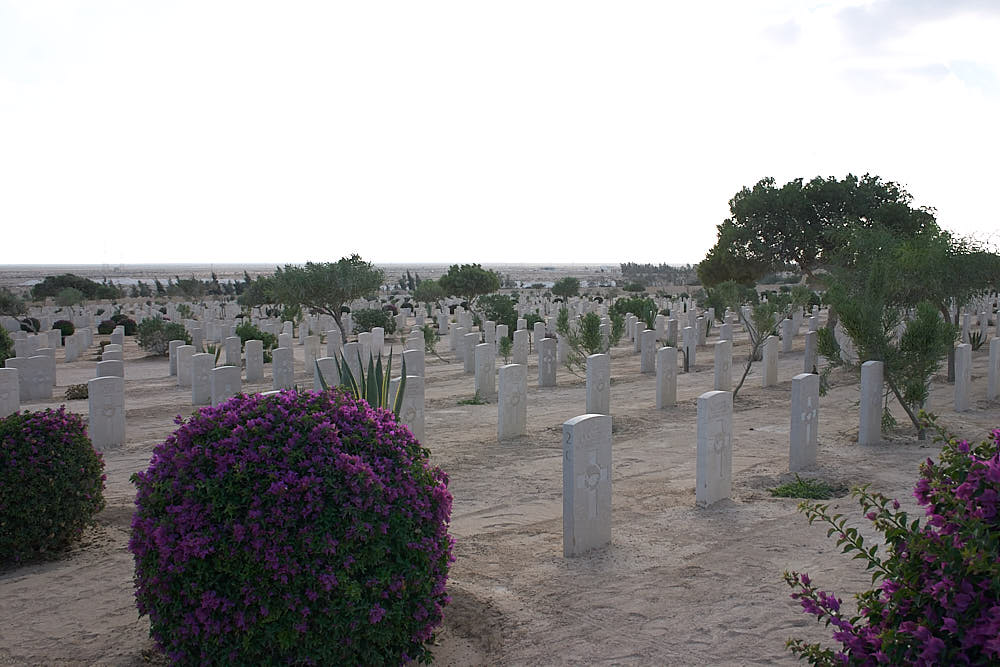
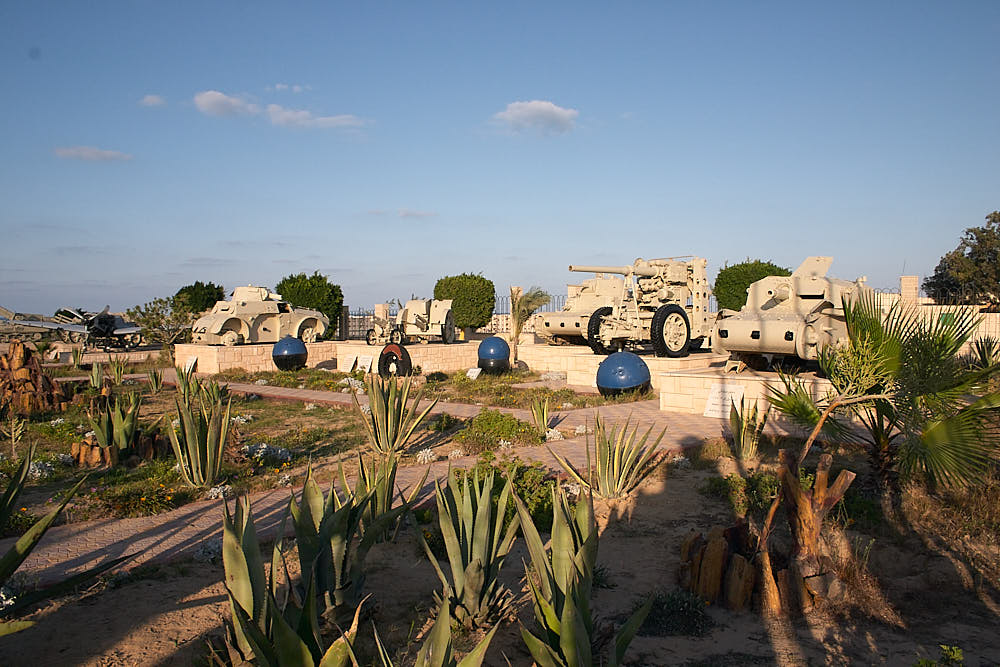
That afternoon we went to El Alemain. Elamein Museum is located in El Alamein, 130 kms West of Alexandria. The museum includes four main halls representing the countries that participated in the El-Alamein Battle: Germany , England , Italy , and Egypt and a joint hall exhibiting weapons and tanks which were used in the battle, and paintings representing war scenes representing the manoeuvres of the battle and Egypt’s role during the war.
During World War II, the British Eighth Army, under General Bernard Law Montgomery, fell back to Al ‘Alamein in June and July 1942 after being defeated by the Germans and Italians at Tobruk, Libya. On October 23, 1942, Montgomery initiated a successful offensive against the German Afrika Korps under General Erwin Rommel. Costing tens of thousands of casualties, this battle proved to be the turning point of the war in North Africa.
After this we headed back to Cairo and stayed in the Victoria Hotel for a few hours. We had 6 hours to repack everything, get something to eat and get up and head to the airport.
Day 19 – 3rd October 2004
We got up at 04:30 and headed to the airport to get our flight to London and from London on to Shannon. No problems heading home – everyone was tired and resting on the plane to get some sleep. Arrived back in Ireland and got a lift home where the only thing left to do was pay off this latest adventure!
So this trip saw the team searching for the Ark of the Covenant -and rumour had it that it was supposedly in Axum at a festival called “Timkat”.
The trip starts will a flight to Addis via London and Alexandria in Egypt. A long first day of travelling to get to our destination. From Addis we head to Lake Tana, Bahar Dar, Gondar and Lalibela.
Following on from this we join in the festival of timkat in Axum before going to the Simean Highlands to looks for the Gelada Baboons. Then it is back to Addis and return home to Ireland.
Day One: January 13th – Irleand/Addis
Early start… got up at 5:30am – now I know that I am going on another epic trip. The taxi got to my place at 6 and we got to Derek’s around a quarter past. He was ready with the camera and recording as I was somehow drafted in to carrying his 100 litre rucksack and dumping it unceremoniously into the back of the taxi. Arrived at the airport for half 6 and paid the taxi man. We checked in and checked our bags through to Addis and got on the flight. Arrived in London at 09:10 and the connecting flight was 13:10. We went to Garfunkels restaurant and got some breakfast there while decided where we were going to go whilst waiting for the flight details to be posted. Mike – the third member of the team – was flying in from Dublin so we were waiting for him before proceeding on to Addis. The flights to Addis was delayed till 16.15 with no reasons given and no gates posted. Mike arrived shortly before 11 and we sat down and chatted for a bit. We had some good magazines to read courtesy of W.H. Smiths in the duty free. We got something to eat around 13:00 hours as we had brought some packed lunches with us. The gates was posted shortly after that and we proceeded down to our gate and awaited boarding. Unfortunately the plane was delayed another hour before taking off so we finally got air borne around 17:15 that day – 4 hours after the originally stated time on the tickets. Thankfully we are patient men and the waiting around was not that bad. The flight to Alexandria (our one stop over location) was approximately 5 hours. We got some food on the plane as well a movie – Without a Paddle. We arrived in Alexandria at local time of 00:15 on Friday morning. We sat in the plane for 45 minutes while the new guests came on and the plane was refuelled and then flew on the Addis. The flight time was approximately 4 hours to get to Addis and we landed around a quarter past 5 in the morning – local time.
Day Two: January 14th – Addis/ Bahar Dar
After flying all night literally, we had to run to get a VISA to enter the country. The cost of the VISA was 20 USD that you pay upon entrance and exiting the country. After getting the VISA we were met by our local guide in Addis, Frank. He rushed us to the check in desk so that we could get our connecting local flight to Bahir Dar at 07:00. Time was running out. We just made the flight and also had to pay 30 bir – 10 bir a head – for airport taxes. This is a tax that exists on internal flights only. We did not have any local currency on us but our guide was good enough to front us the money.
A 55 minute morning flight takes you to Bahir Dar, an attractive town with tree-lined avenues and the deep blue lake in the background. We arrived in Bahir Dar at 08:30 and were collected from the airport but a local. Transfer to the hotel was approximately 30 minutes as the roads were not that good there albeit only being less than 30 km away. The hotel – the Ghion – was located on the shores on Lake Tana. Lake Tana is Ethiopia’s largest lake and is dotted with islands. Many of these islands are the sites of churches and monasteries.
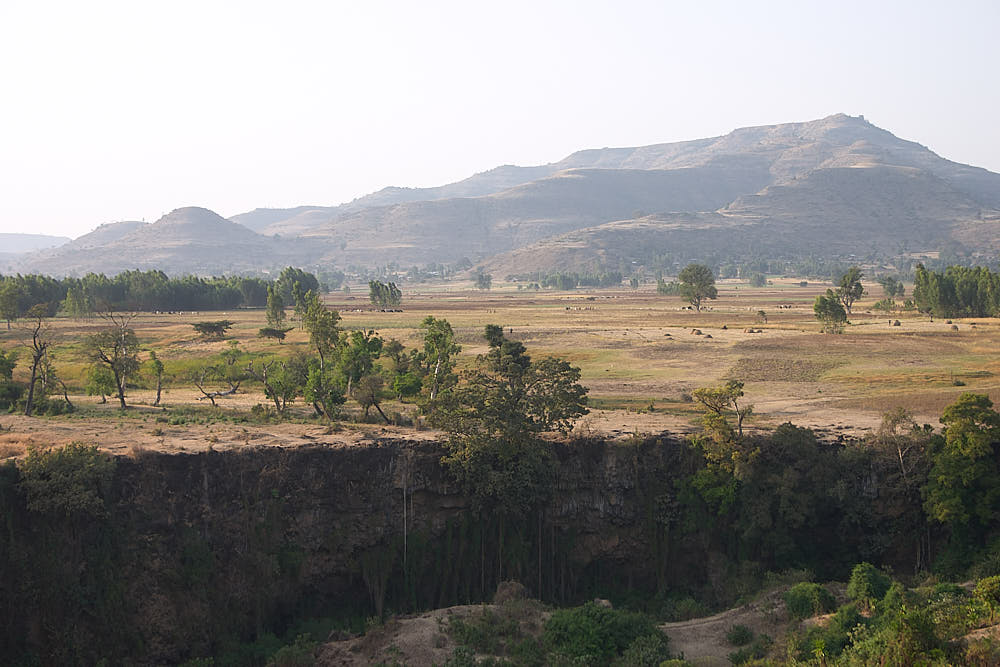
After checking in and meeting the owner of the hotel, a man named Bizrat, we proceeded across to the bank and changed some of our American dollars. The exchanges rate was 8.256 bir to 1 USD. Exchanging money in the bank was straight forward and the receipt that you are given is required at the end if you wish to change anything bir back to USD upon exiting the country. You can also pay your export tax is bir. After lunch, we took an excursion to the Blue Nile Falls (Tisisat Falls) with a private mini bus, about 30 km from Bahir Dar. The river Nile, over 800 km in length within Ethiopia and the longest river in Africa, holds part of its heart in Ethiopia. From Lake Tana, the Blue Nile, known locally as Abbay, flows to meet the white Nile in Khartoum, to form the great river that gives life to Egypt and the Sudan. It has been said that the Blue Nile contributes up to 80% of the Nile’s flow. Nowhere, is it more spectacular than where it thunders over the Tisisat Falls, literally “Smoking Water” – near Bahar Dar. Here millions of gallons of water cascade over the cliff face and into a gorge, creating spectacular rainbows, in one of the most awe-inspiring displays in Africa. They are Africa’s second largest waterfalls. No longer as spectacular as they once were due to the hydroelectric power plant filtering power from the once great river, the area in around the falls are scenic and abundant with endemic wildlife. We saw some baboons near an old 16th century Portuguese bridge, kingfisher birds hunting for food near the falls and a local bird called a francallin. Over night at the Ghion hotel on the shore of Lake Tana.
Day Three: January 15th – Lake Tana/Monasteries
We got up around 07:00 to get some breakfast before head out on the beautiful lake Tana. Lake Tana, the largest lake in Ethiopia, is the source of the famed Blue Nile. From here, the river starts its long journey to Khartoum, and on to the Mediterranean.
The 37 islands that are scattered about the surface of the lake shelter fascinating churches and monasteries, some of which have histories dating back to the 13th Century. It should be noted that most of the religious houses are not open to women. The most interesting islands are: Birgida Mariam, Dega Estefanous, Dek, Narga, Tana Cherkos, Mitsele Fasiledes, Kebran and Debre Maryam.
Kebran Gabriel is the principal monastery visited by male tourists from Bahar Dar, with its impressive Cathedral-like building, first built at the end of the 17th Century. Dega Estephanos, which is also closed to women, is on an island in the lake, and the monastery is reached by a very steep and winding path.
Although the church is relatively new (one hundred years old), it houses a Madonna painted in the 15th century. The treasury of the monastery is a prime attraction, with the remains of several Emperors, as well as their robes and jewels. On the banks of the lake are many more religious houses, such as Ura Kidane Mehret and Narga Selassie, many of which are also open to visits by women.
We departed by boat for the Zeghe Peninsula, known for its 14th century, round, grass-roofed churches with their magnificent wall murals. We visited two, Ura Kidane Mehret, walking through dense forest with prolific bird life and visited the out let of the Blue Nile where the river emerges from Lake Tana. There was a chance of seeing hippo’s in the area but alas that was not meant to be. We spotted some grey herons, cormorants, kingfishers and a lone fish eagle. After lunch, we explored Bahir Dar, including the market and a visit of the Palace of Haile Selassie at Bizawit hill and the Weyto village. Here we got a first hand experience of making Injera, the sourdough pancake-like bread of Ethiopia. We stayed ver night at the Ghion hotel on the shore of Lake Tana.
Day Four: January 16th – Bahar Dar/Gondar
This morning we slept in and got some catch up sleep after the trip from London and the excursions of the previous day. We got up at 09:00 and got something to eat. During the course of breakfast Kevin spotted the fish eagle flying over the hotel heading in to the trees nearby. So after breakfast the team headed down to the waterfront and started to look for this magnificent bird. We located him soaring him on the thermals surrounding the lake – too high to get a clear picture.
Patience was one things that we are good at so, we sat down and waiting for the bird to come to us. The eagle finally landed on some rocks out on the lake that were closer to us than the soaring heights of the bird from earlier. We got some nice pictures of the bird and determined that she was rebuilding the next in preparation of nesting there soon with a brood of chicks. We transferred to the airport and checked in for our 20 minute flight to Gondar. The flight was originally set for 08:30 but was delayed till 13:30. We found that it was necessary to confirm all flights 24 hours before departure. Again there was a local 10 bir tax per head per person for flying and that was all. We waited in the restaurant for the plane to land. It was a Fokker 50 airplane and we saw it coming in with questions from Addis. The plane dropped its guests off, refuelled and took us to Gondar.
Gonder was the 17th Century capital of Ethiopia and is notable for its medieval castles and churches. The City’s unique imperial compound contains a number of castles built between 1632 and 1855 by the various emperors who reigned during this period. These dramatic castles, unlike others in Africa, display a richness in architecture that reveals the Axumite traditions as well as the influence of Arabia. Other treasures of Gonder include the 18th century palace of Ras Beit, the bath of Fasilades, the ruined palace of Kusquam, and the church of Debre Berhane Selassie with its unique murals.
We arrived at the airport and were met by our new guide, Danny. He collected us and took us to the hotel to drop off our bags and start the afternoon of sight seeing. The flights to Gondar had been delayed and therefore the morning trip scheduled for us needed to be squashed in to the afternoon with the other activities. First of all we went to see the Debre Birhan Selassie church. There are very interesting murals on the walls inside and grounds outside are surrouded by vultures!!.
Next we went to see the Imperial Compound, with the enchanting ‘Fasalidas’ castles. The main castle was built in the late 1630s and early 1640s on the orders of Fasilidas. The Emperor, who was greatly interested in architecture was also responsible for seven churches, a number of bridges, and a three-storey stone pavilion next to a large, sunken bathing place, rectangular in shape, which is still filled during the Timkat season with water from the nearby Qaha river. This was the next stop on our flying tour for today.
Flanked by twin mountain streams at an altitude of more than 2,300 meters Gondar commands spectacular views over farmlands to the gleaming waters of Lake Tana thirty-five kilometers to the south. Our hotel is set is on a hill with a panoramic view of the town and its monuments. Stay over night at the Goha Hotel.
Day Five: January 17th – Gondar/Lalibela
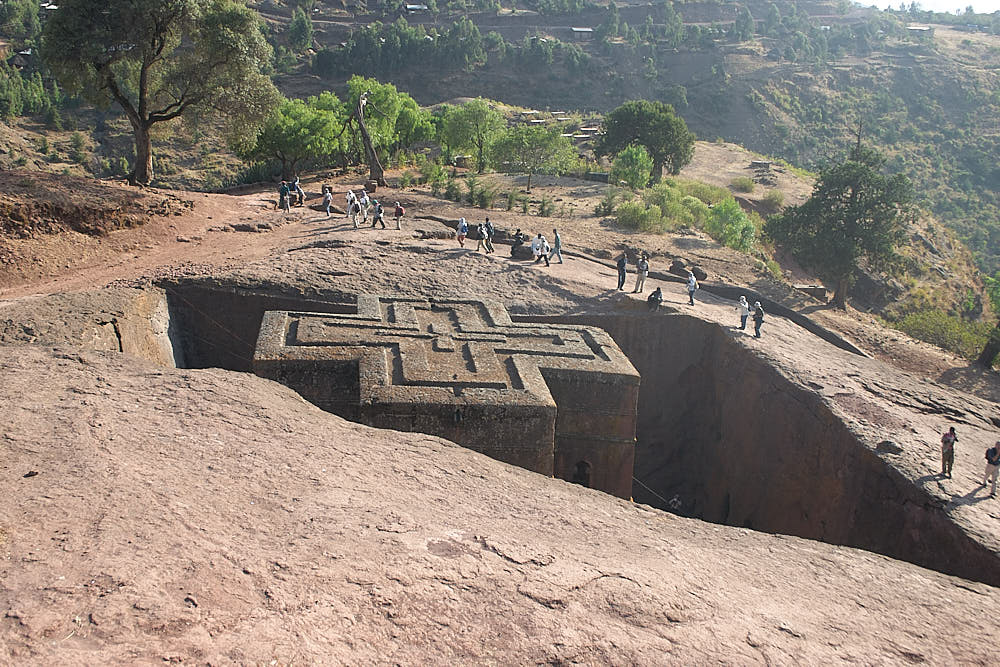
We had an early start this morning as the flight was at 08:30. We got to the airport around 07:00 and checked in our bags. After paying the 10 bir per head travelling charge we looked around some of the shops and did some internet at the airport before boarding the plane. The plane arrived on time and refuelled before starting on the journey to Lalibela. At the end of the 12th and beginning of the 13th centuries, King Lalibela of the Zaghwe dynasty built a series of rock hewn churches, rightly acknowledged as one of the wonders of the world. We were collected from the airport by a local tour guide. He transferred us to the hotel for around 09:30 and we checked in to the room. There is a shortage of water in Lalibela so the running water in the hotel was switched off from 10:00 in the morning to 18:00 in the evening. We rested at the Roha hotel and awaited instructions from our guide. The instructions were a long time in coming.
We decided to take a walk down the road outside towards town and have a look in some of the shops and see what the locals were selling. We came back to the hotel and got some food in the restaurant for lunch. The hotel also sported a camp site outside and this was full due to the timkat festival about to start on the eve of the following day. After lunch we toured 8 of the 11 rock hewn churches. The first 7 were on the north side of town. Upon entering a church, the tourist was asked to remove his or her footwear as a mark of respect. Some guide books made reference to the cleanness of the carpets on the floors in these churches so as a mark of caution it was advised to wear at least one if not two pairs of socks for the durations of the church viewing.
The most famous of the churches was St. Georges – the last church that we saw for the day. Our flight for the following day was scheduled for the afternoon at 14:30. The travel agents notified us that the flight time had changed and it was now departing at 08:30 and check-in was at 07:00. This evening we looked around some more shops and purchased some statues and drawings of the churches in Lalibela before retiring to bed.
Day Six: January 18th – Lalibela/Axum
We got up at 06:00 as transfer to the airport was for 06:30. The transport was late and we arrived at the airport for 07:15. The airline attendant was not impressed with our tardiness. The flight was delayed so everything was ok. We flew to Axum – duration of 50 minutes, once one of the four great powers of the ancient world. After arriving at the airport we were met by our guide and transferred to the hotel. The guides name was See-sayid. He told us that he has worked with the archaeologists for 5 years and was working in the tourist trade for the last 3 years. We dropped our bags at the hotel and departed to see some of the sites of Axum. The hotel was really nice but the beds were really hard. We saw the remarkable stelae or obelisks, the largest single pieces of stone standing anywhere on the world. One of the stelae that was on show in Rome was due back in the country at the end of the month – January.
We also saw tombs and castles of former monarchs, the Axum Museum and the Mariamtsion Church, built on the site of Ethiopia’s first church. A chapel within the church compound is believed by Ethiopian Orthodox Christians to house the Ark of the Covenant, or the original tablets of Moses. Our tour started with a visit to the museum and the stelae. Then we ascended a hill to see the castle of King Kalab, passing Mai Shum (the bath of the Queen of Sheba) on the way. Coming back into town, we saw the tomb of King Basen, visited the small museum inside the church grounds, and at the end of the day we visited the site known as ‘Queen Sheba’s Palace’ (although it is, in fact, the villa of an Axumite notable from around the 1st century AD).
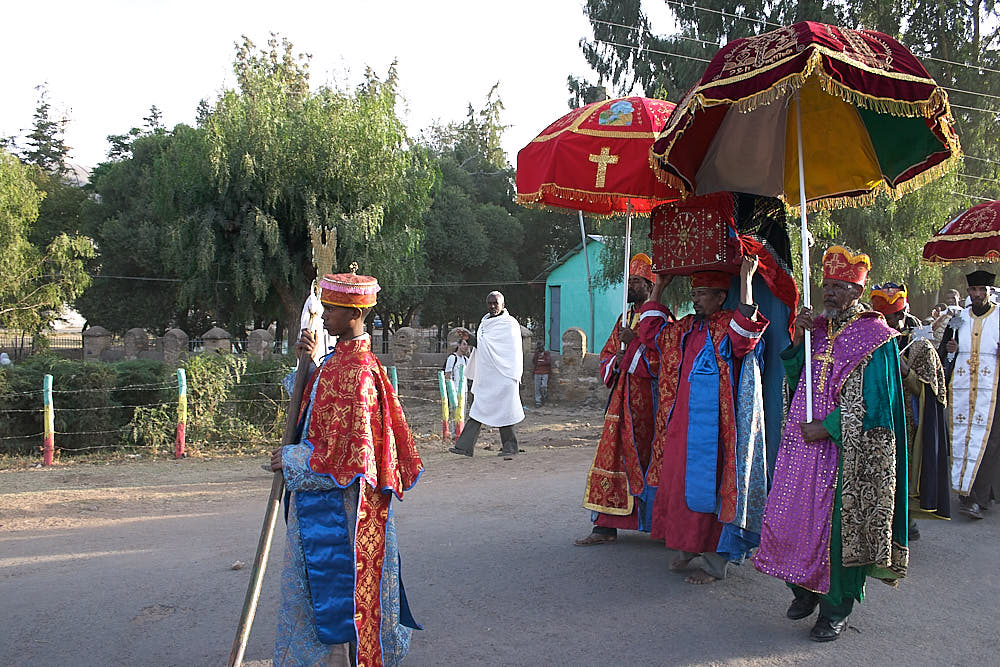
On the eve of Timkat, with great ceremony, the sacred Tabot – a replica of the Ark of Covenant that sanctifies and sits on the altar of every Ethiopian Orthodox Church inside the Holy of Holies – is taken from each church and held overhead by a priest up to the central area where the ceremony takes place. The procession started around 17:00 in the evening. The ketera (priests), debteras (deacons) and the entire congregation remove the tabot (symbolising the Ark of the Covenant containing the Ten Commandments) from each church, and take it on a deeply atmospheric march to a pool of water or river, which is blessed for the next day’s celebration. The keteras wear splendid ceremonial robes of velvet and satin and are shaded by elaborately sequined velvet umbrellas. As they advance, they shake sistras (religious bells) and swing bronze censers from which great wisps of incense smoke escape into the air. The Tabot, carried on the head of one of the priests, is cloaked in layers of rich cloth to protect it from the gaze of the impious. We stayed this night in the Remhay Hotel Axum.
Day Seven: January 19th Axum/Timkat
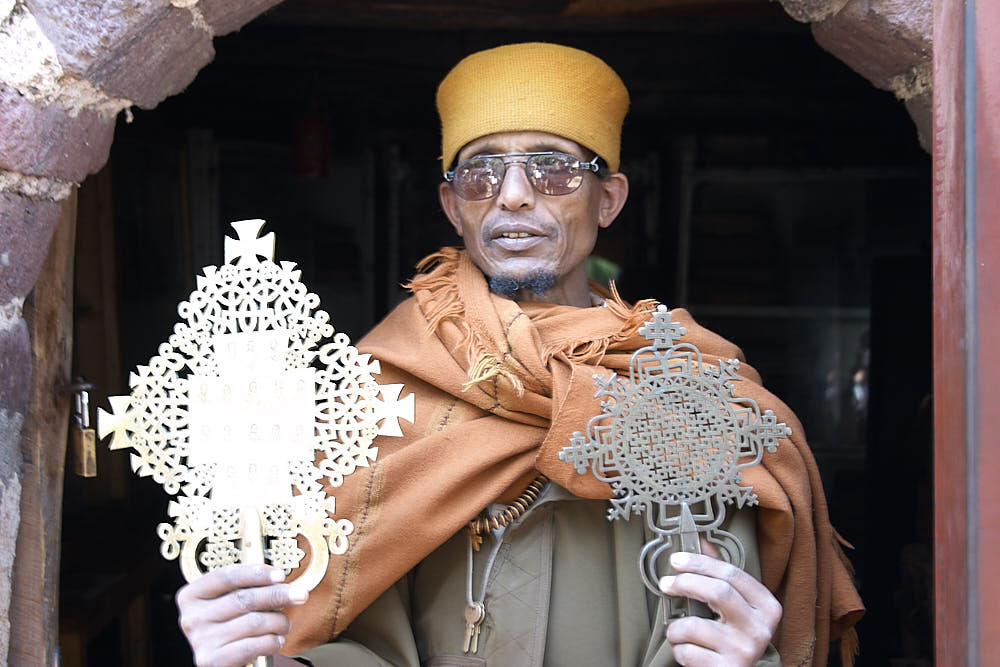
We got up at 07:00 and got breakfast. We were collected from the hotel and transferred to the baths where the water was to be blessed for Timkat – the celebration of the Ethiopian Epiphany. Timkat is a three-day affair. During these colorful occasions, priests are bedecked in dazzling brocade robes, carry ornate hand crosses, and move under decorated umbrellas. They chant to the accompaniment of solemn drums and rhythmic clink of sistrums. Tabots are then carried back to their place on the second day that is January 19 except St Michael church “Tabot” which is on the third day January 20. We watched the priests bless the water and the local people swarm in and gather it to bless themselves. We observed the locals baptise themselves and others with the holy water and then follow the procession back into town and the resting place of the Ark.
The afternoon was spent looking for souvenirs of the Ark. There were plenty of shops open and willing to do business with us. Findind a replica of the Ark of the Covenant proved a little harder that we thought though as there was nothing there that looked like that Ark from the Indiana Jones movie!!. Eventaully after much walking and window shopping suitalbe souveniers were purchased for the return journey with us. We stayed in the Remhay Hotel Axum again this night. They have the best pancakes on offer anywhere in Ethiopia.
Day Eight: January 20th – Axum/Simean Highlands
We got up at 06:30 and got something to eat and then started the long drive to the Semien highlands. The distance was not that great – 240 km to De Bark and another 36km to the camp site for the night. The roads however were not up to scratch and so the drive was a long and slow process. We stopped in a place called the Shire around 9 that morning to get something to drink and break the journey. After getting a rest there were proceeded on to the next stop and town – around noon. We stretched our legs here and got a little rest. The place was busy with some other tourists but it was mostly locals that crowded the streets. Then we drove through Tekeze and the beautiful scenery of the Semien Mountains. We came upon a bus that nearly went off the road later on this day. The gravel of the road provided poor traction for the tyres on the steep descent and nearly proved fatal for the travellers in the bus. Luckily no one was hurt but it was an eye opener to anyone on how easily the accident could have happened.
We proceeded on to De Bark – the town outside of the national park from where the guides are hired for the hiking experience. The area in around De Bark was very rich and fertile and the land was greener and more scenic. We collected a guide from De Bark as well as an armed escort. This was a requirement upon entering the park. In case of an animal attack, a group of hikers must have an armed guard in their procession for safety reasons. We spent an hour getting food and supplies before heading in to the park. We entered the park around 16:30 and arrived at the camp around 18:00. It was just starting to get dark so we pitched the tents and got out our fleeces as the altitude was over 3,100 metres above sea level. We went on a short walk around the local area and got our bearing before returning to the camp fire for the night. We got some soup and pasta for dinner – eaten beside the campfire. After dinner we retired to the tents and got some sleep as we were scheduled to be up early the following morning to go on a 5 hour walk.
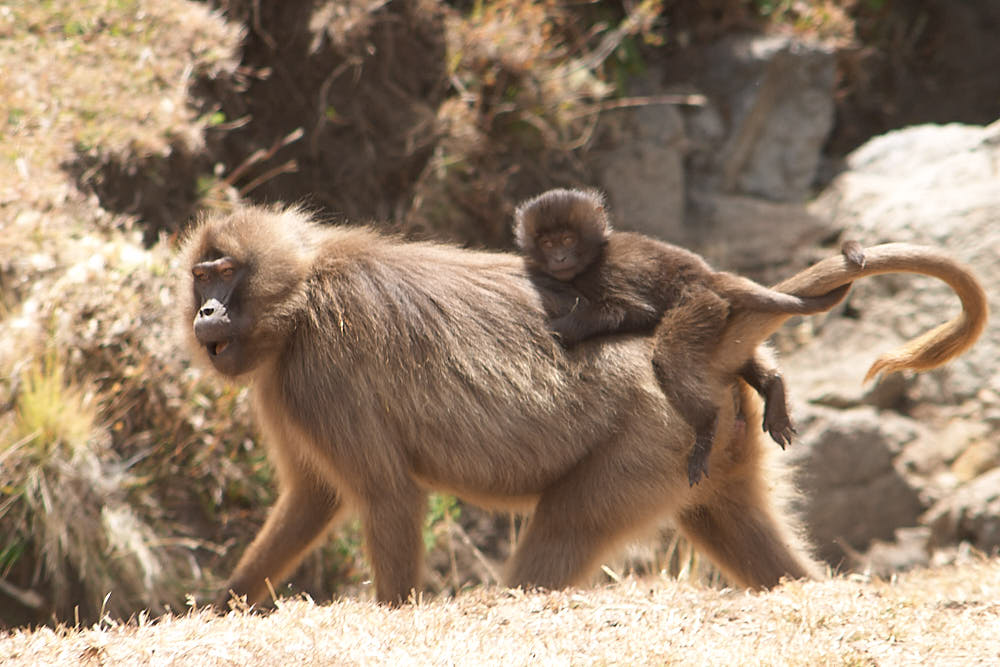
Day Nine: January 21st – Simean Highlands/Gondar
We got up around 06:30 and looked around the camp. It was early but there was some activity around the place. The cook was already busy working on getting food ready for some of the early hikers. We got some omelettes for breakfast and then got our gear together and started to head out on the hike. The first bit of wildlife that we saw was three francallin. They were by the road side and escaped in to the bush. We could hear them calling to each other for the rest of the day but they are a bird that is very hard to view. They grey/brown colour fades into the local landscape very well and acts as a superb camouflage. We walked along the rim of the valley and saw some spectacular scenery below us. Spotted some more wildlife as well in the form of the fox kestrel, the lammergeyer buzzard, the white capped plover, and the bushbuck antelope.
In around noon we happened upon some Gelada Baboons foraging for food in the midday heat. We departed the park and left for Gondar in the afternoon and got back around 16:30. There was a problem with the hotel and bookings so we spent the night in the Guara hotel inside in the centre of town. The trekking in the mountains had left us with some sub burn as we forgot to put sun screen on us when we went out walking that morning. It was a big mistake and something that we will know better of in the future.
Day Ten: January 22nd – Gondar/Addis Abiba
We were not leaving till 15:10 so we transferred to the airport at 11:00 as that was the check out time from the hotel. We rested at the airport and awaited the check in desk to open. We flew to Addis. There was a cultural show to see for some of the members of the team here. Kevin went to bed early to get a good nights sleep as we were up early to get a transfer to the airport and go home.
Day Eleven: January 23 – Departure/Arrival
Collected at 03:30 and transferred to the airport. We paid the exit tax of 20 dollars in bir to get rid of some of the last money that we had. The bank at the airport was not open at this hour of the morning so we could not change the local money that we had back to USD. The duty free would not accept the local money either so we had to spend it in some of the shops in the airport that would accept bir.
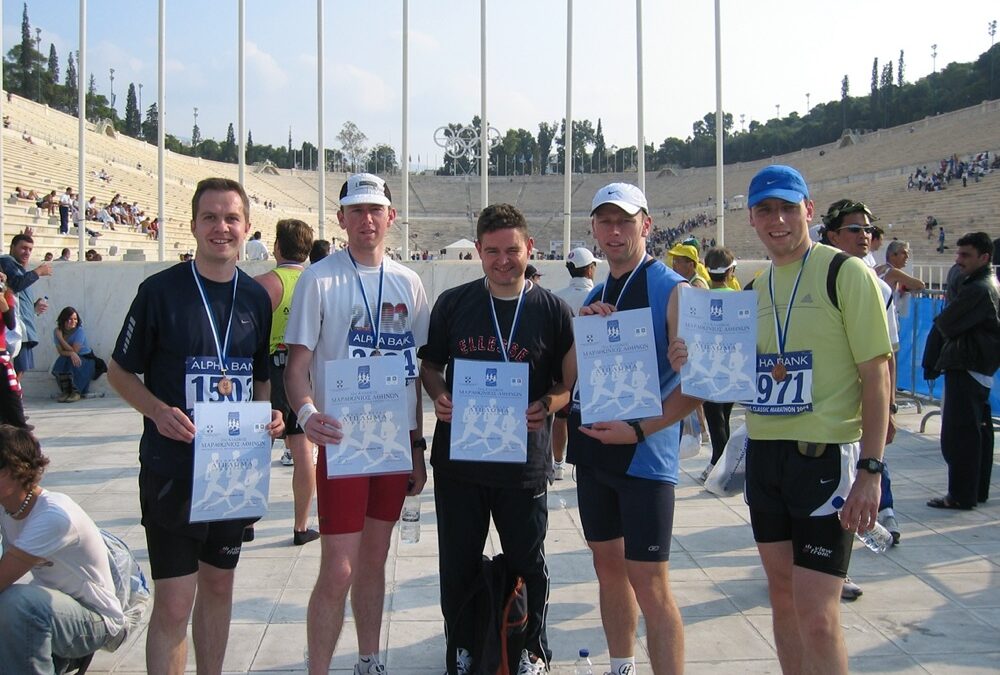
November 05th – 13th, 2004
Just over a short week in and around the Athens and the main island. The trip starts with a few days in Athens to complete the marathon before heading North to Meteora.
After visiting the monastery we head to the island of Zakynthos for some sight seeing and then back to the main land before heading south towards Athens again.
We stop on the way at Delphi and visit Athens for a final day before heading back home to Ireland.
Day One – 5th November 2004 – Departure/Arrival
Ok so we are off again on another trip and nothing says you are on an epic trip like an early start. So we are up at 05:00. Oh yeah, early start. We had an early flight out of Shannon to London Heathrow at 07:40. We packed the gear bags with the runners and running gear as well as some lucozade and fig role bars and then got in the taxi at 05:45. We left for the airport with a stop off to collect another companion – Derek. We got to his place at 06:00 and arrived at the airport at 06:30. We checked in then and proceeded to the duty free lobby where we met another two of our friends – Eamonn and Bryan. Now we had everyone. We could get on the plane and head to Athens to partake in the original marathon – the race from the town of Marathon to Athens city centre finishing in the stadium.
In the terminal in Heathrow as we proceeded to our departure gate we happened upon a Christmas time – now for this time of year it was a little strange and early so we got a few pictures and then headed on to the gate. The in flight movie was The Terminal with Tom Hanks and Catherine Zeta Jones. It was a good show and worth a watch. We landed in Athens Airport at 18:00 hours and got through customs and baggage reclaim by 18:45. We then headed to the train platform that would take us to the city centre. Another friend of ours – Chrysa, was meeting us here. I remember well Dereks word as we waited for the tickets to be bought “Lovely country this! A very welcoming people!”
We bought a group ticket that allowed three people to use the ticket to get to the city centre .It was cheaper than getting single tickets and the student cards only work for students from the local universities and not international students. Train time to the outskirts of the metro took about 30 minutes and another 15 minutes to get to our metro stop. After we made our way to the city centre we got off at Syntagma Square. This stop – on the blue line – dropped us just outside the Parliament house. We then walked down to our hotel for the next two days – Hotel Amalia. We checked in to the three rooms – Eamonn and Bryan. Derek and Paddy and Mike and Kevin. We then proceeded to get something to eat – we got the metro to Metaxourgio and walked from here to a good Italian restaurant chain called La Pasteria. The lads all got some pasta into the system for the upcoming marathon on Sunday morning. There was a really good dessert that was a chocolate brownie smothered in chocolate sauce – Eamonn was the only one that could finish it – the man.
Day Two – 6th November 2004 – Sightseeing/Registration
9:30am and everyone is up. The lads are going sightseeing as that is thing to do when it Athens. Kevin meets some friends for coffee and Derek has a meeting with some esteemed colleagues. Eamonn Mike Paddy and Bryan head to the Akropolis to look around and see Athens from a height. The day is cloudy but dry and the temperature is probably around 19 degrees Celsius with a high humidity factor. Atop the Akropolis there is the temple of Athena – the Parthenon. This allows a great panoramic view of current day Athens. There is a museum with plenty of greek artefacts housed within – including a head of Alexander. Nearby there is a street that is a running track – accommodating some nice little coffee houses that are very famous in Athens.
The afternoon is spent finding the Caravel Hotel so that we can register for the race the following day. Unfortunately the location does not have ant sort of expo for the runners to look around and purchase goods. We arrived at the hotel; we got our champion chip, t-shirt, towel and number. Then we headed to Kolonaki in order to get some more pasta. There was a nice statue of a running man – which we named Dave – made of green glass – and he was moving fast!!
Around 3pm we finally got a place to eat in the Pasteria restaurant – seemingly 3 in the afternoon is prime time for the greeks to have their lunch – and the restaurants are pretty full at that time. We got a good feed of food and then met another friend of ours – Fay. We headed to the supermarket and got some provisions for the following morning – namely energy drinks and chocolate and bin bags – something that was going to keep us warm at the start line while we waited for the gun to go off.
Later that evening we went to a nice coffee place near Syntagma square and had a coffee with another two friends of ours – Athina and Yanni. We chatted and talked and went home to bed nice and early as we had an early start the following morning.
Day Three – 7th November 2004 – Marathon Day
An early start – up at 05:30 and the restaurant was not open so we ate what we bought the day before in the supermarket. The buses were leaving from the finishing stadium between 6 and 6:30 am so we had to be sure to be on one of these buses. We walked form the hotel to the stadium and it was less than a ten-minute walk. It was cold out but we had our bin bags so we were not too cold. We got on the bus and headed to Marathon. It took over an hour to get to the start line – 42 km away. We travelled the route that we would be running less than three hours later. We looked around at the start line but most people took shelter in a building near the back of the running track. Toilets were accessible here and the potential to warm up and loosen out muscles. We lined up a little after 09:00 and at 09:30 the gun sounded and close to 2,500 people started on the long journey home.
The official deadline for runners to finish and receive a medal was 6 hours. We traversed the course with style and panache with hails of “Calimera” to the local supporters that were out to see us on our way. Eamonn did a great run and a personal best of 3 hours 20 mins. Bryan was closer to 4 hours and the rest of us got across the line in around 5hours 30 minutes. The team held fast and finished together – even though some of us were a little faster to get across the line than others.
After the race we went back to the hotel and got a quick shower and then went out for some food. We got something to eat and walked around the streets to look in some of the shop windows. It was a good way to get rid of some of the lactic acid build up from the run earlier in the day. We got to bed early that night in order to get some rest after our long but rewarding day. Indeed we were now truly Olympians!
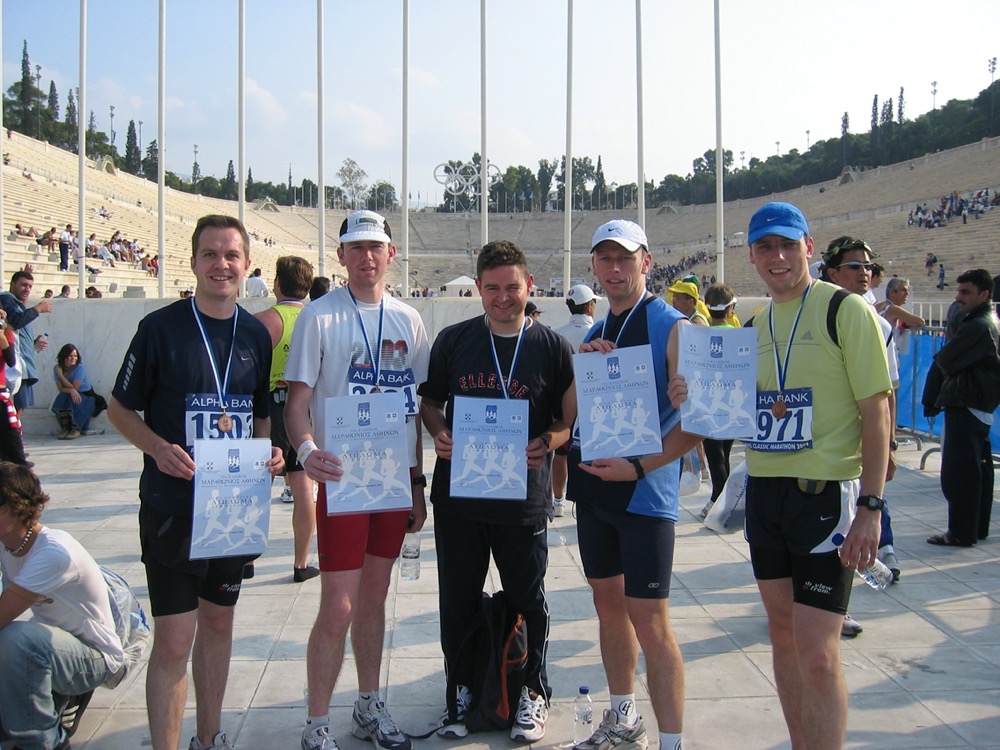
Day Four – 8th November 2004 – Northward Bound
Monday morning at 10:10 and we head from the hotel to the airport in order to rent a car and do some driving around this great little country. The airport was the easiest solution to renting a car as the place was easily accessible by train and this was preferable to driving in Athens City Centre. No offence to the greeks but they are crazy drivers – nearly as bad as the Italians – must be a Mediterranean thing. There was a heavy case of thunder and lightning during the night – and really heavy rain – but most of the lads slept through it. Kevin Eamonn and Bryan were woken by it but Mike Paddy and Derek were out for the count – so you decide who you want on your team when you are out on safari .Eamonn and Bryan headed back to Ireland today and work tomorrow. We were fortunate to have a few more days free to see some sites outside of Athens.
Took the metro/train to the airport from Syntagma. The airport metro/train has a sign of an aeroplane on the side of the car. It leaves roughly around 20 past the hour and 5 to the hour – each hour. Travel time to the airport was 45 minutes. Due to the thunder and lightning during the night there were more rain showers during the day. We had used up all our luck the day before on the race but no one really complained as we were happy.
We rented a Ford Focus for 3 days to see Meteora, Zakynthos and Delphi. We left the airport with our newly purchased map – a must seeing as the car did not have GPS. We took the national road north to Thessolonika and Mount Olympus.
We arrived in a place called Larissa around 16:40 that evening as the sun was starting to set. We could see Mount Olympus shrouded in cloud cover as we purchased some fuel. We got some pictures as it was the closest that we were going to get before night fell. We then headed to the town on Calampaha. This town is situated 3km from the famous monasteries of Meteora. We stayed in a hotel called Sakellaridi. We checked in and headed down town to get something to eat. Derek and Mike headed out to look in some shops as Paddy and Kevin rested and ordered some food. We got a great big pizza each and enjoyed our food as it was the first bite to eat that we had had since breakfast earlier that morning.
We headed back to the hotel and watched Rambo 3 on the tele before turning the lights out and getting some sleep.
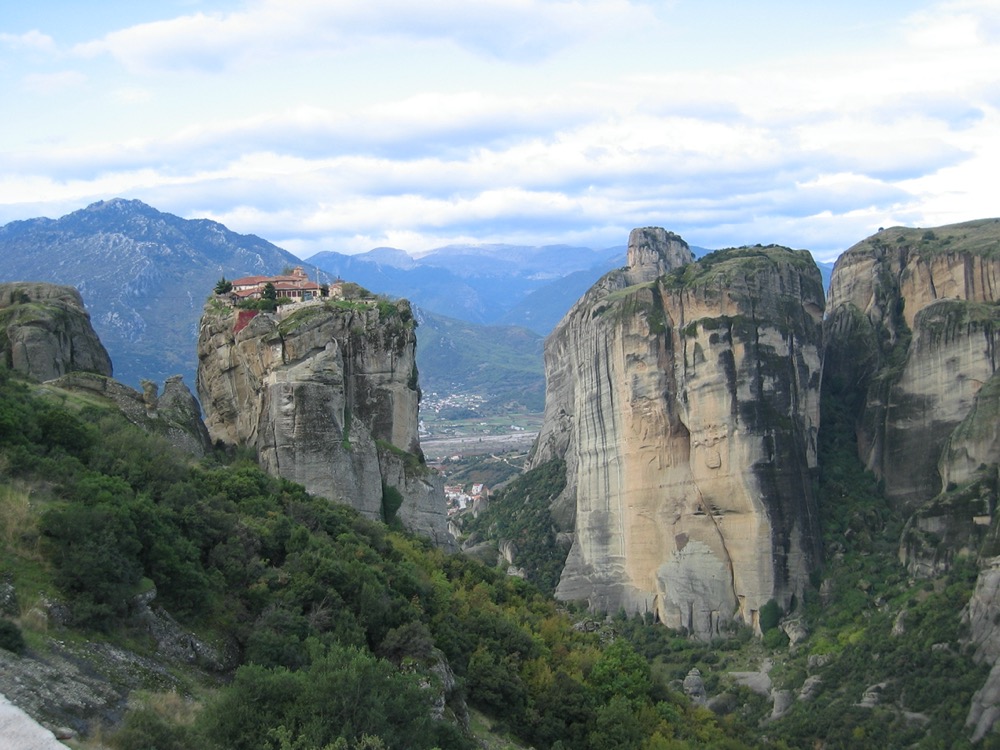
Day Five – 9th November 2004 – Meteora
Ok we got up ay 8am. It was clear outside with few clouds but there was a nice chill in the air. There was no one else at breakfast as they had all already finished and left. The plan for the day was to see the monasteries of Meteora and then head on the Zakynthos. Now there are 13 monasteries in the Meteora so we did not plan to see them all – just three of the main ones and then head on our way to the port to get the ferry to Zakynthos.
The first monastery that we saw was the Holy Trinity. These same monasteries were used in the James Bond Movie – For Your Eyes Only –staring Roger Moore. The next monastery that we went to see was the monastery of Metamorphosis or Great Metereon. Unfortunately this monastery is closed on Tuesday so we had to head down to the monastery of Varum – closeby to the monastery of Metamorphosis. We entered in here and saw some amazing sites and views of the picturesque landscape surrounding these monasteries. We saw the pulley systems that are installed and used to haul goods up into the monastery from below and used to lower material from the monastery to the waiting public. Outside the monastery there are plenty of market stalls selling souvenirs to the tourists.
Back in the town of Calampaha we found a LIDL shop so we entered here and bought some food for the long journey ahead to get to the port for the 5 o clock ferry crossing. We departed the town at 11:30 and headed due west for the port. The roads were curving and the profile was steep – there were so many twists and turns in the road that I reckon it could qualify as a formula one course. In the first two hours we travelled 80km. It was then that we knew that we were going to be in a little trouble getting to the port on time. Luckily there was a 9pm ferry crossing as well that would allow us to get on to Zakynthos around 11pm.
We passed along a view point of Mount Olympus again that permitted some more snaps from a different angle offered to us two days ago.
We kept travelling westwards and took the new bridge that open only recently –within the past 18 months. Normally one would have to get a ferry across and drive on to the port at killea to get to Zakynthos. Now the new toll bridge was open it was faster and easier to get across. The cost of using the toll was 9.70 euro.
After crossing the bridge we headed for Rio and Patra- bypassing this and heading on for Kilini. When we got here we bought out our ticket for the ferry and went back in to town to get something to eat as we were early for the 9 o clock sailing.
We got some typical greek food – fried cheese and pork and chicken slouvaki. Then we boarded the ferry and found some good couches so we could rest up before the crossing. Derek fell into a deep sleep and we found it very hard to wake him when we got the Zakynthos. We were welcomed to the island by some friends and went to where we were staying. Went to bed at 11:30pm.
Day Six – 10th November 2004 – Zakynthos/Zante
We were all woken by the sound of a jackhammer going at 07:30. We had planned on getting a bit more of a rest or lie in but that was not meant to be. It was wet and dark outside with some heavy clouds threatening rain but we kept our spirits high and headed outside in search of some breakfast.
We found a nice little café on the main street that served us a good breakfast for a reasonable price. Once we had finished here we were ready to go exploring the island for the day. Luckily the place was nearly deserted as the tourist season had finished in September so the only people on the island were locals. According to the locals Zakynthos is referred to as Zante. A lot of the places that we drove to or through were closed up and there was no activity to be seen in or around the vicinity.
It is a hilly little island but the first place that we came upon that was nice and scenic was the Blue Cave. After this we stopped at St. Nicholas Port and got some pictures of the landscape.
We then proceeded to the famous shipwreck on Zakynthos – similar to that seen in the movie – Captain Corellis Mandolin. Cobalt blue waters, white sandy beaches, a shipwreck 1000ft below us and rain hitting us in the face, what a setting. There is the option to get a boat out from one of the local nearby ports and sail in to the bay but due to the time of year of our arrival this was not possible. All the boats that ran this service were either out fishing or not plying their trade at this quiet time of the year.
On the way back to Zakynthos we passed some bee hives just off the main road and encountered our fair share of goats and such crossing the roads – out here they own the place and not the drivers.
Ate in a place called Pizza Pizza back in town as it was too wet to do anything else.
Day Seven – 11th November 2004 – Zakynthos-Delphi-Athens
We got up at 06:30 and headed down to the port at 07:00. We bought our ticket and boarded the 08:00 sailing back for the mainland. Waltzing Mathilde was the song of the day for today as Derek had found the lyrics of this is one of the magazines that he was reading. We got back to Kilini at 09:00 and started the drive back to Athens via Delphi. We crossed back over the toll bridge and headed southeast towards Delphi – the UNESCO world heritage site. After consulting the Oracle at Delphi we were told that it was looking good for Garry to go on the Silk Route this summer.
We missed some turn offs getting back to the airport to drop the car off and had to go through Glyfada in the end but we got there without too much trouble. Glyfada is a beach sort area to the east of Athens. We had to go through the city centre to get to Glyfada and from there go to the airport. We picked the worst time of the day to come back in to Athens but thankfully we made it through without any incidents. Upo returning the car we had to pay for some extra fuel so a note is to get some fuel before heading back to the airport as there are no petrol stations inside the airport. We met the girls later on for a night out in some of the pubs around the area we were staying – the main place being the Taj Mahal. This place had some belly dancers and smoking pipes as some of its main attractions.
Day Eight – 12th November 2004 – Athens
10:00 Friday morning and back in Athens. The plans for the day is to go to the National History Museum and then the flea market. Also headed to the museum of art and Culture. Looked in some of the shops in Monasteraki and did some shopping there.
Took it easy for the afternoon and got some food. Then headed out that night to a coffee house to get some caffine and then onto a place called Club 22. Played some good music and we danced the night away here till 4 o clock. Then we headed to Taj Mahal and danced here till 6:30 and then home to get some sleep.
Day Nine – 13th November 2004 – Heading Home
We got up at 11:20 and packed the bags. Got 4 hours sleep and then headed to the airport to fly home at 14:55. At 19:15 we were in London Heathrow waiting in the connection lounge for our connecting flight. At 21:50 we were back home – where is all started 9 days earlier. And for symmetry we finished the video the same way as we started it – with a picture of the map of Greece