Greece

Greece

Athens, Meteora and Zakynthos

November 05th – 13th, 2004

Duration: 9 days, 8 nights
Location: Greece
Budget: €1500
Miles Travelled: 2,000

Just over a short week in and around the Athens and the main island. The trip starts with a few days in Athens to complete the marathon before heading North to Meteora.

After visiting the monastery we head to the island of Zakynthos for some sight seeing and then back to the main land before heading south towards Athens again.

We stop on the way at Delphi and visit Athens for a final day before heading back home to Ireland.


Day One – 5th November 2004 – Departure/Arrival
Ok so we are off again on another trip and nothing says you are on an epic trip like an early start. So we are up at 05:00. Oh yeah, early start. We had an early flight out of Shannon to London Heathrow at 07:40. We packed the gear bags with the runners and running gear as well as some lucozade and fig role bars and then got in the taxi at 05:45. We left for the airport with a stop off to collect another companion – Derek. We got to his place at 06:00 and arrived at the airport at 06:30. We checked in then and proceeded to the duty free lobby where we met another two of our friends – Eamonn and Bryan. Now we had everyone. We could get on the plane and head to Athens to partake in the original marathon – the race from the town of Marathon to Athens city centre finishing in the stadium.

In the terminal in Heathrow as we proceeded to our departure gate we happened upon a Christmas time – now for this time of year it was a little strange and early so we got a few pictures and then headed on to the gate. The in flight movie was The Terminal with Tom Hanks and Catherine Zeta Jones. It was a good show and worth a watch. We landed in Athens Airport at 18:00 hours and got through customs and baggage reclaim by 18:45. We then headed to the train platform that would take us to the city centre. Another friend of ours – Chrysa, was meeting us here. I remember well Dereks word as we waited for the tickets to be bought “Lovely country this! A very welcoming people!”

We bought a group ticket that allowed three people to use the ticket to get to the city centre .It was cheaper than getting single tickets and the student cards only work for students from the local universities and not international students. Train time to the outskirts of the metro took about 30 minutes and another 15 minutes to get to our metro stop. After we made our way to the city centre we got off at Syntagma Square. This stop – on the blue line – dropped us just outside the Parliament house. We then walked down to our hotel for the next two days – Hotel Amalia. We checked in to the three rooms – Eamonn and Bryan. Derek and Paddy and Mike and Kevin. We then proceeded to get something to eat – we got the metro to Metaxourgio and walked from here to a good Italian restaurant chain called La Pasteria. The lads all got some pasta into the system for the upcoming marathon on Sunday morning. There was a really good dessert that was a chocolate brownie smothered in chocolate sauce – Eamonn was the only one that could finish it – the man.

Day Two – 6th November 2004 – Sightseeing/Registration
9:30am and everyone is up. The lads are going sightseeing as that is thing to do when it Athens. Kevin meets some friends for coffee and Derek has a meeting with some esteemed colleagues. Eamonn Mike Paddy and Bryan head to the Akropolis to look around and see Athens from a height. The day is cloudy but dry and the temperature is probably around 19 degrees Celsius with a high humidity factor. Atop the Akropolis there is the temple of Athena – the Parthenon. This allows a great panoramic view of current day Athens. There is a museum with plenty of greek artefacts housed within – including a head of Alexander.  Nearby there is a street that is a running track – accommodating some nice little coffee houses that are very famous in Athens.

The afternoon is spent finding the Caravel Hotel so that we can register for the race the following day. Unfortunately the location does not have ant sort of expo for the runners to look around and purchase goods. We arrived at the hotel; we got our champion chip, t-shirt, towel and number. Then we headed to Kolonaki in order to get some more pasta. There was a nice statue of a running man – which we named Dave – made of green glass – and he was moving fast!!

Around 3pm we finally got a place to eat in the Pasteria restaurant – seemingly 3 in the afternoon is prime time for the greeks to have their lunch – and the restaurants are pretty full at that time. We got a good feed of food and then met another friend of ours – Fay. We headed to the supermarket and got some provisions for the following morning – namely energy drinks and chocolate and bin bags – something that was going to keep us warm at the start line while we waited for the gun to go off.

Later that evening we went to a nice coffee place near Syntagma square and had a coffee with another two friends of ours – Athina and Yanni. We chatted and talked and went home to bed nice and early as we had an early start the following morning.


Day Three – 7th November 2004 – Marathon Day
An early start – up at 05:30 and the restaurant was not open so we ate what we bought the day before in the supermarket. The buses were leaving from the finishing stadium between 6 and 6:30 am so we had to be sure to be on one of these buses. We walked form the hotel to the stadium and it was less than a ten-minute walk. It was cold out but we had our bin bags so we were not too cold. We got on the bus and headed to Marathon. It took over an hour to get to the start line – 42 km away. We travelled the route that we would be running less than three hours later. We looked around at the start line but most people took shelter in a building near the back of the running track. Toilets were accessible here and the potential to warm up and loosen out muscles. We lined up a little after 09:00 and at 09:30 the gun sounded and close to 2,500 people started on the long journey home.

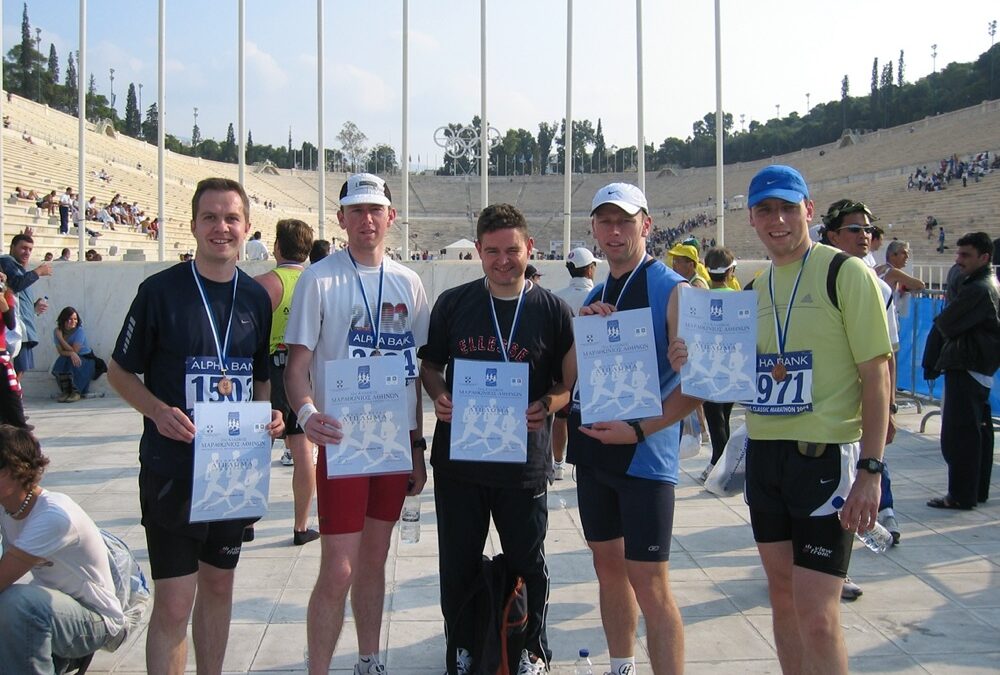
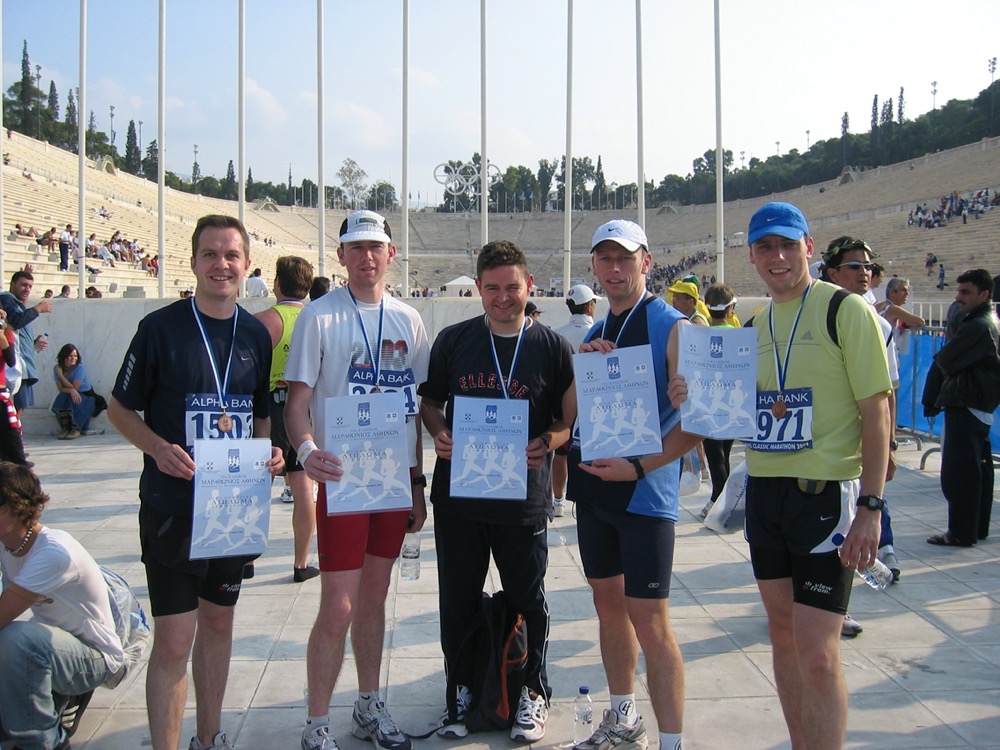
The official deadline for runners to finish and receive a medal was 6 hours. We traversed the course with style and panache with hails of “Calimera” to the local supporters that were out to see us on our way. Eamonn did a great run and a personal best of 3 hours 20 mins. Bryan was closer to 4 hours and the rest of us got across the line in around 5hours 30 minutes. The team held fast and finished together – even though some of us were a little faster to get across the line than others.
After the race we went back to the hotel and got a quick shower and then went out for some food. We got something to eat and walked around the streets to look in some of the shop windows. It was a good way to get rid of some of the lactic acid build up from the run earlier in the day. We got to bed early that night in order to get some rest after our long but rewarding day. Indeed we were now truly Olympians!
Day Four – 8th November 2004 – Northward Bound
Monday morning at 10:10 and we head from the hotel to the airport in order to rent a car and do some driving around this great little country. The airport was the easiest solution to renting a car as the place was easily accessible by train and this was preferable to driving in Athens City Centre. No offence to the greeks but they are crazy drivers – nearly as bad as the Italians – must be a Mediterranean thing. There was a heavy case of thunder and lightning during the night – and really heavy rain – but most of the lads slept through it. Kevin Eamonn and Bryan were woken by it but Mike Paddy and Derek were out for the count – so you decide who you want on your team when you are out on safari .Eamonn and Bryan headed back to Ireland today and work tomorrow. We were fortunate to have a few more days free to see some sites outside of Athens.

Took the metro/train to the airport from Syntagma. The airport metro/train has a sign of an aeroplane on the side of the car. It leaves roughly around 20 past the hour and 5 to the hour – each hour. Travel time to the airport was 45 minutes. Due to the thunder and lightning during the night there were more rain showers during the day. We had used up all our luck the day before on the race but no one really complained as we were happy.

We rented a Ford Focus for 3 days to see Meteora, Zakynthos and Delphi. We left the airport with our newly purchased map – a must seeing as the car did not have GPS. We took the national road north to Thessolonika and Mount Olympus.

We arrived in a place called Larissa around 16:40 that evening as the sun was starting to set. We could see Mount Olympus shrouded in cloud cover as we purchased some fuel. We got some pictures as it was the closest that we were going to get before night fell. We then headed to the town on Calampaha. This town is situated 3km from the famous monasteries of Meteora. We stayed in a hotel called Sakellaridi. We checked in and headed down town to get something to eat. Derek and Mike headed out to look in some shops as Paddy and Kevin rested and ordered some food. We got a great big pizza each and enjoyed our food as it was the first bite to eat that we had had since breakfast earlier that morning.

We headed back to the hotel and watched Rambo 3 on the tele before turning the lights out and getting some sleep.
Meteora

Day Five – 9th November 2004 – Meteora
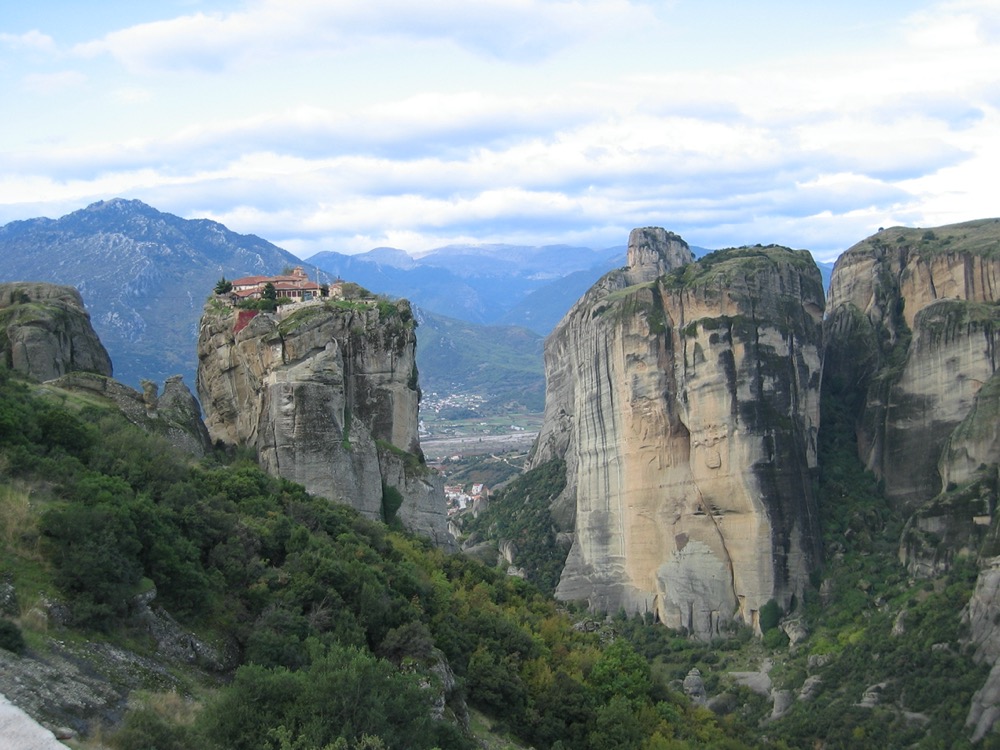
Ok we got up ay 8am. It was clear outside with few clouds but there was a nice chill in the air. There was no one else at breakfast as they had all already finished and left. The plan for the day was to see the monasteries of Meteora and then head on the Zakynthos. Now there are 13 monasteries in the Meteora so we did not plan to see them all – just three of the main ones and then head on our way to the port to get the ferry to Zakynthos.

The first monastery that we saw was the Holy Trinity. These same monasteries were used in the James Bond Movie – For Your Eyes Only –staring Roger Moore. The next monastery that we went to see was the monastery of Metamorphosis or Great Metereon. Unfortunately this monastery is closed on Tuesday so we had to head down to the monastery of Varum – closeby to the monastery of Metamorphosis. We entered in here and saw some amazing sites and views of the picturesque landscape surrounding these monasteries. We saw the pulley systems that are installed and used to haul goods up into the monastery from below and used to lower material from the monastery to the waiting public. Outside the monastery there are plenty of market stalls selling souvenirs to the tourists.

Back in the town of Calampaha we found a LIDL shop so we entered here and bought some food for the long journey ahead to get to the port for the 5 o clock ferry crossing. We departed the town at 11:30 and headed due west for the port. The roads were curving and the profile was steep – there were so many twists and turns in the road that I reckon it could qualify as a formula one course. In the first two hours we travelled 80km. It was then that we knew that we were going to be in a little trouble getting to the port on time. Luckily there was a 9pm ferry crossing as well that would allow us to get on to Zakynthos around 11pm.

We passed along a view point of Mount Olympus again that permitted some more snaps from a different angle offered to us two days ago.

We kept travelling westwards and took the new bridge that open only recently –within the past 18 months. Normally one would have to get a ferry across and drive on to the port at killea to get to Zakynthos. Now the new toll bridge was open it was faster and easier to get across. The cost of using the toll was 9.70 euro.

After crossing the bridge we headed for Rio and Patra- bypassing this and heading on for Kilini. When we got here we bought out our ticket for the ferry and went back in to town to get something to eat as we were early for the 9 o clock sailing.

We got some typical greek food – fried cheese and pork and chicken slouvaki. Then we boarded the ferry and found some good couches so we could rest up before the crossing. Derek fell into a deep sleep and we found it very hard to wake him when we got the Zakynthos. We were welcomed to the island by some friends and went to where we were staying. Went to bed at 11:30pm.

Day Six – 10th November 2004 – Zakynthos/Zante
We were all woken by the sound of a jackhammer going at 07:30. We had planned on getting a bit more of a rest or lie in but that was not meant to be. It was wet and dark outside with some heavy clouds threatening rain but we kept our spirits high and headed outside in search of some breakfast.
We found a nice little café on the main street that served us a good breakfast for a reasonable price. Once we had finished here we were ready to go exploring the island for the day. Luckily the place was nearly deserted as the tourist season had finished in September so the only people on the island were locals. According to the locals Zakynthos is referred to as Zante. A lot of the places that we drove to or through were closed up and there was no activity to be seen in or around the vicinity.

It is a hilly little island but the first place that we came upon that was nice and scenic was the Blue Cave. After this we stopped at St. Nicholas Port and got some pictures of the landscape.

We then proceeded to the famous shipwreck on Zakynthos – similar to that seen in the movie – Captain Corellis Mandolin. Cobalt blue waters, white sandy beaches, a shipwreck 1000ft below us and rain hitting us in the face, what a setting. There is the option to get a boat out from one of the local nearby ports and sail in to the bay but due to the time of year of our arrival this was not possible. All the boats that ran this service were either out fishing or not plying their trade at this quiet time of the year.

On the way back to Zakynthos we passed some bee hives just off the main road and encountered our fair share of goats and such crossing the roads – out here they own the place and not the drivers.
Ate in a place called Pizza Pizza back in town as it was too wet to do anything else.

Meteora

Day Seven – 11th November 2004 – Zakynthos-Delphi-Athens
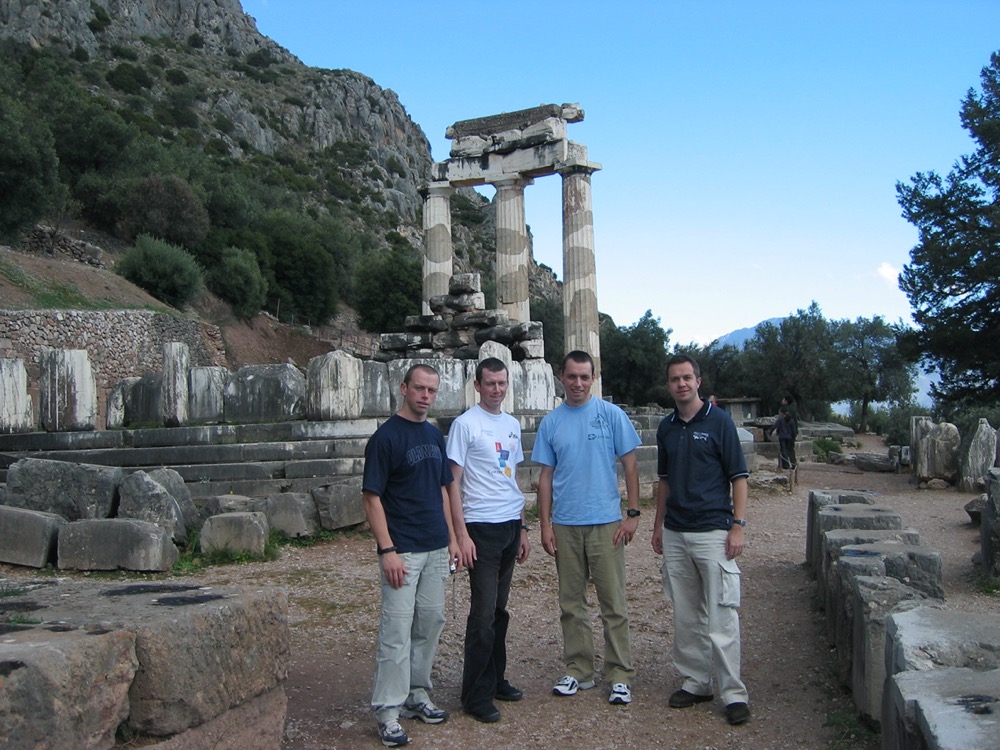
We got up at 06:30 and headed down to the port at 07:00. We bought our ticket and boarded the 08:00 sailing back for the mainland. Waltzing Mathilde was the song of the day for today as Derek had found the lyrics of this is one of the magazines that he was reading. We got back to Kilini at 09:00 and started the drive back to Athens via Delphi. We crossed back over the toll bridge and headed southeast towards Delphi – the UNESCO world heritage site. After consulting the Oracle at Delphi we were told that it was looking good for Garry to go on the Silk Route this summer.

We missed some turn offs getting back to the airport to drop the car off and had to go through Glyfada in the end but we got there without too much trouble. Glyfada is a beach sort area to the east of Athens. We had to go through the city centre to get to Glyfada and from there go to the airport. We picked the worst time of the day to come back in to Athens but thankfully we made it through without any incidents. Upo returning the car we had to pay for some extra fuel so a note is to get some fuel before heading back to the airport as there are no petrol stations inside the airport. We met the girls later on for a night out in some of the pubs around the area we were staying – the main place being the Taj Mahal. This place had some belly dancers and smoking pipes as some of its main attractions.

Day Eight – 12th November 2004 – Athens
10:00 Friday morning and back in Athens. The plans for the day is to go to the National History Museum and then the flea market. Also headed to the museum of art and Culture. Looked in some of the shops in Monasteraki and did some shopping there.
Took it easy for the afternoon and got some food. Then headed out that night to a coffee house to get some caffine and then onto a place called Club 22. Played some good music and we danced the night away here till 4 o clock. Then we headed to Taj Mahal and danced here till 6:30 and then home to get some sleep.

Day Nine – 13th November 2004 – Heading Home
We got up at 11:20 and packed the bags. Got 4 hours sleep and then headed to the airport to fly home at 14:55. At 19:15 we were in London Heathrow waiting in the connection lounge for our connecting flight. At 21:50 we were back home – where is all started 9 days earlier. And for symmetry we finished the video the same way as we started it – with a picture of the map of Greece 
Meteora

2010 Scandinavia Trip Report

2010 Scandinavia Trip Report

Norway and Finland - Nature Safari

July 7th – July 19th 2010
Duration: 13 days, 12 nights
Location: Norway & Finland, EU
Budget: €4200
Miles Travelled: 2100

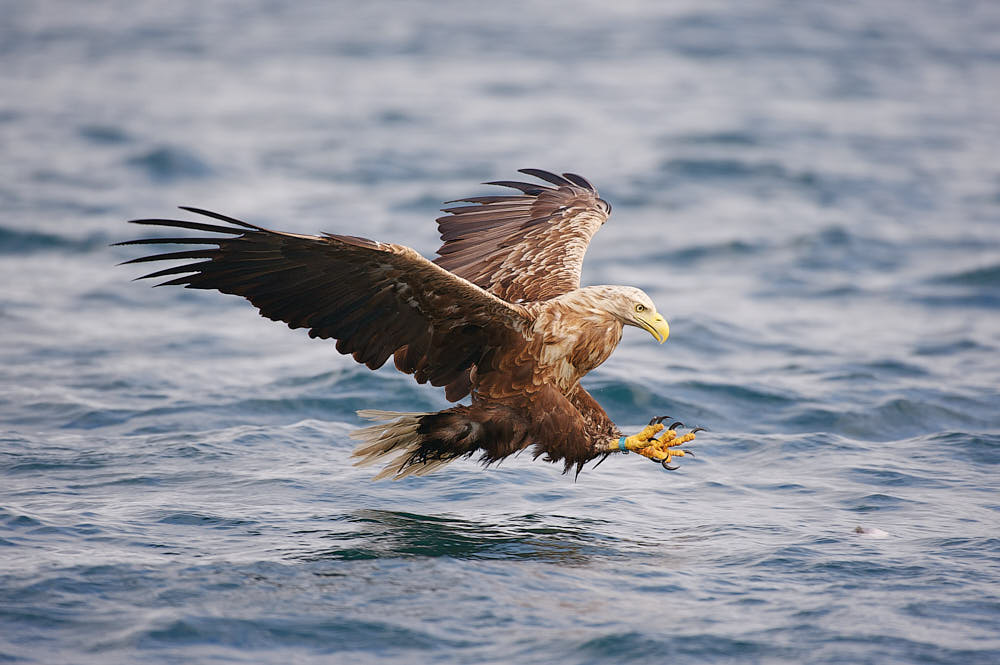
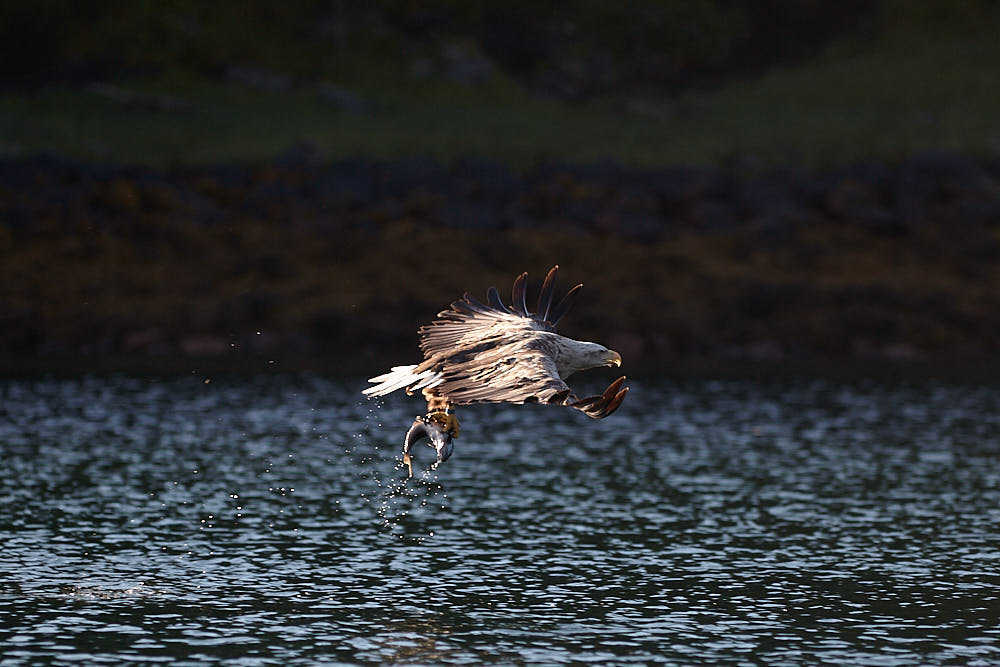
This was a trip that happened as a last minute plan really. I got to go and photography the White Tailed Sea Eagles in Flatanger, Norway for a week in early July with some friends.

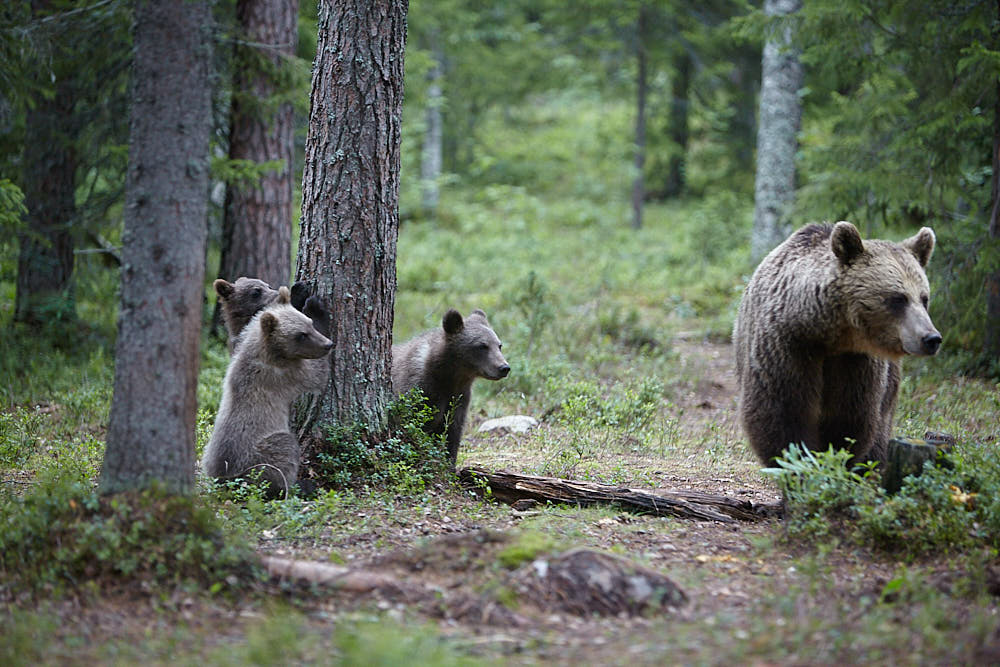
After this I headed to Finland and went in search of Ospreys, bears, wolverines and other animals in the area.

Day 1 – July 7th 2010 – Wednesday

I got up at 5am for an early drive to Dublin for my flight to Trondheim in Norway. I left Limerick at 5:35am and headed towards Dublin. The bypass of mountrath and Borris-in-Ossery are now open and for 1.80euro it is worth it for the time saved. I arrived in Dublin airports long term BLUE carpark and got the bus to the terminal. I was a little early but it was good to just relax. I paid for the car park online. The check in opened at 08:30 but I have used a Kiosk myself to select seats and received a printed boarding pass. Once the check in desk was open I checked in my bag and proceeded through the security section. I had most of my essential camera gear with me for the flight. I took with me the following items

  • Canon 1D Mark IV Camera Body
  • Canon 5D Mark II Camera Body
  • Canon 500mm L  f4 IS Lens
  • Canon 70-200mm IS USM Lems
  • Canon 24-70mm L Lens
  • Ca non 1.4x Teleconverter
  • Dell Mini 9 Latop and External HDs
  • Wimberly II Tripod head for the 500mm Lens
  • Memory cards, battery chargers, cables etc

Once through security – this took about 20 minutes – I went upstairs and got some breakfast. I had time to kill. It was 11.95 for a full Irish breakfast. I ate and relaxed and waited for the rest of the lads that were going to Norway with me to photography the white tail  sea eagle. I was heading over there with a irish wildlife photographer called Mike Brown. Also going was Joe Duffy and James McSweeney. Our flight was at 11:05 via Copenhagen and then onto Oslo. We boared without any problems and the flight over to  Copenhagen was uneventful. The flight time was approximately 2 hours and 45 minutes. Upon arrival at Copenhangen, we headed for the next gate. The good thing about SAS and their boarding pass was that it has all the follow on passes printed on the one card so all we had to do was get to the gate on time. We checked out the monitors when we arrived and found the gate for the flight to Oslo. We had about 30 minutes to spare before they started boarding once we got to the gate. The flight to Oslo was approximately 1 hour. In Oslo we had to re-check our bags. One of the lads was over the 20KG limit on luggage by approximatley 4KG and had to pay 35euro surcharge. We all checked in and I stayed for a later flight as the lads headed off to Trondheim to meet with Ole Martin Dahl – the eagle man. My flight was at 20:20 so I went to get something to eat and headed to the gate once it was posted on the monitor. I arrived in Trondheim after 1 hour and 5 minutes and met Mike Brown and Ole Martin at the baggage claim. We then proceeded to drive north towards Flatanger – a small town nestled in among the many fjords of norway. It took us 2.5 hours to get there and it was close to midnight when we got the accommodation for the next few days We saw some moose on the way in near Flatanger. They were grazinn in the fields near the town. It was still bright out which was due to the location and how close to the Arctic Circle we were. We had some guests at our house also – two fox cubs from this years littler. They were exploring around the house when we got there and put our bags in the room. We took some images of the sunset and talked and finally said we were going to bed at 2am. The time difference was 1 hour between here and Ireland.

Day 2 – July 8th 2010 – Thursday

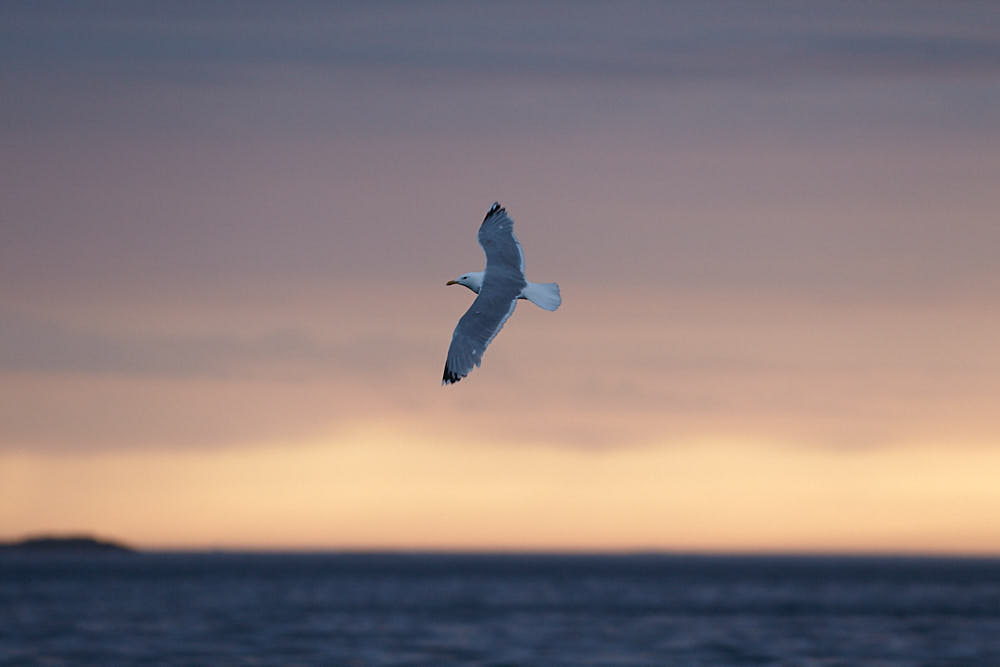
We got up around 5am this morning. So not a lot of sleep but everyone was excited to get out on the boat and start taking some pictures. Ole Martin called over to the house at 6am and we were down and on the boat by 06:30. The morning was nice and the light was good now. Sunrise – as you can call it – happens around 02:30 in this part of the world. Considering sunset lasted for approximately 90 minutes the night before there are only a few hours between the sun going down and coming back up again. In those few hours, there is still decent light out for seeing but not for taking pictures unless you are interested in long exposure. A good thing to consider bringing might be a sleep mask that they issue on the planes on the long trans-atlantic jourenys. Ole Martin has names for the eagles and after a day or two you start to get used to it . We headed left out of Flatanger when we got going and the first thing that you will notice about Ole and his tours are the gulls. They follow him everywhere – and for good reason. He feeds them bread as he drives around the miles of fjords looking for the eagles. Be caerful if you are going to feed the gulls too as they are bold – one even sits on Ole’s head and takes the food right out of his mouth. . We saw a moose on the way over to the first eagle spot – we got to coast the boat in close to the shore line but they are a shy creature and it was eating in the shade of a mountain so light was poor where it was located. Ole Martin spotted her on the way to the location and we joked with him later that he must have eagle eyes himself. You will understand why when you go on a tour with him! The first location proved rewarding with the male eagles coming down to take the fish that Ole threw out. Normally it works something along these lines – Ole Martin locates an eagle or failing that goes to a location where he knows the eagle to be in the vicinity. He moves the boat into postition for the best light – backlight, sunset etc. After checking that everyone is ready he throws out the fish – and calls “Fish is out!”. If you loose track of where the fish is, just look for the greater black back gulls – they will be fighting over it and trying to eat it. The fish is called a Coalfish and it is fished in the area locally and strongly abundant. The fish are generally frozen and too big for the gulls to eat  so there is no problem with them staying near it. The next words you want to hear from Ole – or anyone else on the boat – is “Eagle is coming” and this is invariably followed by “Where?” from the people with the cameras. The eagle came off its perch and glided into us in the shadow of the mountaion but Ole had him spotted and soon we were all tracking him into us. They are fast but sometimes they will circle the boat and give us a better opportunity to photography them. It is not that the eagle has trouble finding the fish, as they never loose sight of it once Ole throws it into the water and they see the splash from half a mile away – or more. No, they circle the fish and slowly start to circle in lower arcs until they are swooping in with talons extended, strike and catch the fish and fly off back to the perch or nest. This morning it all happened so fast that the fish was gone and the eagle was heading back to the nest before we knew it. It is an amazing spectacle to watch and witness.

We stayed on the water from 06:30 to 10:00 that moring looking for eagles and getting pictures. In the beginning I was taking images on the eagle when he was still a long way off but I soon came to realise that there was no need for this as it was rare that the eagle was coming in straight to take a fish. The boat does get cold when you are moving from place to place so you will need some warm clothing or something rain proof for the few times that the wind might whip some wave spray in over the boat. Ole has 4 survival suits in the house that we discovered later on that day. They have the capability of acting as a floatation device if one does enter the water and also keep you warm between journeys from point to point. They were very good and not overheating you also so after the first day we tended to wear them out with us after that – for safety and warmth and to protect us from the gulls overhead – sometimes they were depositing stuff down on us too so watch your camera and gear just in case.

The 500mm is a heavy lens as people will know and hard to haldhold – though it is very good and razor sharp. I used it for the day but it takes time to figure out how the eagles approach Ole and try to guage how they will react to the wind, weather, elememts etc. Time and practice – there is plenty of opportunity to photography the gulls with whaterver equiptment you bring and check your display to see that you are getting the desired effect before the eagles come.  The lens of choice on the boat was the 300mm f4 lens as coupled with a 1.3 or 1.6 crop factor it gives a nice focal lenght that allows you to follow the eagle down onto the fish.

After coming in at 10:00 we headed to the Spar shop in town and got some food for lunch. I know it is a wierd thing to say lunch when it is only 10 in the morning but when you are up at 5am then it sounds really good. We got some food and headed back to the house to cook it. Scrambed eggs and bacon with tea or coffee. Everyone got busy after that downloading the images from the mornings shoot and putting them onto their computer for rating or backup – or a bit of both. I went to bed at 12 and got up around 14:00 hours. I wanted to go out for a short run as the weather was so nice. There is a lovely mountain behind Ole’s cottage that gives an amazing panoramic view of the fjords. I ran up a rough trail – took about 15 minutes and is designed for mountain running as there is roots and rocks everywhere – and then sat and enjoyed the view from the top. There is a radar mast up there and a book to sign to say you were there. Then upon descent I turned right and headed out towards one of the islands – with a church on it. You see this when you are on the fjords. I did not get out there today now due to the mountain run part but all in all it was a nice run and I was back to the cottage in under the hour. I grabbed a shower and then did a backup of my images from this morning. After this, we chatted some more and at 17:30 Ole collected us to go down to the local pub – Zanzibar – where we got something to eat before heading out on the boat again. The have burgers and chips as a failsafe option and most days will have at least two different types of fish dishes on the menu – depending on what was caught recently. We headed back out around 19:00 and were on the water till 22:00. The evening was changable and there was a nice bank of cloud out in the open water but we got some nice shots and saw Ole and James do some fishing as well for some coalfish for the following days trips. We were looking for some eagles for a sunset shot but alas we could not find any on the way back in so I practiced with the gulls in the shots instead. Back on the pier at 22:00 and up to the house for 22:30. Then we started looking at pictures or surfing the web on the free wireless in the house. The fox cubs came up to the house later on but they were nervous and did not really afford us a great opportunity to get a good shot of them. Bed was still around 01:00 the following morning though – it is hard to go to bed when it is bright out – it just goes against all the rules!

Day 3 – July 9th 2010 – Friday

This morning we got up at the same time. 05:00 – it was starting to take a toll on us now but we knew that there was a nap on the card around noon once we got something to eat. The weather had taken a turn for the worst and the rain was coming down quite strongly outside. Ole texted to say it was to clear and we would wait another hour. No one really complained as we all got another hour in bed and some much needed sleep. I got to test out a different camera and setup this morning. Ole had a Nikon D700 and a 200-400mm zoom lens and I used that for the morning shoot. I have to say that it was a very good setup. The zoom lens at that focal length was very good for tracking the eagle in and getting some good shots as they snatched the fish from the water before returning to its perch on the mountain. I spent the morning using this equipment as we went from fjord to fjord looking for eagles and shooting gulls and doing some fishing. We got back in around 10:00 and headed to the Spar to stock up on supplies before returning to the house for an early lunch. After food I imported my photos and made sure the camera was free in case Ole or someone else wanted to use it for the afternoon. I went to bed for an hour and then got up and went for a run for an hour before getting ready for dunner and an evening on the boat.

We had a new guest as well this afternoon – Tommi from Stockholm. He has driven up – approximately 12 hours – to get to Flatanger and he was booked in to go out on the boat with us for the next two days – starting tomorrow morning. He headed off to do some sunset shots when we were geting ready for the meal and evening boat safari. I borrowed Mike’s 300mm f4 Lens as he was using a 100-400mm lens this afternoon. I have to say that it was a lot lighter than the 500mm and easier to swing around. It did lack reach but in the grander scale of things that was not really important as the eagles would come pretty close to the boat when they were swooping for the fish. I recall on one dive the eagle came in the wrong way and straight across the bow of the boat, literally within spitting distance. No one was ready for it thought and we all had the wrong lenses on in any case. The evening light was lovely and the sky was blue with a specking of clouds showing here and there. We were looking for a sunset shot with an eagle, where we capture it silhouette as it dives for the fish. The light was perfect but alas we could not find an eagle that was hungry enough to come out for a fish. So we got to practice the technique with the gulls and some bread that Ole had. We headed back into the harbour around midnight this time – the sun setting was so nice that we stayed out a little longer looking for eagles to photograph. After we got in we headed for the house and took some images of the sunset from the balcony and then downloading the pictures from the day onto our respective computers. Bed was sometime after 01:00 for us again.

Day 4 – July 10th 2010 – Saturday

The morning started off as normal. Role out of the scratcher at 05:00. Only thing this morning was the weather was bad. It was raining hard and were told that we would wait till 07:00 before heading out . There was hope that it would clear up – a bit like yesterday morning. Eventually got out on the boat around 07:30 but it was very dull and overcast. Diffused light but the metering on the cameras were hard to work with – a lot of us were shooting in Manual to try to compensate. An alternative this morning was something Mike calls “Arty Farty” where we shoot really slow shutter speeds and try to get a nice blurry controlled effect into the images. We took some shots of eagles and gulls and then  headed back into the Harbour around 10:00 to get some food and lunch. I chilled out and tried to decide on what to do re the run. The weather was pretty wet outside once we got back to the house – the survival suits on the boat were very handy this morning. I gave the run a pass and messed around with some photos and some web work before getting some sleep and then heading out in the afternoon – hoping that the weather was going to clear. It was still cloudy and overcast and we got some rain – so make sure to have a quick safe dry place to put your camera when out on the boat. We took some images and came in early as there was little point in shooting in that sort of light. Home to the house and it was too cold even for the foxes. Ole told us that the weather was forecast better for tomorrow so we were hoping that it would prove to be accurate.

Day 5 – July 11th 2010 – Sunday

Sunday morning and it started out promising! We headed up to where we started out on Wednesday and decided to try some backlighing of our main subject – the white tailed sea eagle. Ole spotted the male on a tree and threw out the fish. We were lucky in the sense that the female came off the nest for a meal as well so she took the first fish.. Then Ole threw out a second one – once we had time to have a quick look on the LCD’s of the cameras and make any adjustments that we wanted. Then we captured the male flying through and got some great shots. Ole said that it was a small fish and the male would probably come again in a few minutes. We took some shots of the gulls and Ole did some fishing and then the male was back looking for another fish. We captured this sequence again and then headed out to another fjord. On the way out of town we saw one of the red fox cubs down by the edge of the water feeding as we drove along. He saw us coming and headed for shelter though in the trees before we got close enough for a good shot. We got some more shots of eagles and gulls and some nice landscapes as the sun was lighting up the surrouding hills and mountains nicely. Back in the town and house for 10:00 where we got some food and got ready for the afternoon session. I did my usual sleep and run and then headed up to the  top of the mountain behind the house with James. The day was nice so we headed up to try to capture a panoramic image of the view from up there. It took approximately 30 minutes to make it to the top and we sat down and took some pictures and then relaxed and enjoyed the view and the sun. It was starting to cloud up by the time we were descending so we were hoping that the afternoon session would be good.  Back to the house, quick shower and out the door at 17:30 to get some food and onto the boat then for the evening session. We got some nice images of a pair of eagles on a rock yesterday during one of the sessions and they were there again today but they did not stay around to let us capture the images this time. The wind picked up and we could not get out across to the big fjord. We captures some images but the boat was rocking more than usual so it was hard to get good shots. We were heading back into town around 21:00 and one eagle followed us in in order to get a fish. It was the last shot of the day and we were happy that it happened. Then it was into the pub to watch the final between Spain and the Netherlands. Tommi headed off to drive back to Stockholm as he was working in the morning. We watched the end of the game and headed back to the house. The fox cubs came up to the house also tonight so we got some nice shots of them before going upstairs and starting to pack. Got to sleep around 02:00.

Day 6 – July 12th 2010 – Monday

Up at 06:00 and got the rest of the packing done and a shower. The cubs were outside again and the light was better so got a few more shots before packing away the camera. Ole collected us at 07:15 and we headed for Trondheim airport. Got there a little after 10:00 for a 12:10 flight. We said good luck to Ole Martin and headed in. Checkin was easy enough and security was not too bad either. Got inside then and just relaxed before the flight to Copenhagen. It took approximately 2 hours to get down to there. From here I got a connecting flight to Helsinki. There was a one hour time difference also between Copenhagen and Helsinki. After 30 minutes in Helsinki, I was boarding my third and final flight for the day to Oulu. The lads were arriving back into Dublin as I was stepping off the plane in Oulu in 25 degree heat outside and being met by a local wildlife guide from Vaala – Eero. He collected me at 20:00 and we headed for Vaala – approximagtely 90 minutes drive due south. I got there around 22:00 and got something to eat and went to be as it was a long day and tomorrow I was  going to be photographing ospreys and their chicks.

Day 7 – July 13th 2010 – Tuesday

Today was the first day that I was going to be shooting something other than Eagles and seagulls. Today I was hoping to get some footage and shots of Ospreys. Eero called to the house around 09:00 and collected me and another photographer to go and get some breakfast. It was a very relaxed affair compared to Norway and Ole Martin. Then again the ospreys were sitting on a nest with three chicks to feed so we knew where they were and they were not really going anywhere. We had breakfast at the ABC petrol station. We also made some sandwiches there for our lunch for later on – it was all included in the 7euro breakfast charge. Once we were done here we headed to Eeros house to get some supplies… thermos flasks with water for the day, wellington boots for the walk into the hide and a few other bits and pieces. We drove around 30 minutes out to the hide via the house – I had to collect my tripod head – and then packed up and walked into the hide. Eero has an extremely useful piece of gear. It is a sort of jacket that has a cover for your head and eyes and is made of light mesh. It is ideal for keeping the flies off you in the woods and areas where they are strongest. We got to the woods around noon – coming on the hottest part of the day. The walk in took around 40 minutes and we had to cross lots of streams and old river beds. The wellingtons were invaluable in keeping the feet dry. Upon arriving at the hide the parents were off the nest and circling as the intruders made their way to the box. The hide was erected so that it was slightly looking down into the nest and had a nice background of green trees behind it. Eeor told us that the nest is nearly 25 years old and the size of it tells you that it has been around for a bit. The osprey female came back in once Eero had left. Myself and the other photogrpaher set up the camera gear and then we settled in. We got some images of her returning and then settled in to wait for the male to return with some food. The heat was oppressive in the hide box. The temperature reaching 30 degrees outside and probably higher inside in the box. We were drinking our water but we did not bring enough and had to spare it as it was going to be a long day before we finished there. We witnessed 4 feedings in total – the last one occurring as we were about to head home so that was good timing. The female was calling once the male was on the way back to the nest so we were always aware of when a feeding took place – though we did take turns in keeping an eye on the nest in case anything else happened in the meantime. The only thing that did happen was the female would head away from the nest and rest on one of the nearby trees and use it as a bathroom. The chicks did not have this luxary so they reversed to the edge of the nest, cocked their backside over the edge and squirted their waste over the side to fall to the earth below. We finished in the hide around 20:00 and walked back to the car and got loaded up. Got going again around 21:00 and headed back to the house. Saw some divers on the way in but they were too far away to get any usable images. Then we headed over to the house and the lads went for a meal. I was tired after the day so I went to bed as I was driving in the morning to Viiksimo. Got to bed around midnight.
Day 8 – July 14th 2010 – Wednesday

Got up at 06:00 and went for short 40min jog. Back and showered and changed to meet Eero at 07:30 to collect car. Got car back from garage at 09:30 and was on the road at 10:00 after stopping at Tori market to get me some of those mossie jackets for myself. Drove to Viiksimmo to where the bear and wolverine hides are. Off road part of approx 30km and from Vaala is approx 250km or 3.5 hours. Stayed in big hide this night. Close to road. 50m approx. Nice and big inside. Entered around 16:00 hours and first bears appeared around 19:00. Stayed up till 01:00 and got some sleep then for a few hours and then got up at 04:00 to give the guide a chance to sleep. Saw a white tailed fish eagle as well as Black Kite and ravens before heading away at 07:00 and going back to the lodge. Got brekkie at 08:00 and then got some sleep for a few hours. Then I was going to the forest hide for the next night.

Day 9 – July 15th 2010 – Thursday

Headed to the forest hide around 17:00 hours. Got there and got settled in and then waited. Totally different to the big hide. Had to walk approx 10 minutes from road to hide. Wellies were needed here and very useful. Got into the hide and set up cameras. Food was close and so were the bears. After 22:00 before first bear showed up. There was a great spotted woodpeckers though to help me pass the time in the meantime. First bear was a large male and he was huge. Was kinda cool to see him and see how close he want and just stare at him. A few more bears showed up as the night wore on. I went to sleep around 00:00 or a little after and got up around 03:30 to get some of the sunrise and see if anything else would show. There was a nice sunrise and the woodpeckers were back. Left the hide around 07:00 and headed back to the lodge. Got some food, shower and quick email check and the headed towards Martlinselkonen. Approx 140km from where I was currently. Saw large male reindeer as I left the lodge.

Day 10 – July 16th 2010 – Friday

14km of off road driving here.  Saw black grouse on the way in. Arrived at 12:30 and checked in. Meal at 15:00 and got ready for swamp hide. Left at 16:00 and walked in to swamp hide. Took 20 minutes to drive and about 20-25 to walk in – depending on numbers and fitness level of people. There are some boardwalks to cross and the rest is mostly trails. Swamp hide is open field. Nice setup but really bad weather. Terrible rain. Was actually cold. Got into sleeping bag. Bring a head torch if you want to read some materinal in a book. Mother and cubs were there at 21:15. Other larger bears there earlier. Very nervous of each other.

Day 11 – July 17th 2010 – Saturday

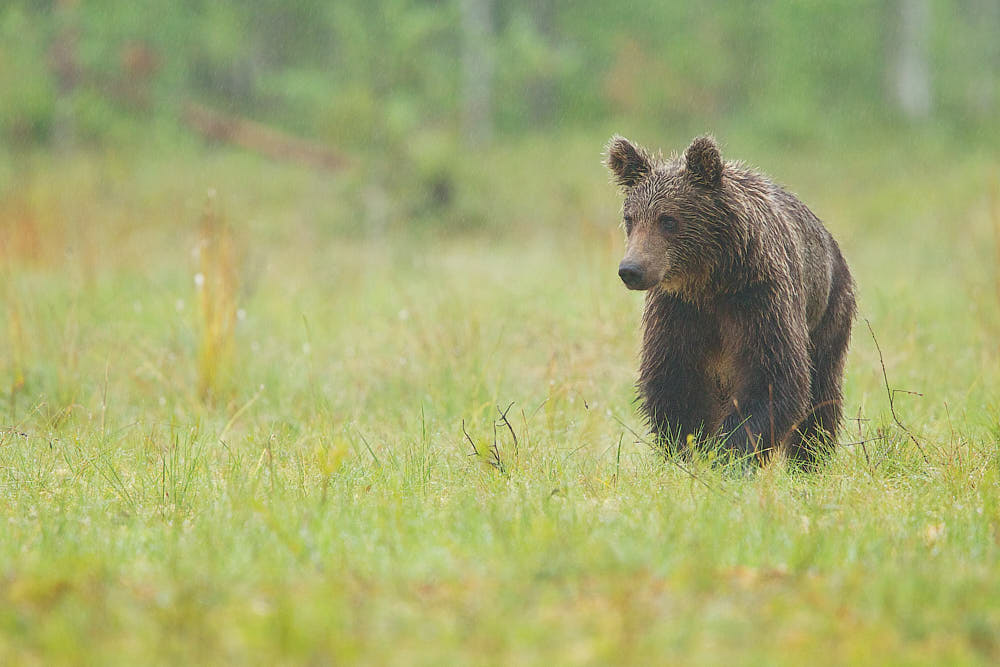
Collect at 07:00 and headed back to the lodge. Got breakfast and slept for an hour. Then got up and copied some files and read some notes. Forest hide tonight. Got food at 15:00 and then headed to forest hide. They are all on the same route. First is the swamp hide then 200m on is the main hide – for viewing and photographing the bears. Another 100m on from this is the pro hides for photographing the bears. I was in there tonight. There was a family in the other hide. As were entered the area there were bears out there already and they ran away. They can cover ground really fast when they want to. Food was laid out – salmon and dog biscuits – and I got set up. Bears were not long in coming and over the course of the evening the three monthers with their 4,3 and 2 cubs respectively showed up. The mother with the 4 cubs and the one with the 2 cubs even started fighting when the cubs were mock fighting at one stage. Was amazing to hear.

Day 12 – July 18th 2010 – Sunday

Collected just before 07:00 and walked out to the cars and back in the lodge for 08:00. Got brekkie and checked out around 09:30 and headed to Vaala.Distance was 200km and took about 2.5 to 3 hours. Nice roads across but weather was not great. Got there around 12:00 and got some petrol and then some food for lunch and dinner later on. Went out for short drive after to try to find some nice photo ops but nothing doing. Got some lunch and dinner and repacked for flight in the morning. Early start with drive to airport at  05:30. I am starting to get used to it now tho.

Day 13 – July 19th 2010 – Monday

Travelled to the airport with Eero at 05:30 and arrived around 07:00. Said goodbye to Eero and checked in my bags for my onward flight. Had a flight from Oulu back to Helsinki first and then onto Copenhagen and back to Dublin before the drive back to Limerck. A long day of travelling at the end of a great two weeks with lots of images and memories to take home.

Morocco, Casablance and the Sahara

Morocco, Casablance and the Sahara

Morocco, Casablance and the Sahara

22nd March 2018 to 31 March 2018

Duration: 10 days, 9 nights
Location: Morocco, Africa
Budget: €1750
Miles Travelled: 1970KM

Days: 10
Dates: 22nd March 2018 to 31 March 2018
Tour Company: Morocco Round Trips
Currency: Dirham (10.7:1 exchange rate)
Time Zone Difference : None
Morocco Driving Distance : 1970KM approx


Day 1 – SHANNON – STANSTED

We took an evening flight from Shannon to Stansted with Ryanair. Departure time was 21:15 and we arrived around 22:40 and collected our bags. We got a 3 pound shuttle to the airport hotel, checked in and got to bed around midnight. The shuttle took approximately 5 minutes to get the to hotel and left every 30 minutes .

Day 2 – STANSTED – MARRAKESH

Up at 03:00 to get the 04:00 shuttle back to the airport. This was the first shuttle of the morning. We checked in our bags and proceeded to the gate. No problems with bags or luggage thankfully. Flight time was three hours 30 minutes to Marrakesh. We arrived around 09:45 and went through passport control and got our luggage. Customs checked our bags for drones etc so be sure not to bring any. There is a nice little app called Airmap that you can download for iOS and Android that will tell you the rules and regulation of a country you are planning to visit and if it is allowed to bring a drone with you. We got outside and waited for our collection. The tour operators cannot go inside the airport so you need to exit in order to get collected by your company. Our company was late so we called them and eventually got collected and driven to the Riad in the old town or Medina. We checked in to the Riad Anika around noon and left our bags there. We put the batteries on charge and headed out for a tour of the city with a local guide at 14:00 hours.

Everyone talks about TIA – This is Africa – re timing etc so be prepared to wait around for drivers or guides or tours to run on time according to their website. The weather was nice and warm today so we met our guide at 14:00 and started a tour of the old city – the Medina – in Marrakesh – which is known as the “Red City”. Marrakesh is a former imperial city in western Morocco, a major economic center and home to mosques, palaces and gardens. The medina is a densely packed, walled medieval city dating to the Berber Empire, with mazelike alleys where thriving souks (marketplaces) sell traditional textiles, pottery and jewelry. We visited several main attractions in our afternoon including :

    • The Koutoubia Mosque, which is an old monument built under the reign of the Almohad Caliph Yaqub al-Mansur (1184 to 1199). A symbol of the city, and visible for miles, is this Moorish minaret of the 12th-century. This monument inspired other buildings such as the Giralda in Seville in Spain and the Hassan Tower in Rabat.
    • The Bahia Palace was next on our list. This Palace was built in the late 19th century and was intended to capture the essence of the Islamic and Moroccan style.
    • Madrasa Ben Youssef. This Coranic school is named after the Almoravid Sultan Ali Ibn Yusuf (reigned 1106–1142). Madrasa Ben Youssef is the largest in all of Morocco.
    • The Saadian tombs, which is a site that dates back to the time of the sultan Ahmad al-Mansur (1578-1603). The tombs were discovered in 1917 and were restored by the Beaux-arts service :
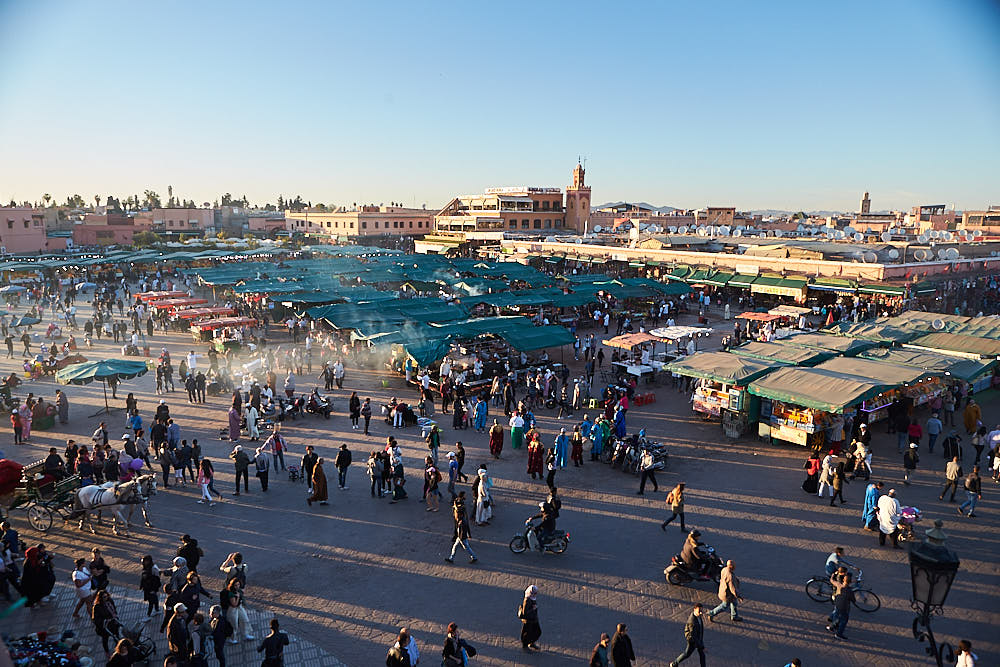
    • The world famous Jema El Fna Square where we enjoyed amazing performance of traditional activities by storytellers, snake charmers, peddlers of traditional medicines and the markets. Beware the hawkers and snake charmers – they will give you the snakes to take pictures with and then ask for 200 DH (approx 20 euro) or if they see you taking pictures of other people with the snakes they will harass you for money because you took a picture or video.

After this, we got some dinner, had a drink in the glacier bar overlooking the Jema El Fna square as the sun set and then made our way back to the Riad – approximately 15 minutes walk or 1 mile away.

Day 3: MARRAKECH – CASABLANCA – RABAT (330KM)

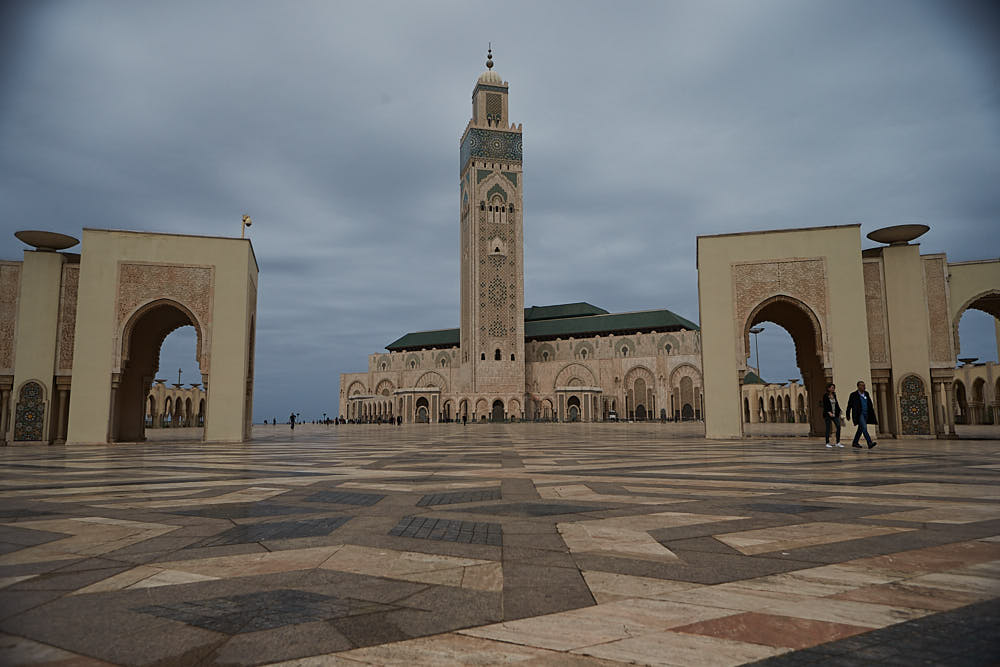
After a good nights sleep we got collected around 08:00 and started out on the three hour driver to Casablanca (245KM due North). The roads were good and the weather was nice. One thing that we noticed and were a little surprised by was that everything was so green outside. We stopped for a coffee half way and the lads had a nice crepe and Nutella to keep the hunger at bay. Arrived in Casablanca around 11:15 We visited the famous and the biggest Mosque in Africa, Hassan II, which was built between 1987 and 1993. It is very impressive and vast. We spent an hour here walking around and taking pictures. The last tour at the museum started at 11:00 so we missed this. The tour of the Mosque was not until the afternoon. Check the times before you arrive if you are interested in partaking in either. We then headed to Ricks Cafe – from the movie Casablanca – and got some lunch before driving to Rabat, the capital of Morocco. It took just over an hour to get to Rabat and meet our local guide, Mohamed.

We visited the Royal Gates built in 1864, and enjoy the charming garden of Chellah, surrounded by walls and beautiful defensive gates, built between 1310 and 1330. Later we stopped at Mohamed V Museum built in 1972, and then visited the tombs of Moroccan kings Mohammed V, who died in 1962, Hassan II who died in 1999, the tomb of Moulay Abdullah the uncle of Mohammed VI and Hassan Tower which was built in 12th century. We explored the Oudaya Kasbah which was built in 12th century and served as a military base for the Almorabits army in their defence against the Spanish army. The roof of the Kasbah allows a stunning view of the surrounding area. We also saw the 240km long Abi-Regrag river, located in western Morocco between Rabat and Sala. Overnight in Rabat at the Riad Dar Dar. We had to walk down a few streets and back track a little before we found the Riad – nestled away down some narrow alley and walkway. It was nice inside and we were greeted with the standard Moroccan Tea welcome before checking in.

We got dinner in the Riad and walked around the city’s market streets and bought some trinkets before retiring for the night.

Accommodation : Rabat :www.riaddardar.com

Day 4: RABAT – CHEFCHAOUEN (300KM)

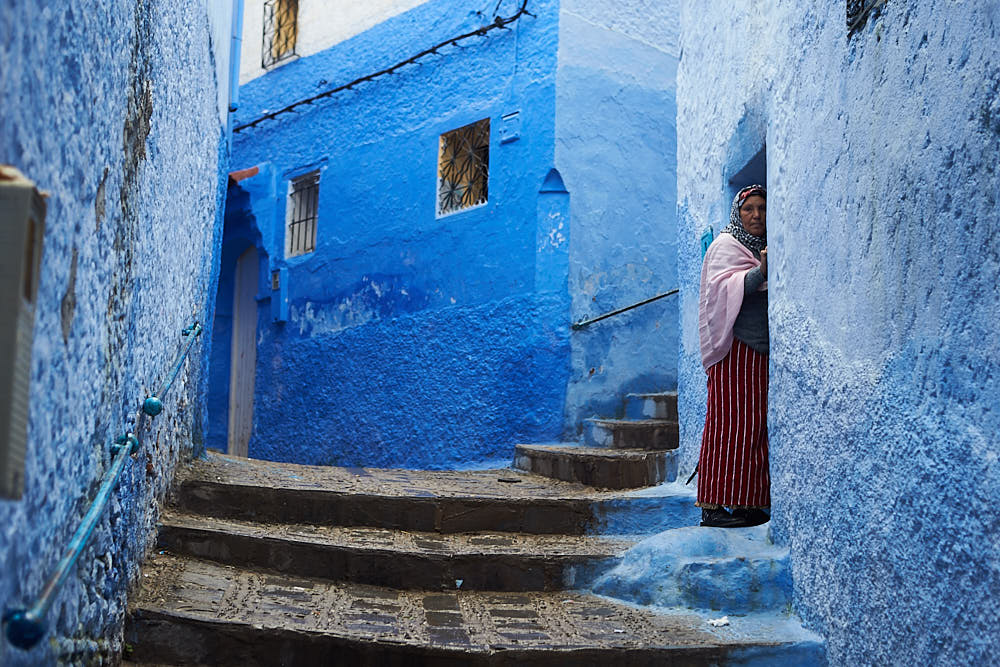
After breakfast we will drive to Chefchaouen, the blue city, through the cities of Khnetra, stopping in Ouazzane, passing by spectacular scenery with cedar, oak and almond trees. We arrived in Chefchaouen around lunch. The day was wet and damp all the way to Chefchaouen. The road had a lot of switch backs, twists and turns and narrow sections and there was a lot of climbing and descending. It is worth taking your time and stopping often to get some air and not get sick. The travel time was around 5 hours from Rabat – including stops.

In the afternoon, we looked around the Blue City. We had lunch in the Aladdin Restaurant in one of the main squares before exploring some more. The rain cleared off but the clouds remained and the temperature was lower than Rabat so we had a jumper and jacket on us for the walk around. Set against a wide valley and nestled between two peaks in the stunning Rif Mountains, the isolated town of Chefchaouen is a surprising delight. Much of Chefchaouen was recreated by Andalusian refugees escaping the Reconquistia, so its striking blue and whitewashed houses, red-tiled roofs and artistic doorways give it the feel of the Spanish hills. We spent the rest of the afternoon exploring the sights, sounds, and smells of the medina, the shops in the square selling woven goods and small sweets, and the town’s famous goat’s cheese. Herds of goats wander the sparse hillsides that surround Chefchaouen, and their cheese is sold in great fresh rounds in the street markets. Within the plaza is the walled fortress of the Kasbah – where you can wander through the tranquil gardens inside, visit the ethnographic museum, and soak in wonderful views from the rooftop. Around 18:00 we visited the Ras el-ma, where the city’s fresh water springs from the mountain. There is a path up the mountain here to give you a panoramic view of the city.

We returned to our accommodation for the night, got some dinner and watched a movie before preparing for the drive South towards the desert the following day.

Day 5: CHEFCHAOUEN – VOLUBILIS – FES (250KM)

We got up around 06:30 and did an early morning sunrise walk around the Blue City and saw it come to life. After breakfast we descended from the hills and traveled south through the centre of the peninsula towards the sacred pilgrimage town of Moulay Idriss (approximately 3 hours). From here it’s a short journey out to the World Heritage site of Volubilis – meaning Morning Glory. The remains of this Roman city make an undeniably impressive sight as they came into view on the edge of a long, high plateau. We took a 45 minute tour around the arches, basilicas, and superb mosaics along the Decumanus Maximus, many of which remain intact. We then drove onto Fes, arriving there around 14:30. Fes is the spiritual heart of Morocco.

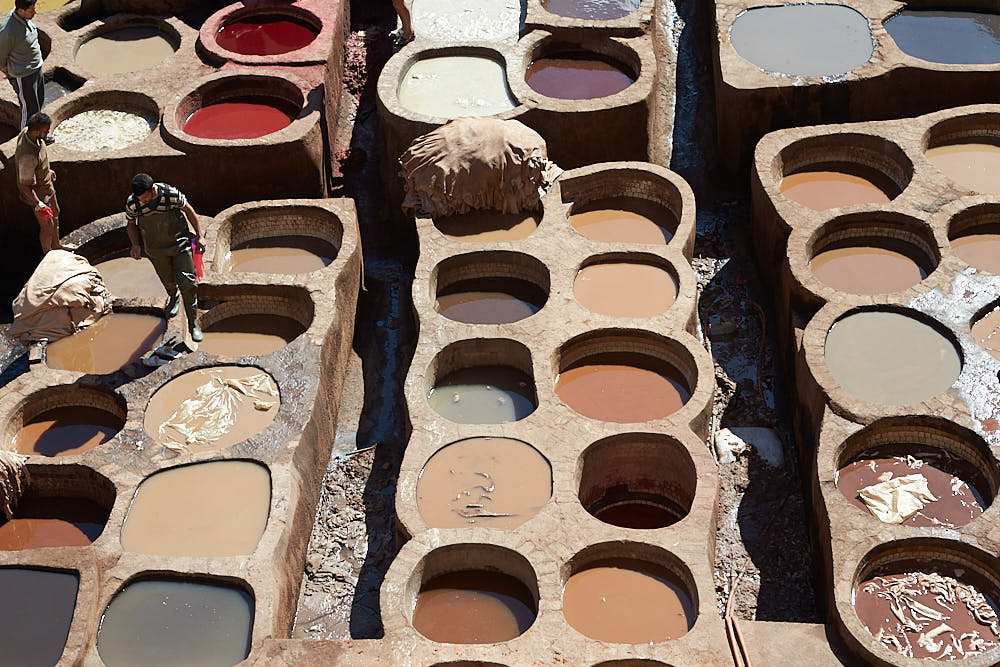
We collected our guide at the Blue gate and started our tour immediately. We started in the Medina – one of the world’s largest walled-in cities.  In the south west wall of the medieval Medina is a beautiful looking entry, the Bab Bou Jeloud. It gives excess to narrow streets that are lined up with little stores that sell fresh fruits, spices, woven Berber carpets etc.  This medina is very large, approximately 3 km and therefore one of the largest medina´s of the world.   We visited the El Qaraouiyyin Mosque, a traditional school, the place Nejjarine and the tanneries. At the tanneries you can watch locals work on skins of goat, lamp, camel and cow, in small clay pits. Sheep is cheap is the famous saying from the tanneries re the hides etc. We saw the Royal gates and had a nice panoramic view of the city before checking into our Riad. There was a problem with the sleeping situation in the Riad and the owner was not very accommodation. We had booked a twin bed and they only had a double available – according to them. Then dinner in Cafe Clock near the Blue gate and walked back to the Riad and slept.

Day 6: FES – MIDELT – ZIZ VALLEY – MERZOUGA (420 KM)

Today was a long day with a lot to see and do. After breakfast in the Riad, we drove south to Ifrane and Azrou through the Middle Atlas Mountains. The air was crisp, clean and fresh. You can feel the altitude when stepping out of the van. The Berber name of Ifrane means caves and it is nicknamed in Morocco as a little Switzerland since it is a very green town and is a ski resort in the Middle Atlas region of Morocco because of its high altitude at 1665 meters. Ifrane is famously known for the Brotherhood Private University, established in 1997 by The King of Morocco Hassan II and the King of Saudi Arabia Fahd – where all classes are taught in English. It is an international university. After Ifrane, we stopped at the cedar forest where we saw the Barbarian Apes in their natural habitat. Then we drove through the Tizi Ntalghamt pass to Midelt. Midelt is in the Middle Atlas and is called “the apple capital”. We got lunch here before traveling along the magnificent Ziz Valley oasis carved through volcanic rock. The Middle- Atlas offers some beautiful views. . Upon approaching Errachidia we saw the scenery change to a dessert environment. Onward we traveled through Erfoud, Rissani and we ended our drive in Merzouga . We arrived here around 17:30 that day.

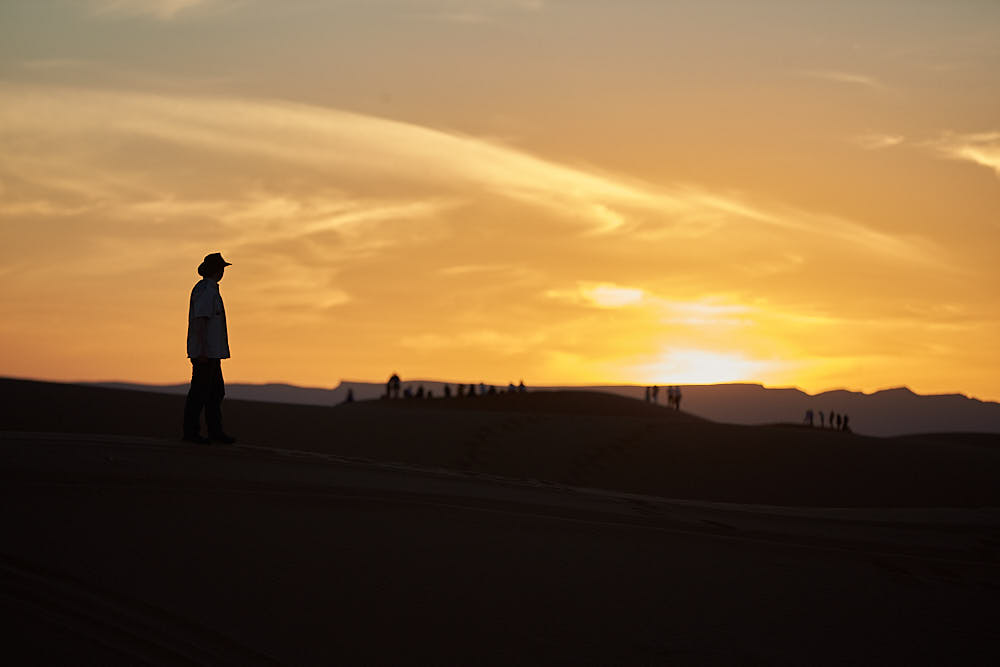
In Merzouga, we mounted our camels and headed off into the Sahara for a spectacular sunset at the Erg Chebbi Sand dunes.  Merzouga is the hometown of the Alaouist dynasty, where Moulay Ali sheriff started to unify Morocco under his red flag in the beginning of the 17th century. The camels brought us to a camp in  the middle of the Erg Chebbi Sand Dunes. These are the highest sand dunes in North Africa. The camel trek to the camp takes about 60-90 minutes depending on your schedule. Some tour companies get you to camp within 60 minutes and let you climb the closest dunes to see the sun set whereas others will stop en-route and allow you to dismount and enjoy the sunset away from camp.  Here, in the middle of the desert we experienced a magnificent sunset and afterwards the sky came alive with stars. .We spent the night in the camp with dinner and live music in the middle of the Sahara.

Day 7: MERZOUGA – RISSANI – ERFOUD – TODGHA GORGES – DADES (280 KM )

We got up for sunrise in the Dunes followed by breakfast and some sand boarding. Then we drove some quad bikes for an hour to get back to town before heading towards Dades. We left Merzouga and headed for Rissini – approximately 30 minutes drive. This silent town was once the ancient capital of Tafilalet and its location is at a crossroads between north and south Morocco. It brought the city to an important status of a former major caravan center. Up to now Rissani remains a major commercial center in the region, with a large souk, particularly lively on Tuesdays, Thursdays and Sunday. It was noted for its leather and goat skin trading in ancient ages. The souk is busy on the other days also and worth a walk around to experience the environment and setting.

After this we traveled to Erfoud. Fossils are a major industry in Erfoud – some 350 million years ago the region around Erfoud was a part of the huge ocean. We got a tour of the facilities and saw how they mine and shape the fossils once they are excavated. On the way to the Todgha Gorges we passed the palm trees groves approx 127 km from Rissini. The great canyons of Morocco  – the Todgha Gorges – are situated beyond the central high Atlas Mountains. Here, the contrasting landscapes remind visitors of the Colorado, with its high plateau, its gorges and great canyons, and its peaks sometimes splintered by erosion. Several peaks in this area exceed 4000 m, with Jbel Saghro 2500 m and Jbel Mgoun at 4068 m being the highest peak in this part of the High Atlas. If you look up, you might see climbers scaling the different peaks. The area is populated by Berbers. In the Todgha Gorge we walked through the area and took some pictures before getting back on the road to the next stop. Finally we drove to the Boumalne Dades where we spent the night. Dinner was included this evening – a buffet affair – followed by a walk around the grounds before retiring for the night.


Day 8: DADES VALLEY – OUARZAZATE – AIT BEN HADDOU – MARRAKECH ( 350 KM )

We got up and had breakfast and were back on the road for 09:00. We drove along the road of 1000 kasbahs, since there are enormous Kasbahs on both sides of the road. Some of those old fortified houses are restored but unfortunately a lot of them are in ruins. We drove first to the Dades gorge & valley. Here you saw the rock formations “human bodies, fingers of monkeys “. After a stroll through the impressive Dades Gorge, we’ll drove on to Ouarzazate passing by the valley of the Roses. This valley provides some of the most spectacular scenery of the south, this is where a large part of Morocco’s rose and rose water production occurs. We stopped for a coffee and bought some curios in the local shops. This valley gave birth to a rose from which locals produce different cosmetic products like soap, perfumes and skin creams. Locals here celebrate this rose by organizing a national festival at the end of April every year. We continued along the road of thousand Kasbah to the oasis of Skoura to visit the Kasbah of Amredil. Our trip continued to the city of Ouarzazate, a city of vibrant culture and artistic traditions.

We stopped here for some lunch. First we visited the museum with cinema props and sets from the Hollywood movies. Entry cost for the visit was 30 DH per person. Ouarzazate (Hollywood of Africa, Noiselessly town, The door of the desert), is a city situated in the middle of a bare plateau, south of the High Atlas Mountains. It is mainly inhabited by Berbers, who constructed many of the prominent kasbahs and building for which the area is known.


After lunch we visited the fortified city of Aït Benhaddou, built in the 11th century. Once up on a time this Kasbah was the former caravan route between the Sahara and Marrakesh. It is situated on a hill along the Ounila River and has some beautiful examples of kasbahs, which unfortunately sustained damage during each rainstorm and windstorms. Most of the town’s inhabitants now live in a more modern village at the other side of the river; however, around five families are still living within this Kasbah.

Aït Benhaddou Kasbah has been a UNESCO World Heritage Site since 1987 and several films have been shot there, including Lawrence of Arabia (1962), Time Bandits (1981), The Jewel of the Nile (1985), Kundun (1997), Gladiator (2000) and Alexander (2004). From this beautiful fortified house we went west to the city of Marrakech. It is called the “Homeland of God in Berber”. The ramparts of the town are nearly 30 kilometers long. Then we drove through the Atlas Mountains and saw amazing views. The roads were windy and rough in places so the going was slow and easy for the most part. After driving back over the winding Tizi-n-Tichka pass we arrived back to Marrakech around 21:00. We were staying in the same accommodation as the first night.


Day 9: MARRAKECH – ESSAOUIRA- MARRAKECH (400 KM)

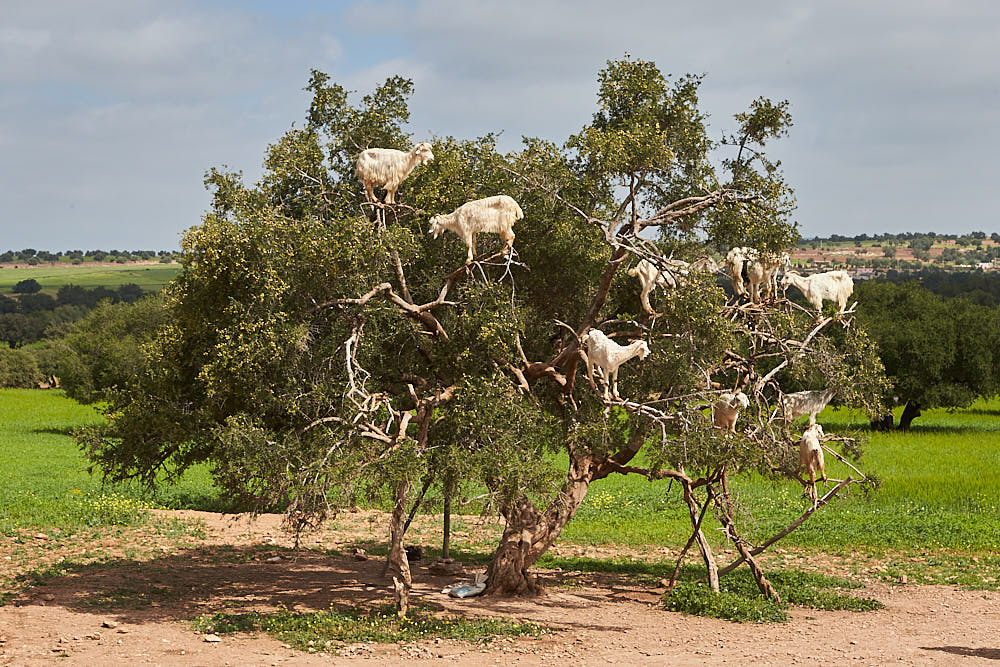
We contacted a tour company earlier in the week and booked a day trip to Essaouira for our last day. The company was late in starting, late getting to the destination and thankfully left on time to get us back home. We drove for nearly four hours with all the stops and getting out of the city. We arrived in Essaouira at 13:00 after stopping for a coffee, a photo of the famous goats in the Argan trees and the shop showing the Argan nuts being ground and made into oils and creams. We went surfing for an hour first – you definitely need a wetsuit if you are going in to the water – and then got some lunch and looked around the Medina before coming back to the bus and departing at 16:00. The area is nice and there are a lot of wind and kite surfers visiting and staying locally. We stopped for coffee on the way back around 17:15 and arrived back in Marrakech around 19:00. We got dropped off in the Jema El Fna square and walked a very similar route to the first days tour before heading back to the Riad for dinner and repacking.


Day 10 MARRAKECH – STANSTED – SHANNON

We got an email from Ryanair re coming to the airport an hour earlier in order to get through security so we left the Riad at 07:30 and arrived at the airport for 08:00. The first queue was to get into the departure section . All bags were scanned and we had to show a boarding pass. Then we proceeded to queue at the desks and drop the bags before heading to the Security check for the next queue. Once through here we went through the biggest queue for passport control and then into the Gate area where we got a coffee and chatted before heading to our gate for the final queue to head home. All in all we needed to be at the airport 3 hours before the flight due to the queues and security checks.

The flight was delayed leaving Marrakesh but we got into Stansted around 15:30 and got our bags by 16:00. We said good luck to Garry and then headed through the bag drop section and security again. We got into the departure section around 18:00, got some food and headed to the gate before getting the flight home to Shannon at 19:55. It was wet and cold in Stansted and Shannon.

Tunisia

Tunisia

Tunis, Sfax, El Jem and Matmata

29th February – 8th March 2020

Duration: 8 days, 7 nights
Location: Tunis, Tunisia
Budget: €1500
Miles Travelled: 1,200

Departed Ireland for Tunis via London on the first day. Tour around the Medina – old town – followed by a visit to Carthage in the afternoon. Next we head to Monastir – Life of Brian – and the moloseum of Bour ge habib. On to Sousse and then Kairouan.

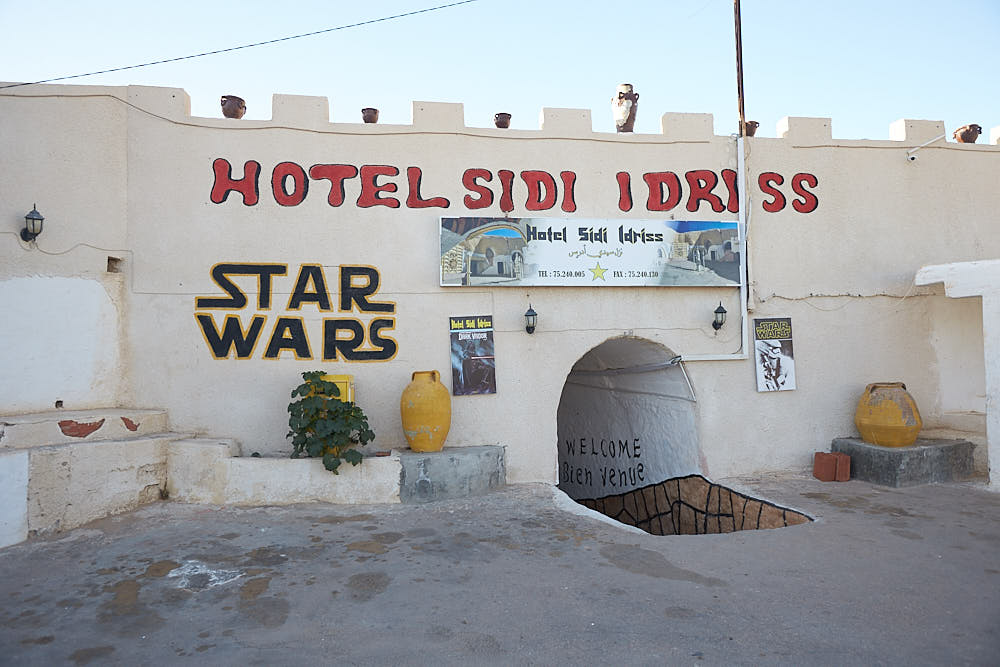
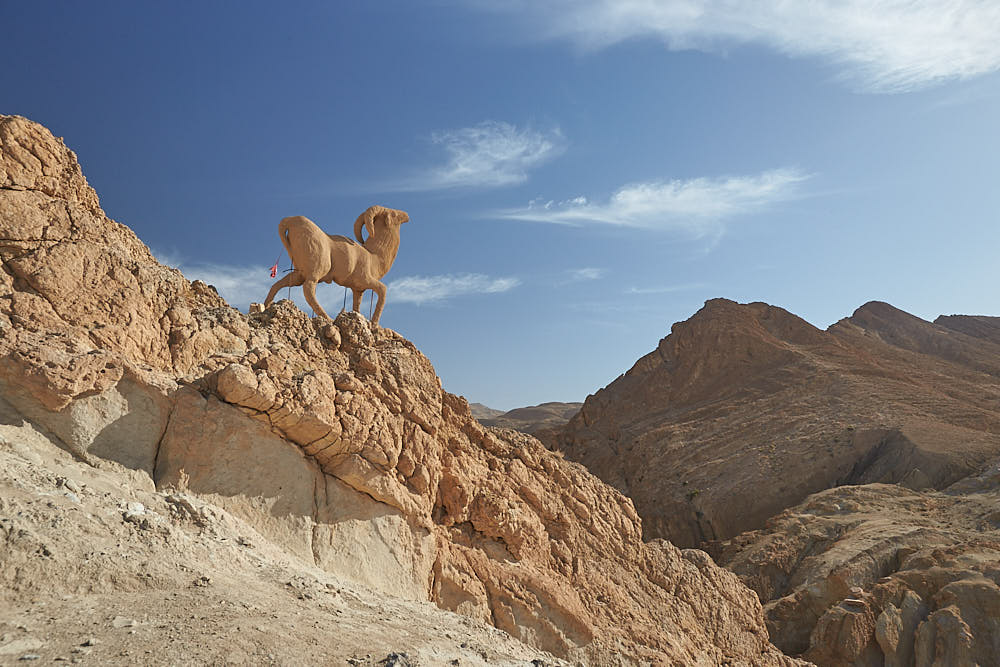
Highlights today was El Jem followed by Sfax. On the road then to Matmata to see the troglodyte homes. Next day we saw Lars homestead from the Star Wars movie – Hotel Sidi Idriss – and then on to Tozeur. After Tozeur we head to Moss Eisly or Tatouine from the Star Wars movies. Then it was on the road to Nafta and around 10km outside there is Lukes hut from the Star Wars movies.

The last section sees us take in Chebiki, Gafsa and back to Kairouan . Dougga settlement is the last big stop before heading back to Tunis for the night and heading home again.

Trip Itinerary

Please click on the sections below to look over a brief report of where to went each day and the stops involved. Be sure to check out the gallery for the images for each part of the trip.

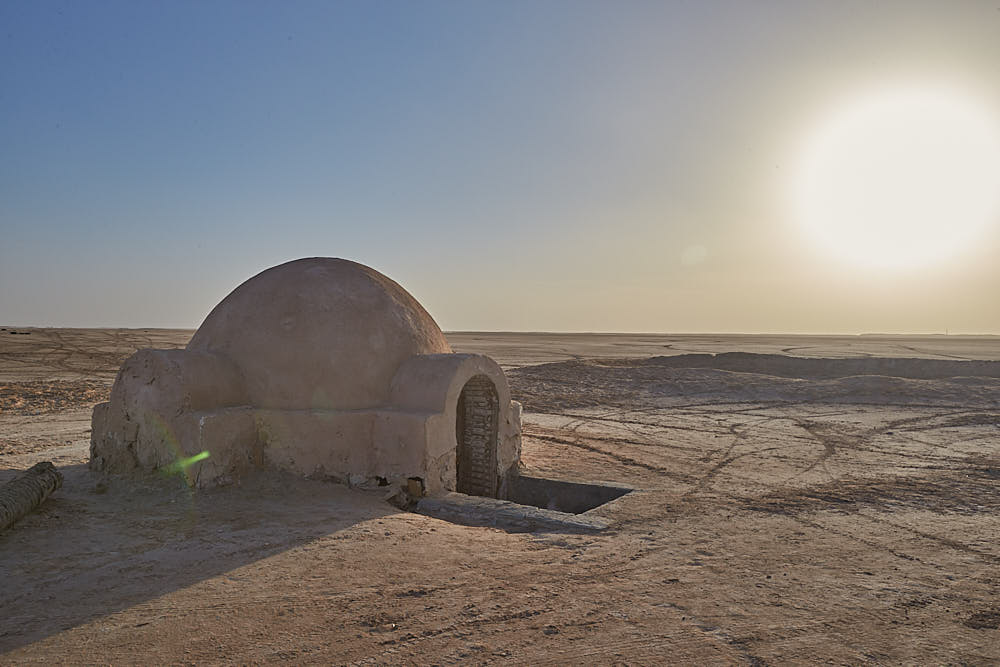
Lukes Hut

Luke’s Hut

Located just outside the town of Naftah (Nefta) in the Eastern part of the country, the small dome represents the entrance to a below-ground-level home.

First constructed in 1976 when the film crew for Star Wars: Episode IV — A New Hope arrived in Tunisia, after serving its purpose Lars Homestead was left to decay in the middle of the desert.

Salt Flats

Salt Flats

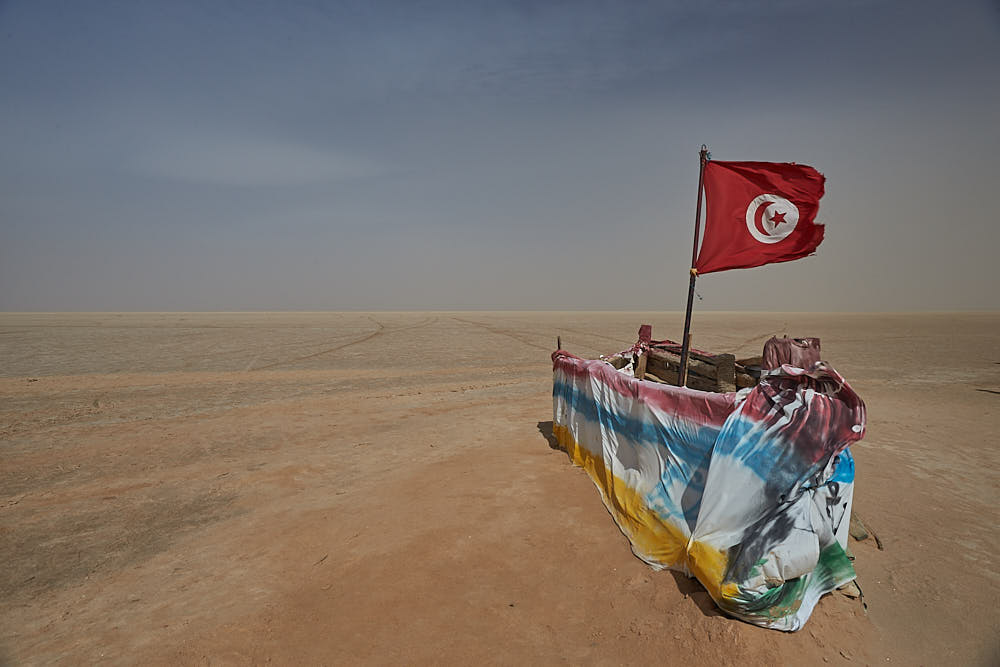
Chott el Djerid (also known as Chott El-Jerid, and several other variations of spelling) is a great salt lake located in the Tunisian part of the Sahara desert. It’s known to be the largest salt lake in the Sahara, and depending on your sources, it’s also the largest salt lake on the African continent. With a surface area of more than 2,700 square miles, Chott el Djerid is over 1.5 times larger than the Great Salt Lake of Utah.


Chebiki

Chebiki

Chebika (الشبيكة) is a mountain oasis in western Tunisia, in Tozeur Governorate.

Chebika lies at the foot of the mountains of the Djebel el Negueb and, because of its exposure to the sun, it is known as قصر الشمس Qasr el-Shams (“Palace of the Sun” in Arabic).

In antiquity it was a Roman outpost known as Ad Speculum and later a mountain refuge of the Berber people.


Dougga

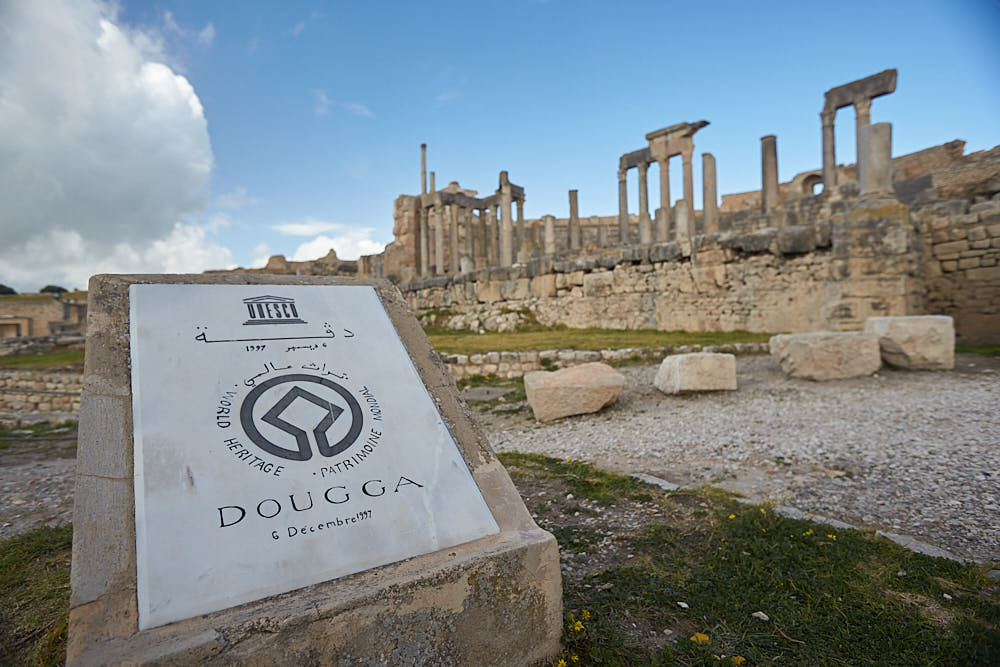
Before the Roman annexation of Numidia, the town of Thugga, built on an elevated site overlooking a fertile plain, was the capital of an important Libyco-Punic state. It flourished under Roman and Byzantine rule, but declined in the Islamic period. The impressive ruins that are visible today give some idea of the resources of a small Roman town on the fringes of the empire.

El Jem

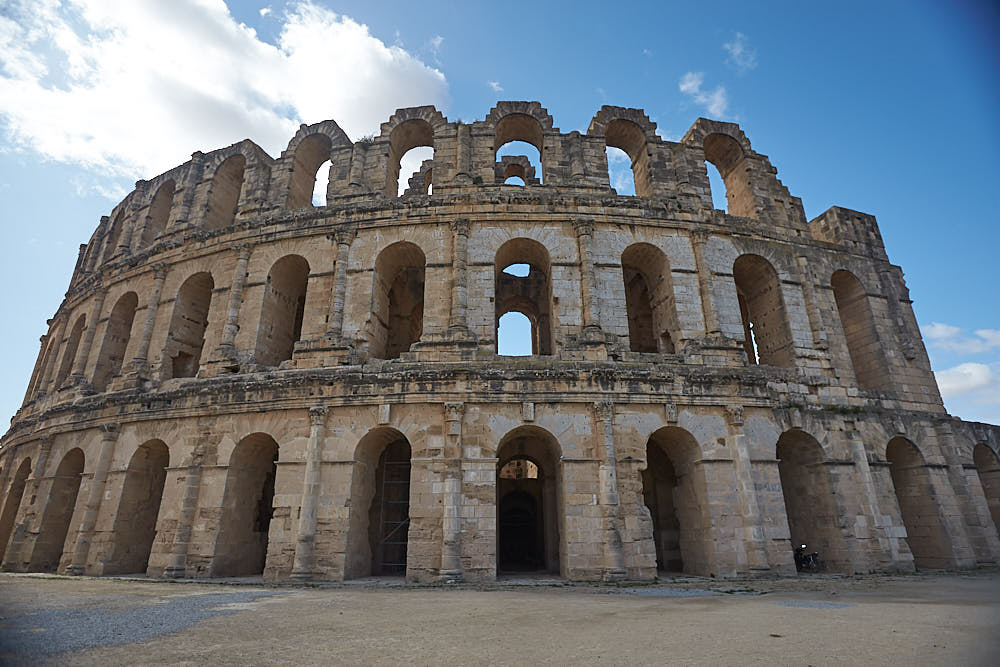
The impressive ruins of the largest colosseum in North Africa, a huge amphitheatre which could hold up to 35,000 spectators, are found in the small village of El Jem. This 3rd-century monument illustrates the grandeur and extent of Imperial Rome.

Kairouan

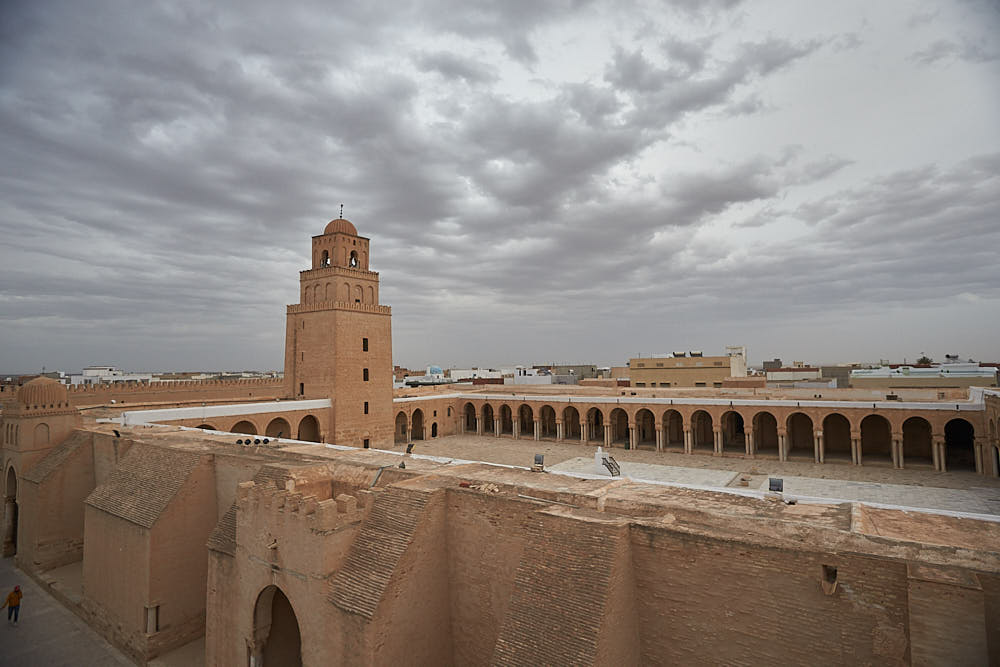
Founded in 670, Kairouan flourished under the Aghlabid dynasty in the 9th century. Despite the transfer of the political capital to Tunis in the 12th century, Kairouan remained the Maghreb’s principal holy city. Its rich architectural heritage includes the Great Mosque, with its marble and porphyry columns, and the 9th-century Mosque of the Three Gates.

Trip Itinerary

Please click on the sections below to look over a brief report of where to went each day and the stops involved. Be sure to check out the gallery for the images for each part of the trip.

Saturday 29th February - Day 01

So this trip came about because the Tokyo marathon and Japan excursion was cancelled due to the Covid-19 or Corona Virus pandemic. We got notice approximately two weeks before we were due to travel that the marathon was cancelled so we set about looking planning an alternative destination – and that destination was Tunisia.

I got up at 04:00 and left home around 05:00 and collect Mike and Pa is Abbeyleix and we were back on the road for 06:30. We got to the car park for 07:30 and dropped off the car. Then we headed to Terminal 2 for our Aer Lingus flight to London at 09:50. Checkin was fine and the security was quick and easy. We met Derek and got some breakfast. Then boarded and headed off to London to meet up with Masai McNulty and grab an onward flight to Tunisia with Tunis Air at 17:00. The cost of the flights was around 500 euro total – with a checked bag on each leg. 90 minutes flight time to London and 3 hours to Tunis- Carthage International Airport with Tunis Air.
Arrived at the airport, got through security ok and without any delays and transferred to the hotel in around 20 minutes. Grabbed some food and went to bed.

Sunday 1st March - Day 02

Up at 08:00 and got some breakfast – plain affair of eggs and bread, tea and coffee. We met out guide at 09:00 and headed to the Bardo museum and looked at all the different mosaics here from all over Tunisia. Then we walked through the old town – Medina – at the shops and stalls before exiting at another gate. Then we headed to the coast for some lunch before heading out towards Carthage and the ancient ruins here. We spent some time walking around the area and then headed back to Tunis for dinner and bed.

Monday 2nd March - Day 03

We got up, packed up and checked out of the hotel . Then we were on the road towards the coast towards Monastir- Life of Brian was shot here – as well as the moloseum of Bour ge habib- president that changed everything for Tunisia back in the 1960s. Then we got some lunch and headed onto Sousse. From here we changed some money and then we drove over to Kairouan- 4th holy city in the world. It started to rain once we got into the hotel. We checked in after a short walking tour around the city. Dinner and bed. Stayed in the Kasbah hotel tonight.

Tuesday 3rd March - Day 04

Today we headed to El Jem – roman structure. We looked around the area in the morning and did a short walking tour in and around the ruins. Then we headed Sfax for an hour – money capital of Tunisia . Short walking tour here and then we were on the road to Matmata – to see the homestead of the troglodytes- houses built into the rock/caves. We stayed in a troglodyte hotel here tonight and got some local Tunisian cuisine for dinner – soup, brik and then chicken cooked in rosemary herb and thyme/sage.

Wednesday 4th March - Day 05

Got up and headed to Lars homestead – hotel Sidi Idriss. Sidi means saint. It was only 5 minutes down the road from where we stayed the night before. Looked around and checked in online before heading on towards Tozeur. We headed off down the road to the Salt Flats – 90km long – on the way in to Tozeur. We got into there around 14:30 and got collected by a 4×4 and headed out to Camel Mountain – location in the desert where the English Patient was filmed.

We stopped here for a pano view and then we were on the way again mobbing the sand dunes on the way to Moss Eisly- Tatouine in the Star Wars movies. We looked around the set here and then headed out of Nafta and on the Lukes hut from the movies. The original was destroyed over the years but a petition was launched online that raised 10,000$ to restore the homestead and in 2011 it was rebuilt. We stopped here and got some photos – it is around 10km outside of Nafta. We headed back to our hotel in Tozeur – had dinner and walked back to the hotel and went to sleep.

Thursday 5th March - Day 06

Up and had breakfast and then headed to Chebiki. Did a short tour around the mountain loops and came back through the oasis. Then we went to a pano view point overlooking the vista and the Algerian border – only 20km away. We then headed to Gafsa for some lunch and then we got some ice cream and headed North to Kairouan for another nights sleep.

Friday 7th March - Day 08

Up for some breakfast and then we checked out of the hotel . On today to see the 160 acre area that is the ancient Roman settlement of Dougga. We did a walk around the ruins – saw the temple of Jupiter and other gods and explored the amphitheatre before departing. Place was very quiet. Then we headed to get some lunch before heading back to Tunis. We got in there around 16:00. We got some water at the shopping centre before it closed, got some dinner and watched a movie and went to bed.

Saturday 8th March - Day 09

 Today was the last day. We chilled out around the hotel and repacked the bags. Then headed to the airport at 11:00. Took around 20 minutes. Check in was easy enough and we got some food and spent the rest of our Dinar. Once you go through the security checkin they only accept euro and dollars. We ate outside and then headed in.

Flight was delayed from taking off by nearly 2 hours. Got to London around 17:05 local time – made up some time in the air. Got the bags and went to get the train back to T2. Train broke down on the track kept us in place for nearly 30 minutes. We decided to get a cab over to T2 and got there around 18:30. Checked in really quick – dropped the bags – and legged it through Security to get to our gate just as they were starting to board.Just about made it home that night.

Jedi Transition – aka Rainbow Canyon 2015

Jedi Transition – aka Rainbow Canyon 2015

Rainbow Canyon aka Jedi Transition

Duration: 7 days, 6 nights
Location: Lone Pine, CA
Budget:
Miles Travelled: 3,000+

Kevin and Paddy headed to LA for a day before driving a few hours North East towards a small town called Lone Pine. It was here that we were based for the week ahead to try to get some shots of low level flying (LLF) through the Rainbow Canyon - aka Jedi Transition.

The lookout point is around 45 minutes drive away from Lone Pine and it is pretty remote. Lone Pine offered the best accommodation, food and amenities based on the location.

Rainbow Canyon is part of the R2508 Special Use Airspace Complex, in Panamint Valley.  The Canyon is a part of the much larger Sidewinder Low Level route, and is officially called “Jedi Transition”.  Rainbow Canyon itself is also known as Star Wars Canyon. It is said that some movie scenes of the Star Wars movies were shot here.

The Jedi Transition starts just west of Owens Lake at 36.403047,-118.01239. From here aircraft hug the desert floor and pull up just before the canyon to clear higher levels. From there they enter the Canyon at Father Crowley Point, and continue through the Valley and exit the valley 3 miles from Father Crowley point. Most aircraft call up at 315.9 Mhz before entering (only pilot to pilot communication). The direction of flight is published as east-west but we have seen aircraft going the other way. Thanks to Ron for the information.

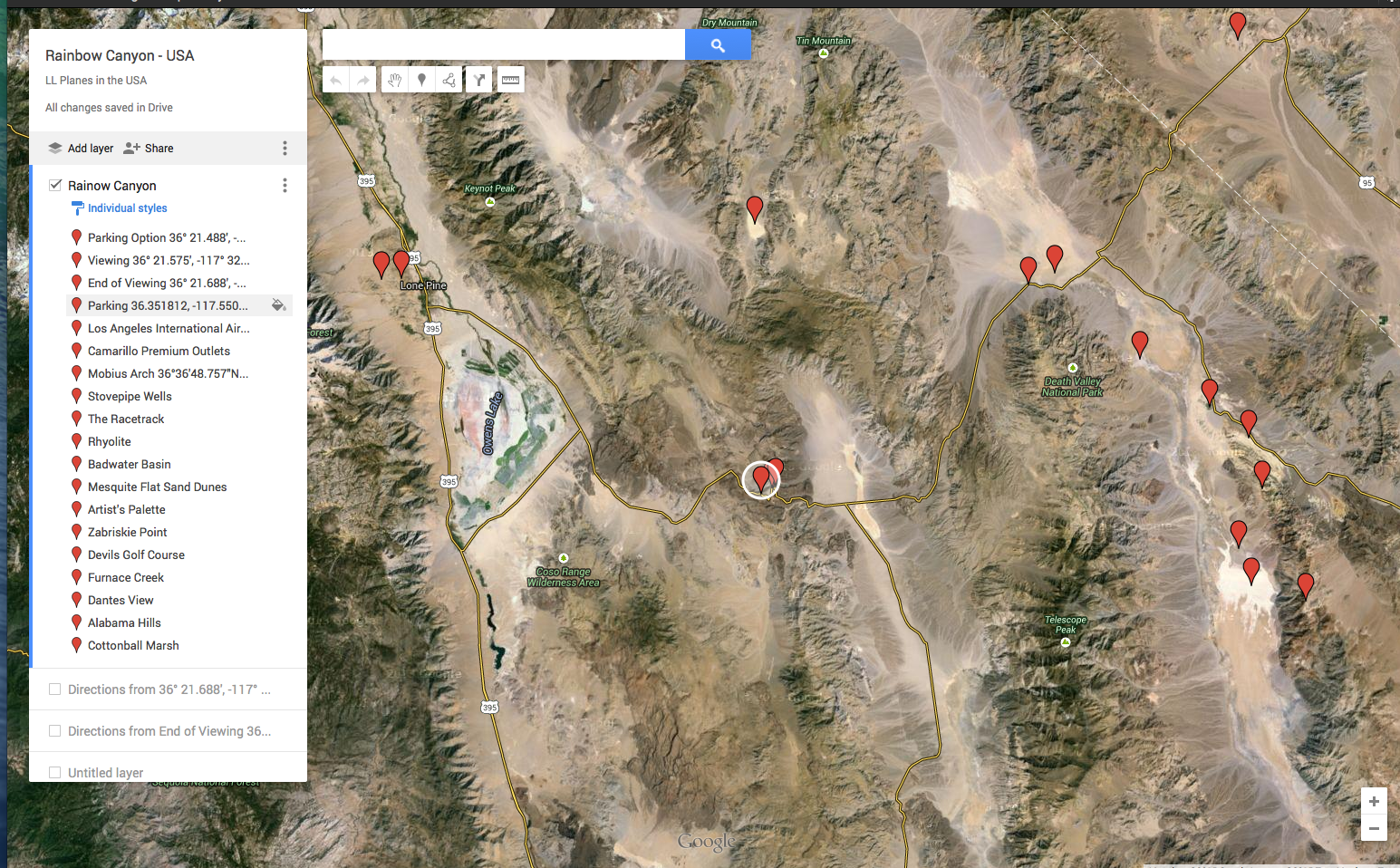
I put most of the information that I could find in the area on a Google Map – image shared below.

Map locations

The circled point in the center of the map is Father Crowley Point and car park. On the far left of the map , above the triangle and Owens Lake, is Lone Pine and the Comfort Inn where we stayed. Really nice accommodation, close to the turn you need to take in order to travel to the lookout and parking and about 1.5 miles outside of town. Breakfast was included and free wifi, parking and the usual other pieces. We headed into town each night and went to the local supermarket, Josephs, and got supplies for the following day. The supermarket was usually open till 20:00 each night so we were back from the hills by then.

A typical day ran something like this : get up at 07:00 and get some breakfast, then pack the bag and be in the car and moving by 08:00. The drive across was approx 49 miles from when you turn onto the road. There are mile markers on the side of the road as you are driving and Father Crowley Point is at mile marker 47 – give or take. You keep driving past this to mile marker 49.5 and on the right hand side – just after it – there is as pull out area where we parked the car. The walk to to hilltop takes about 10-15 minutes and then you are in place for the day. It takes about an hour to get from the hotel to the hilltop as traffic is usually light. We had an F/A-18 Hornet pass us the first evening as we were coming home around 18:00 hours and again another morning as we were heading out around 08:40 so traffic is definitely not restricted to 9-5 in the Canyon.

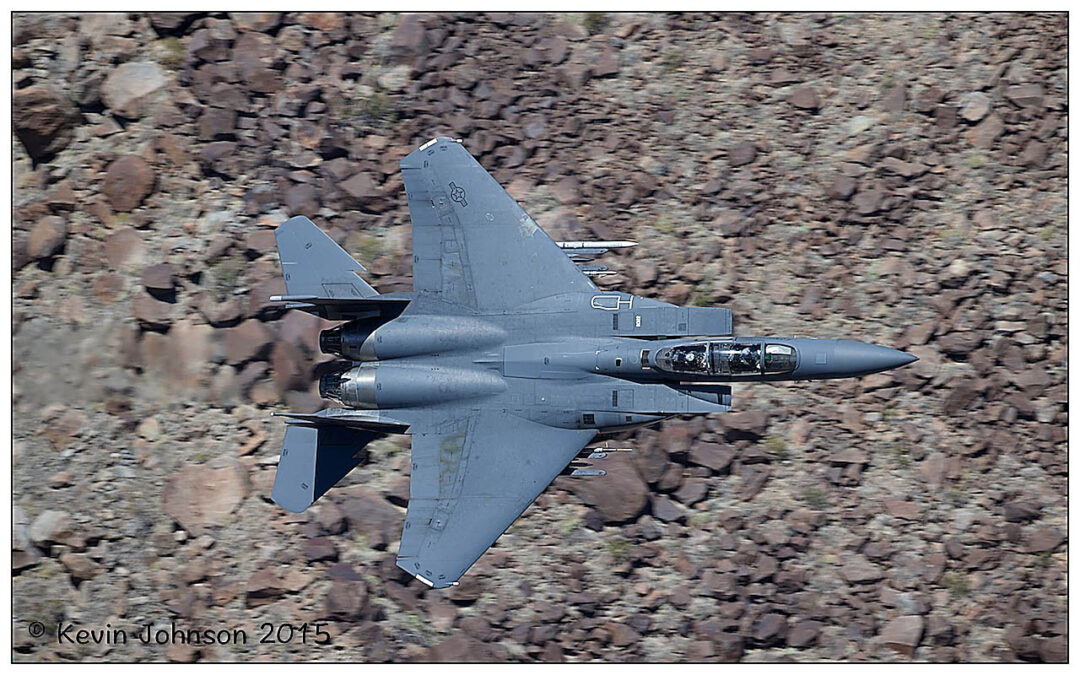
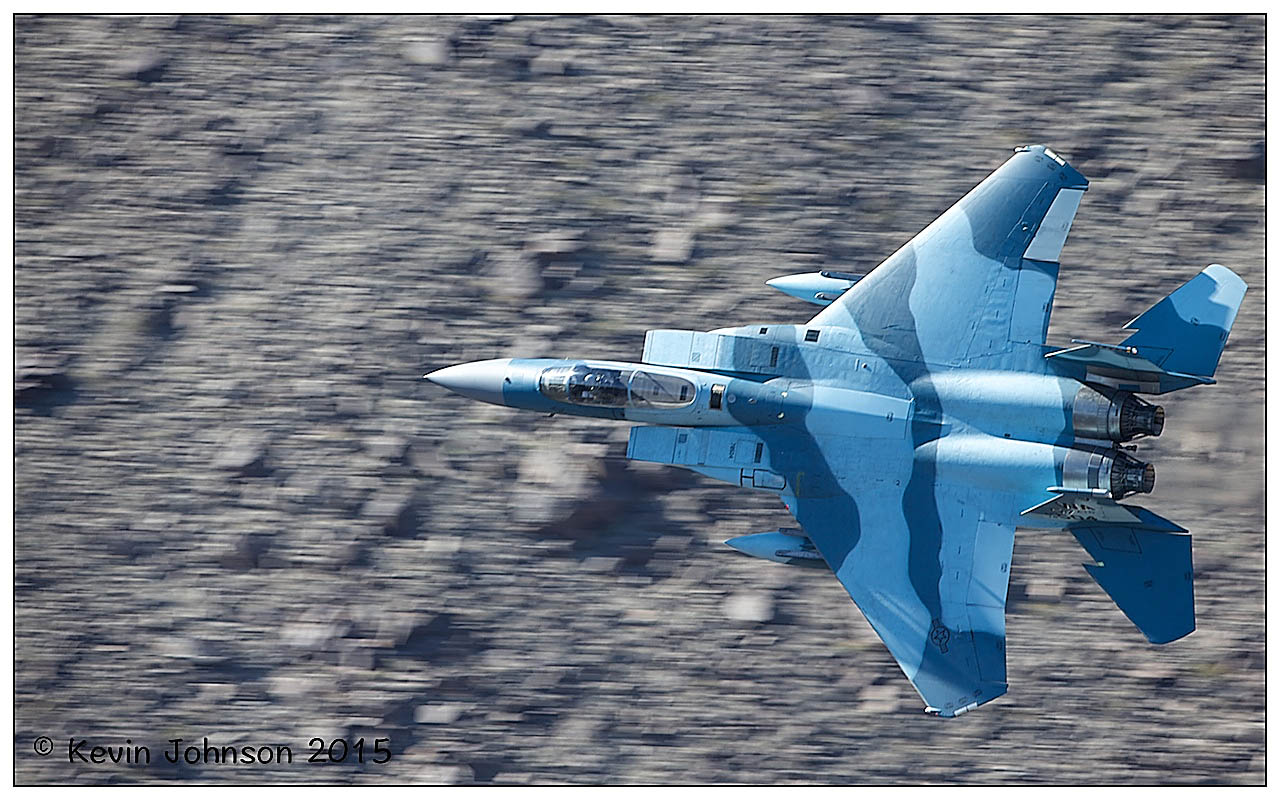
On Monday, we were caught napping with a pass from an F-15E Strike Eagle westbound at around 10:00. It being our first day, and not having a scanner, we just waited. The Eagle flew through and I did not get any shots of the first pass but he saw us and exited the Canyon beyond Father Crowley Point and came back through for us – East bound. This time we were ready …

West Bound

East bound

Early morning and later in the afternoon are probably the best times of the day to shoot but one cant be picky when you travel from Ireland to this great location. All in all we had 7 passes on Monday, 8 on Tuesday, 9 on Wednesday and 6 on Thursday. It was spring break and Easter Week so that might have cut back on the amount of flying in and around the area – I don’t know – but I was grateful for all the passes that went through.

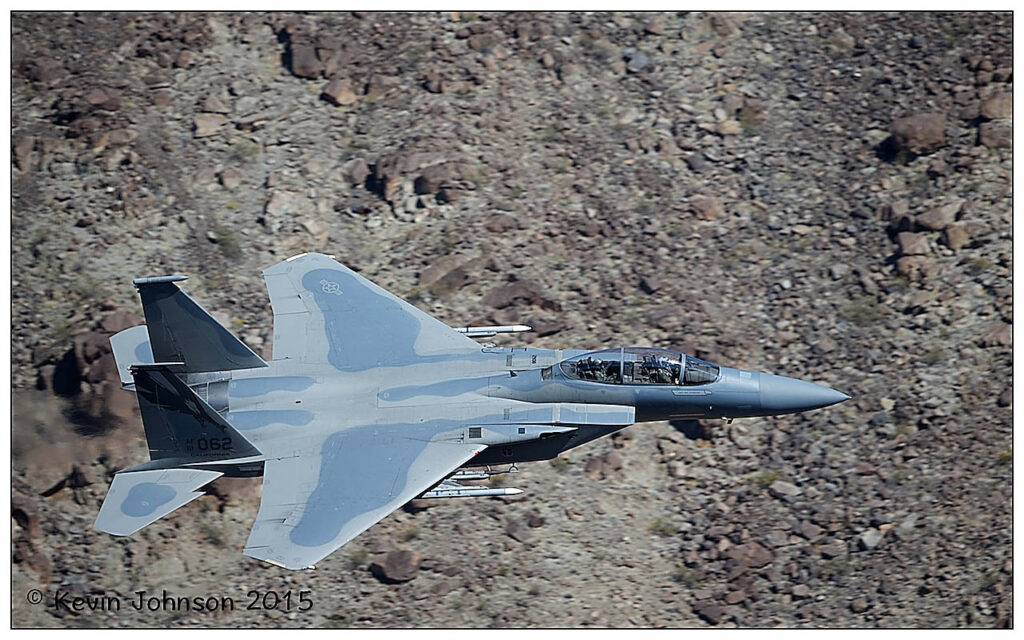
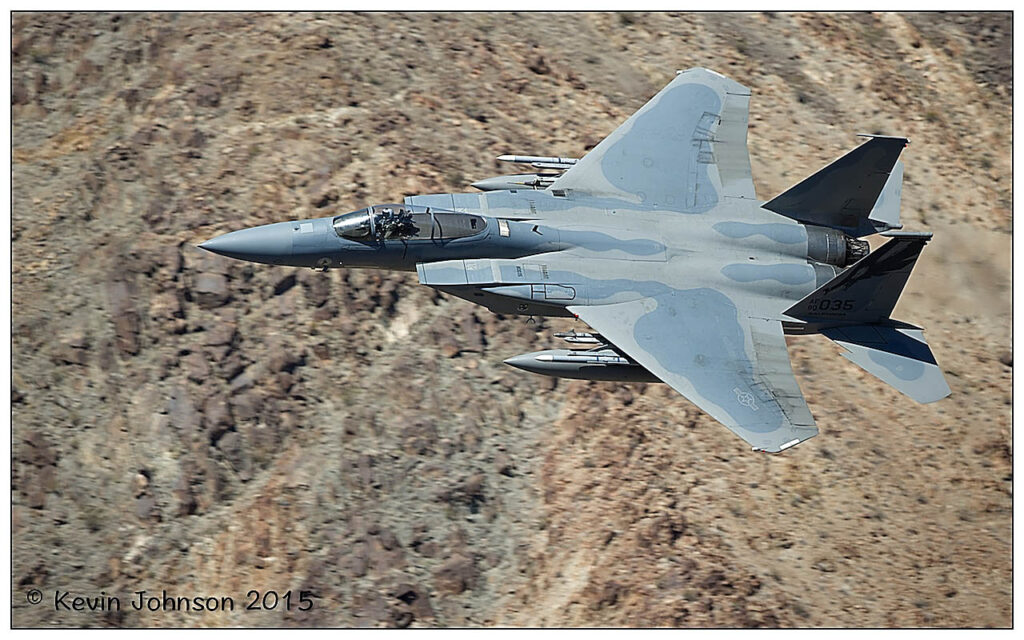
Early afternoon and this camo F-15C came through and I had the shutter speed down a tad too low for the capture. The image is here for show more than anything else …

We had several F/A-18 Super Hornets and I think some Hornets or Legacy Hornets also when we were there …

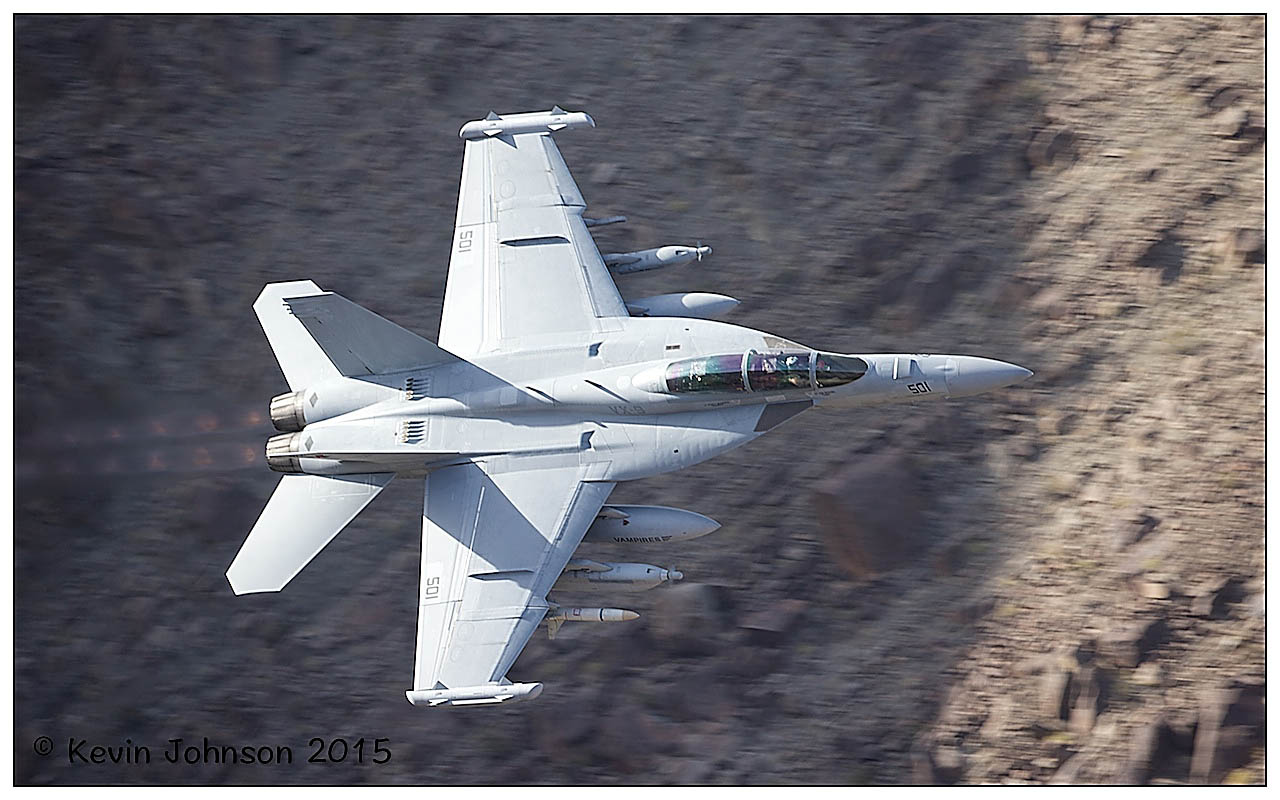
F/A 18F Growler VX-9 "Vampire" burning through the Canyon

The Growler is an electronic attack aircraft. It is capable of disrupting, deceiving or denying a broad range of military electronic systems, including radars and communications.

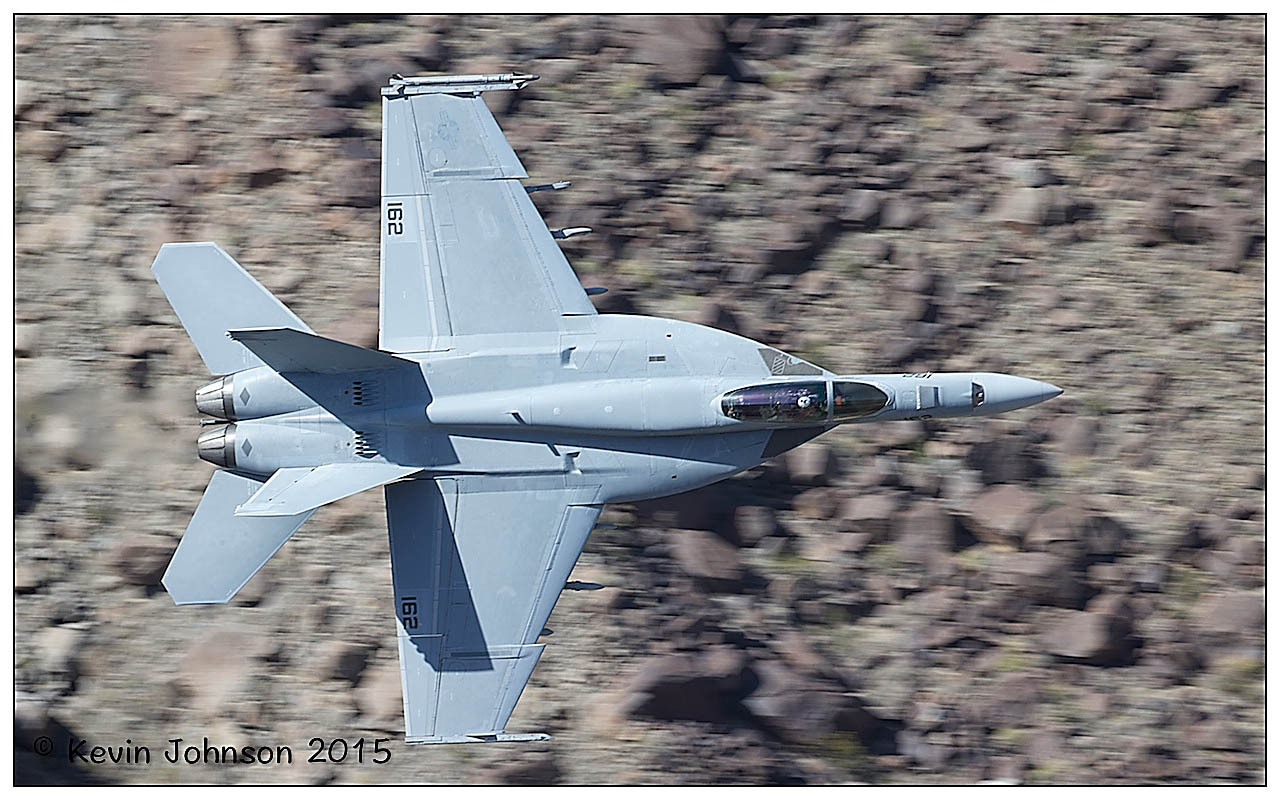
F/A-18E Knife Edge through the Canyon

The EA-18E Growler is an electronic attack aircraft. It is capable of disrupting, deceiving or denying a broad range of military electronic systems, including radars and communications.

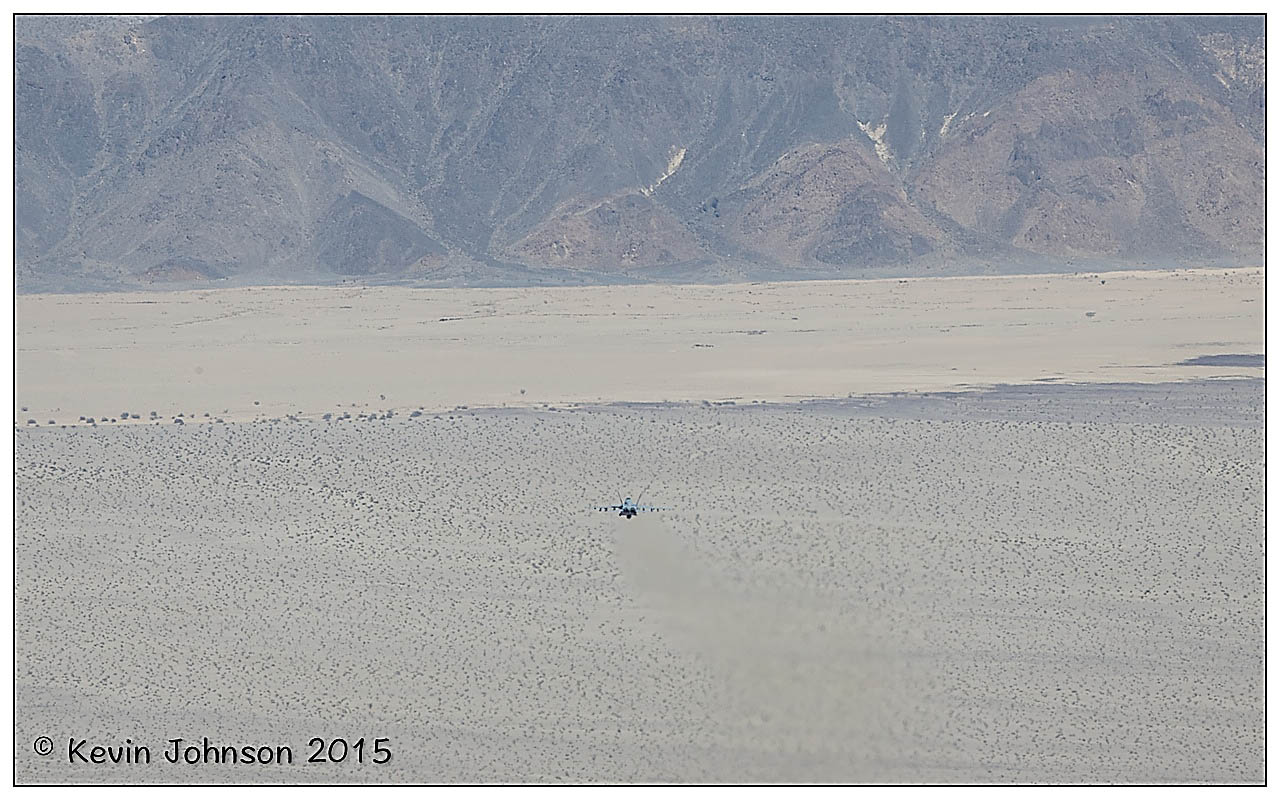
Canyon Floor View

A view of the hornet as it sweeps the deck and heads away across the canyon floor before pulling out as it reaches the wall – approximately 3 miles from the view point.

We had a special visit from an X53 NASA modified F/A-18 on the last morning also – the pass was high but I included the images here for show more than anything else. A C17 came over the hill to the right of Father Crowley Point also and dropped down into the Valley – impressive and huge…


They can be seen in the Photo Gallery for the trip along with some other nice shots from the excursion.

Pre Antarctica – Argentina

Pre Antarctica – Argentina

So in early December 2013, myself and my brother headed to Antarctica to reach the 7th continent – and discover what it had to offer. Packing was a bit of a chore for this trip but I finally decided to take the following gear. Once we get into Buenos Aires, we spent a day here looking around and sight seeing before flying on to Ushuaia. We had already visited Buenos Aires in 2008 with the lads so we were kinda familiar with the place and area. We stayed at NH9 de Julio in the City Center. Nice hotel, clean, centrally located and within walking distance of several of the main attractions. We did a sight seeing tour with the hop-on hop-off local bus tour company and walked around the city to get some air and see it for ourselves. The following morning, we had an early flight from the national airport to Ushuaia. People were coming out of the nightclub at 05:00 when we were en-route to the airport – it only took us about 20 minutes to get from the city center to the airport. We checked in, dropped off the bags without any problems even though we were over the weight limit and settled in to wait for the onward flight. Three and a half hours later and we were touching down in Ushuaia and getting transferred to our hotel – Del Bosque Apartment Hotel. Once we had checked in we went out for a walk to get our bearings and look around the city – small enough but tidy. We had our first trip later on that evening to go looking for Beavers.

We were collected at 18:00 to head out to the park where the Beavers are located. The tour company – Comapa Tourism – had the driver and guide collect us at the hotel and we drove for around 30-40 minutes to the site entrance. Details on the website are as follows:

BEAVER WATCHING
Total duration: 4 hours.

Hiking: 1 Hour.

Includes: transportation / hiking / meal.

Equipment: rubber boots and raincoat.

Minimum: 2 pax.

Departure from the hotel towards the valley. Arrival at the refuge located in a privileged place with a panoramic view. After putting on our rubber boots we start hiking. The area is the ideal habitat for those lovable creatures and by crossing several dams we will have the opportunity to watch some of these wild beavers. Hot drinks will be provided.

Later we will return to the shelter where we have the option of either having a meal. Return to Ushuaia.

We got back to the hotel at 22:00 that night and were happy as we had some beaver images as well as upland geese and a meal – a good start to the trip.

Beaver on the grass

Beaver in Argentina near the water – grazing on some scrub

Beaver in the water

Beaver in the water taking some food back to its holt to store for the winter.

Reflections

A nice reflection from the surrounding area when we were on the lookout for Beavers

The following day we headed into Tierra Del Fuego for a 1/2 day train journey to “Fin del Mundo” or the end of the world. We hired a local company to bus us out to the train – purchase the train tickets for us and then collect us on the other side. I think that the train ride is approx 40-45 minutes long and it is only ok – you do not really see a lot of cool stuff and you are just on the edge of the National Park – you have to go a lot deeper into it to see the really good stuff. But if you have 1/2 day to spare it is worth doing I think. More details can be found here.

The following morning we did what we probably the best trip of the journey to date – 4 hour horse riding tour in and along the boundary of the National Park. We were collected at the hotel and taken to the ranch – 20-30 minutes drive away. We got saddled up and headed out for the excursion. Definitely bring wet pants with you as even if it is not raining you will be going through scrub and trees and brush for the journey and you are going to get wet. We had some rain but for the most part it was really enjoyable and really really peaceful. We stopped after two hours and had some tea and sandwiches and just relaxed and enjoyed  the scenery, vistas and the peace. We headed back to Ushuaia and relaxed for the afternoon.

The following morning we headed for Harberton ranch via the road network where we got our first introduction to the different penguin colonies in the area. Only a set number of people can visit the ranch per day, and in doing so, take a boat out to the penguins on the island and walk amongst them. This is truly rare and something that I would recommend. A lot of tours out of Ushuaia will operate down to the area but cannot land on the islands. Harberton ranch itself is the only one that will allow you to walk amongst them – for a price!

We arrived back into Ushuaia and headed back to the hotel as we were checking out tonight and heading to the Los Nires hotel where we were going to stay before embarkation tomorrow at 16:00. The following morning, we relaxed and did some sight seeing near our new locations before heading into town to get on with our journey to the White Magnet.